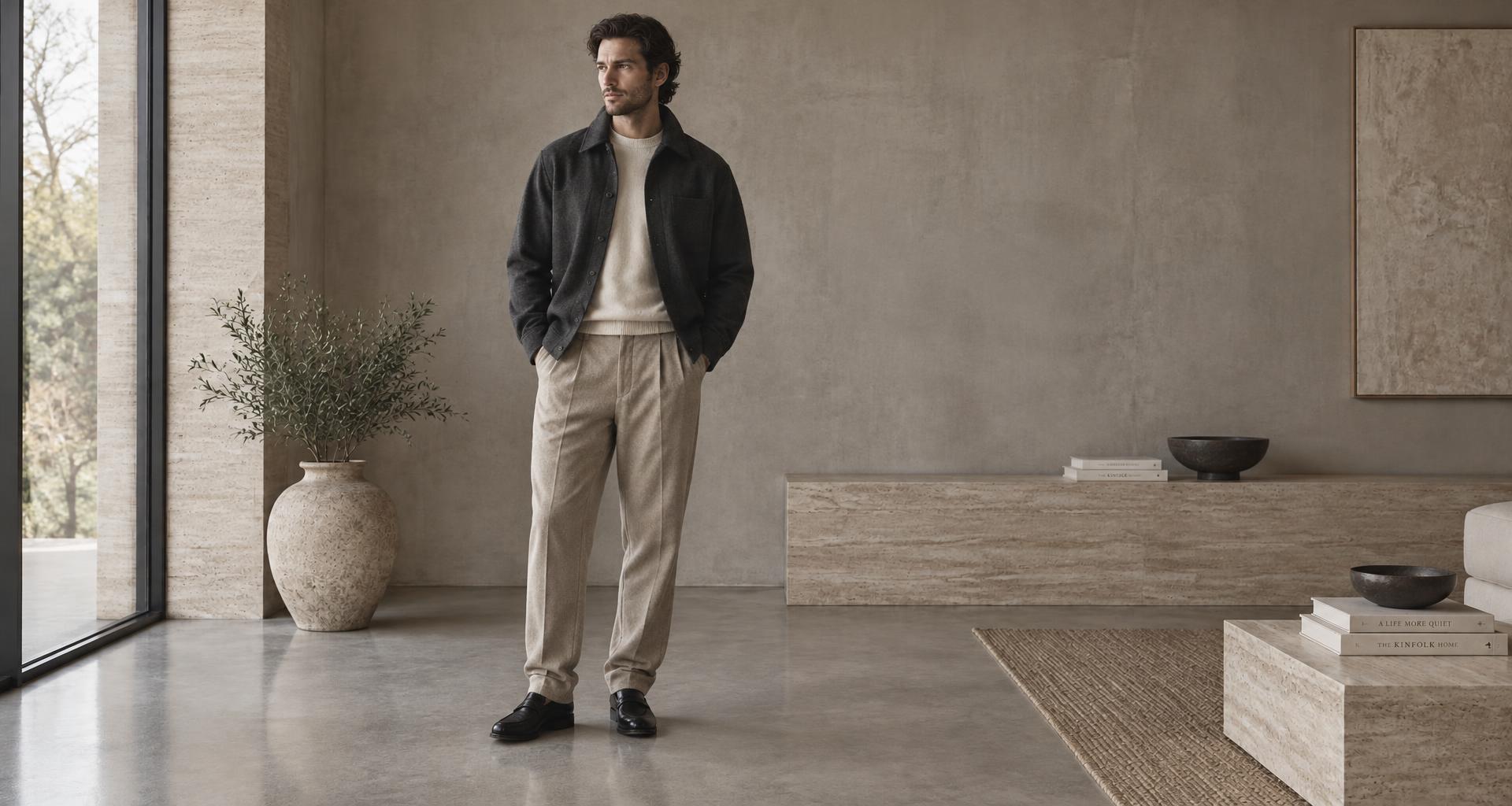
Neutral colours are easy to wear.
That is exactly why they can become difficult to wear well.
Black.
White.
Grey.
Stone.
Navy.
Cream.
Olive.
Brown.
They rarely clash.
They combine easily.
They make getting dressed simpler.
But if every piece has the same weight, texture and proportion, a neutral outfit can quickly feel flat.
The answer is not always to add more colour.
Usually, it is to make the quieter parts of the outfit work harder.
Neutral does not mean colourless
Neutral wardrobes are often treated as if they contain no colour at all.
That is not really true.
Stone has warmth.
Olive carries green.
Navy is still blue.
Cream is softer than white.
Brown can move from pale tobacco to almost black.
Even grey changes dramatically depending on whether it leans warm or cool.
The strongest neutral wardrobes use these differences.
They do not depend on one shade repeated endlessly.
They create variation inside a restrained palette.
Start with one anchor colour
A simple way to build a neutral outfit is to choose one dominant colour first.
Black.
Navy.
Stone.
Grey.
Olive.
Then build around it.
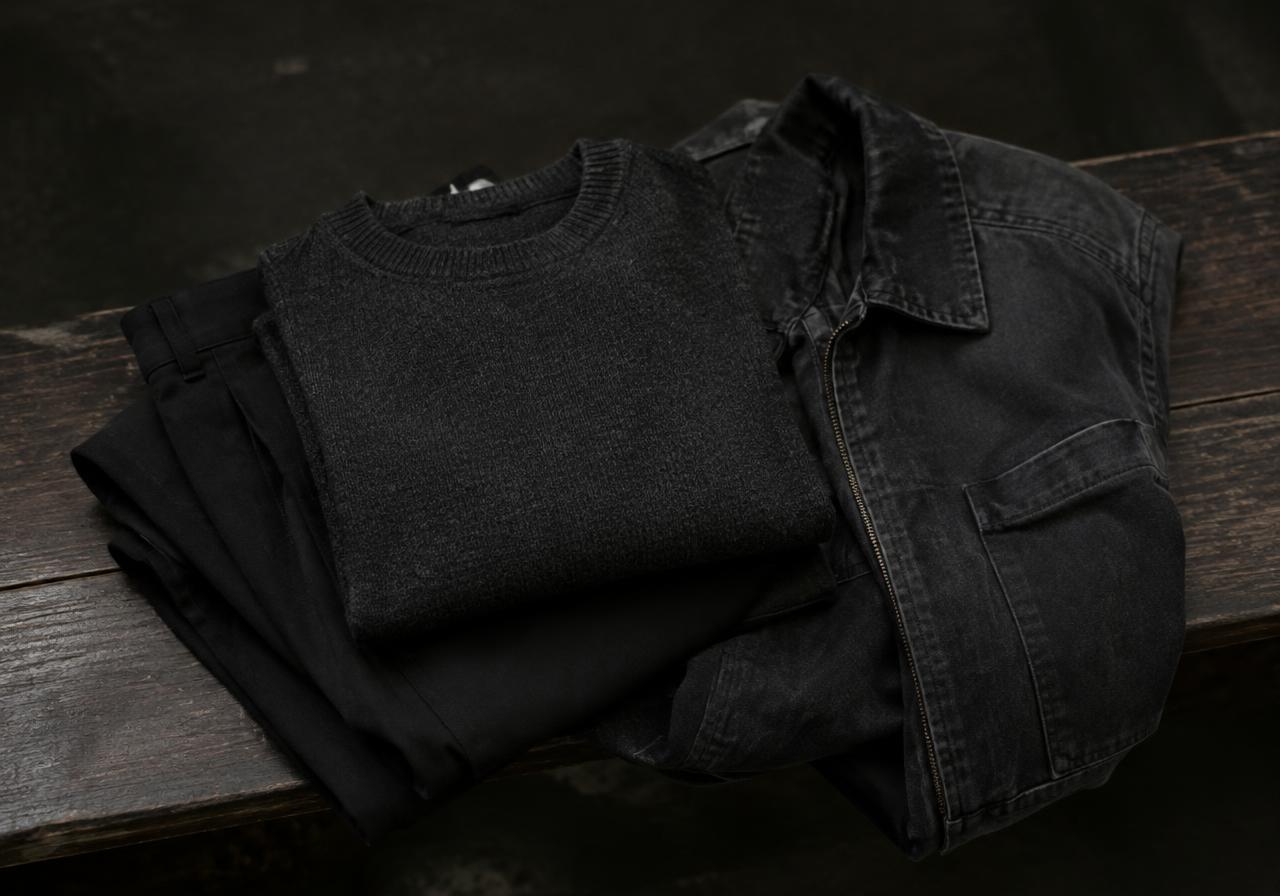
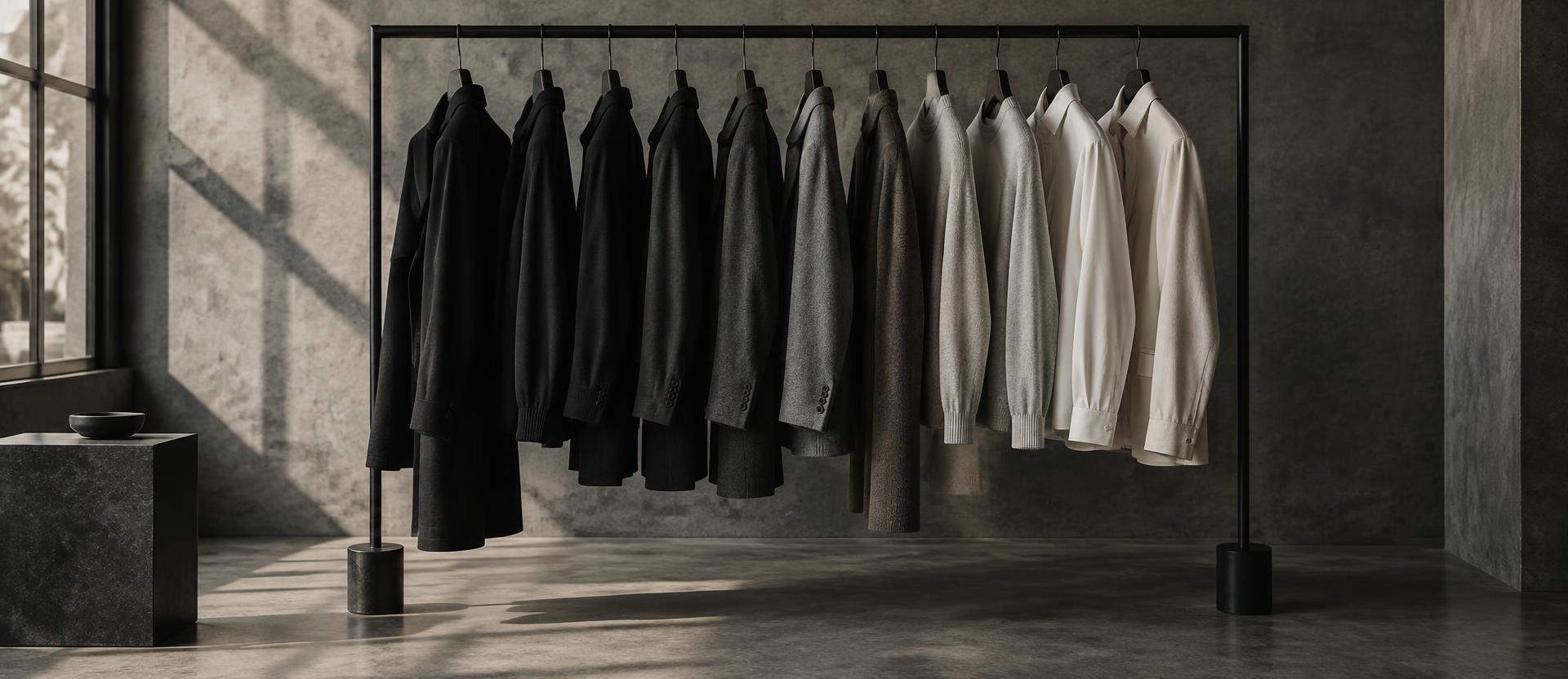
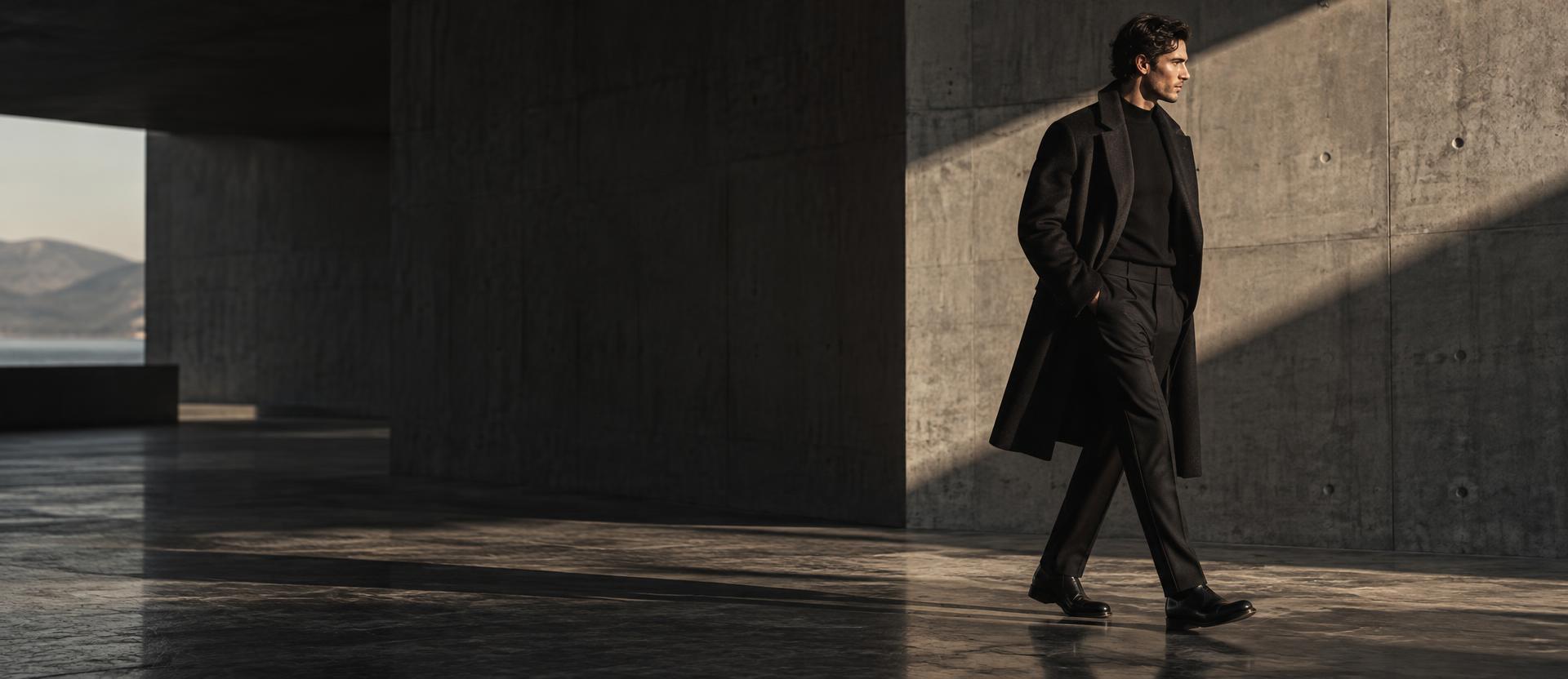
Black trousers might sit beneath a charcoal knit and washed black jacket.
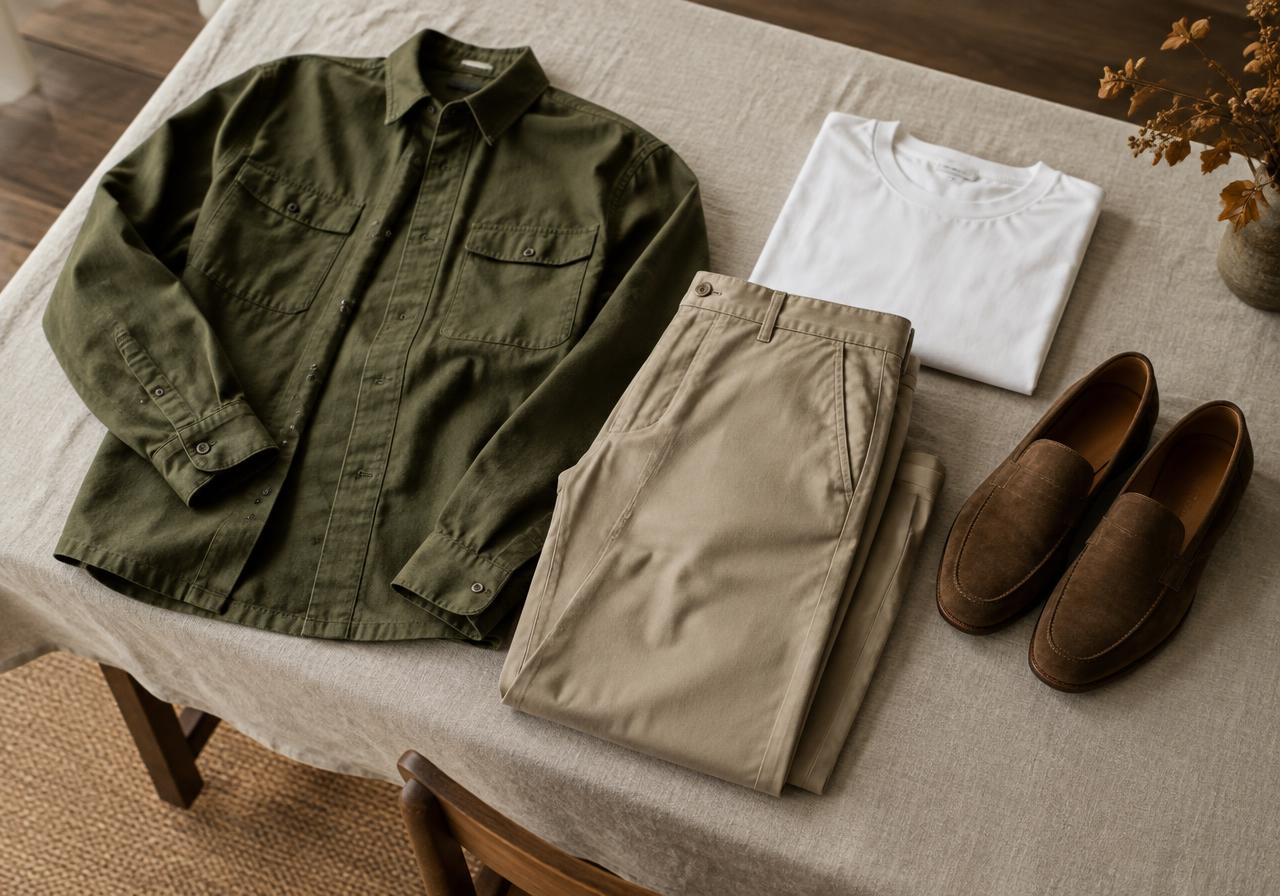
Stone trousers might work with a cream shirt and darker brown outer layer.
Navy can sit beside grey, white or muted olive.
One anchor keeps the outfit coherent.
Everything else adds depth.
Use tonal variation
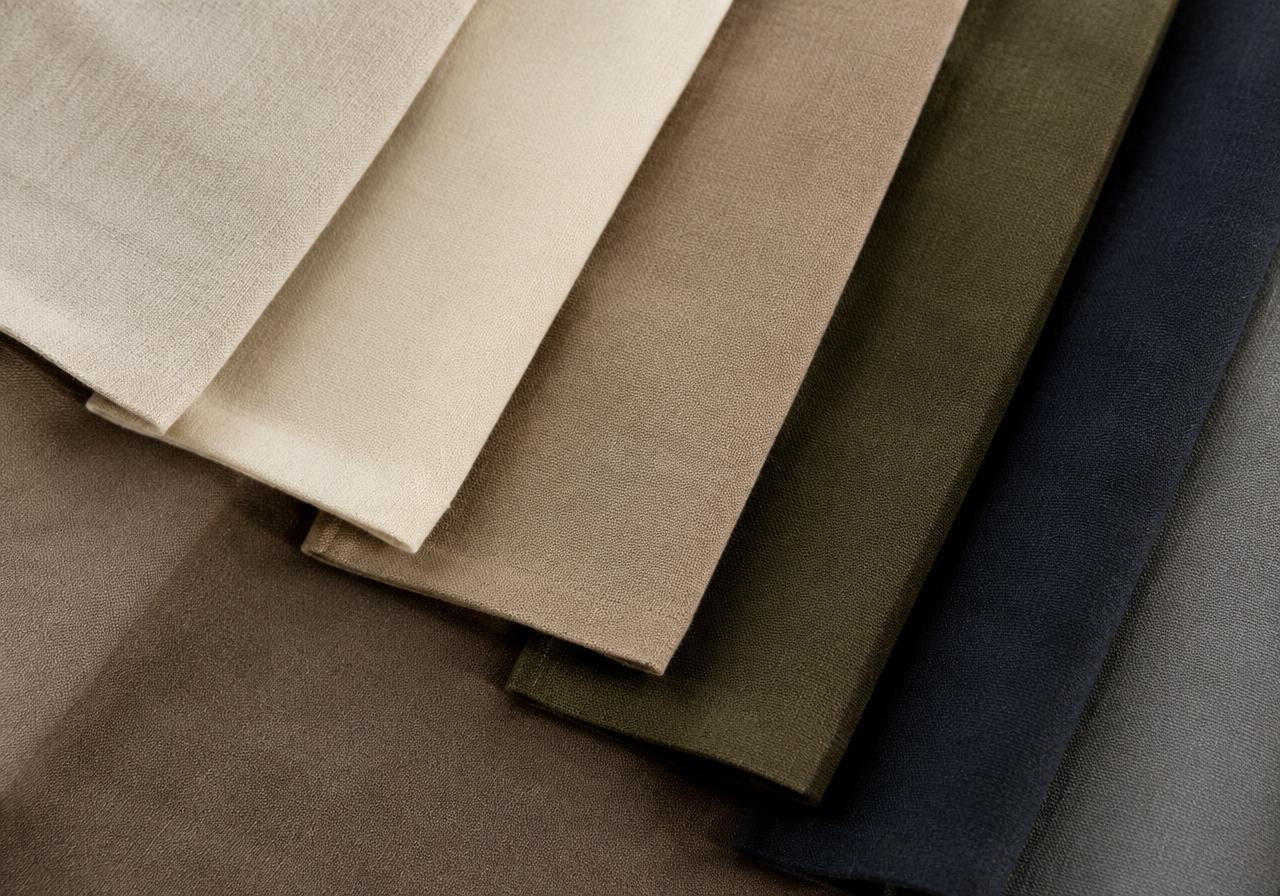
Wearing similar colours does not mean everything needs to match perfectly.
In fact, slight variation usually looks better.
Black with charcoal.
Cream with stone.
Navy with faded blue.
Brown with taupe.
Grey with graphite.
Those small differences create separation between garments while keeping the palette quiet.
A completely matched outfit can sometimes look more uniform than intentional.
Tonal variation solves that.
Texture matters more when colour is reduced
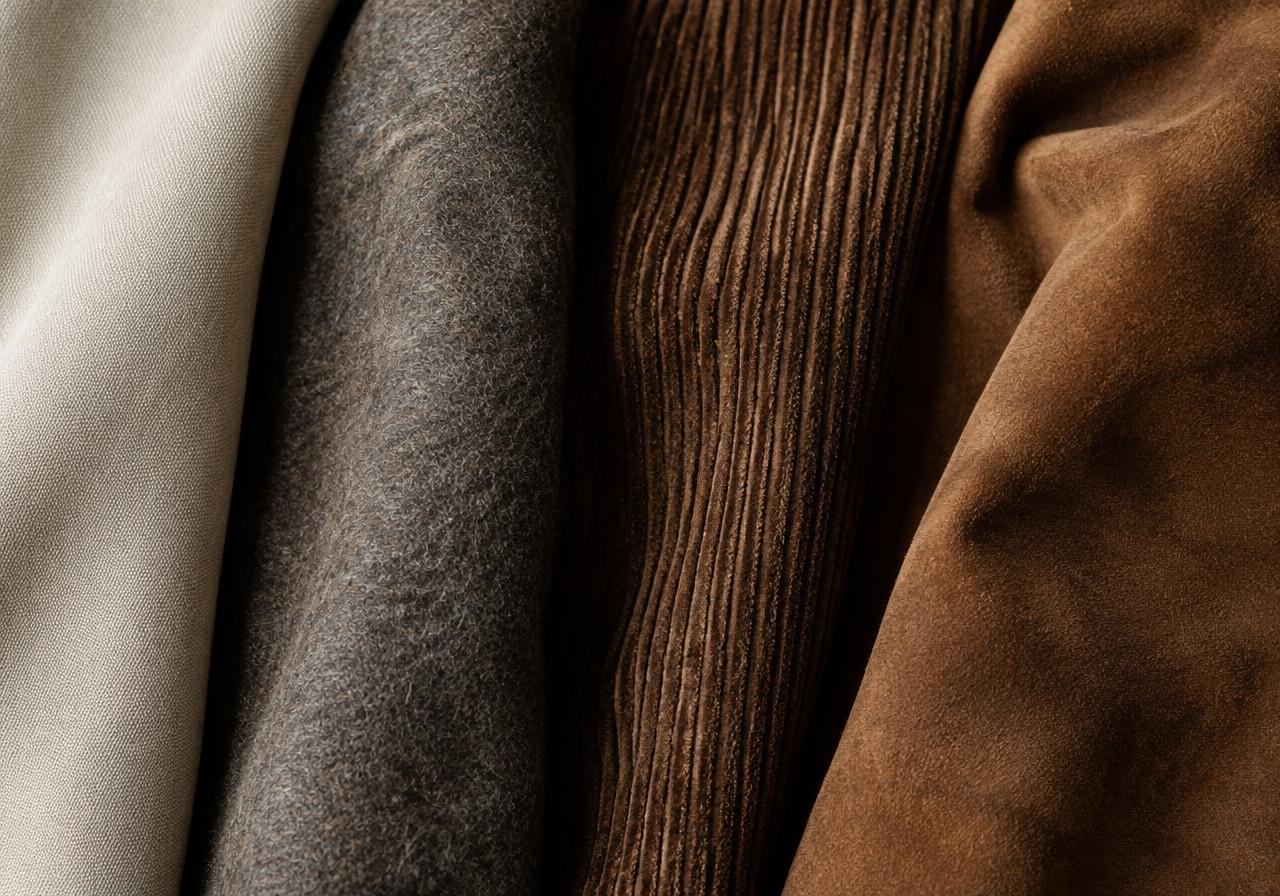
When bright colour disappears, fabric becomes easier to notice.
That is useful.
A smooth cotton T-shirt behaves differently beside a brushed wool overshirt.
A linen shirt feels different from a structured cotton one.
Suede looks softer than polished leather.
Corduroy adds depth without adding another colour.
Texture can make a neutral outfit feel rich without making it loud.
You do not need more decoration.
You need more contrast between surfaces.
Mix matte and structured fabrics
One of the easiest ways to stop neutrals feeling dull is to mix materials with different finishes.
A matte T-shirt.
A slightly textured overshirt.
A structured trouser.
A suede shoe.
Each piece reflects light differently.
That creates visual interest even when the colours are close.
The outfit remains simple.
But it no longer feels flat.
Proportion does some of the work
Neutral outfits make silhouette more visible.
That means proportion matters.
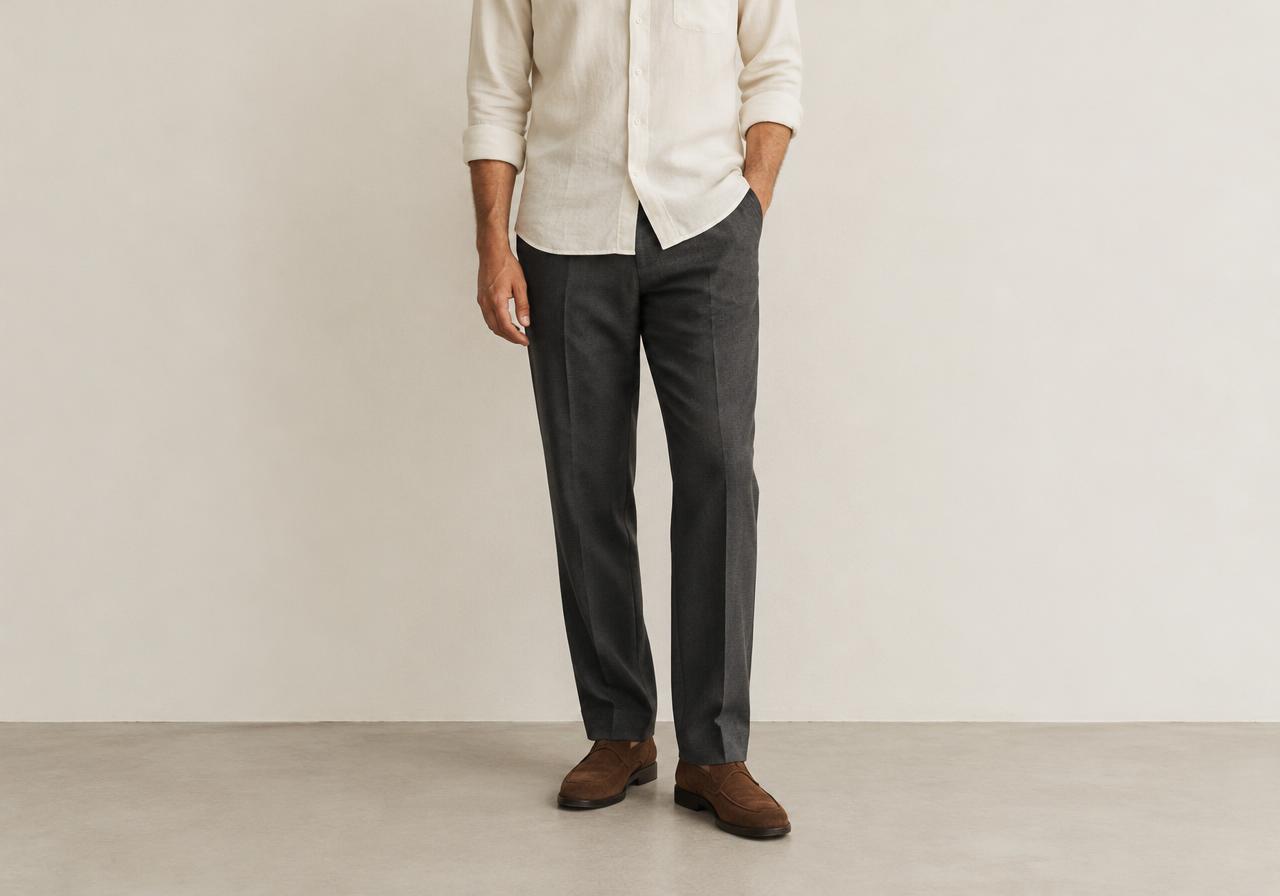
A relaxed shirt with straight trousers can feel completely different from a fitted T-shirt with wider trousers.
The colours might be almost identical.
The shape changes everything.
If every piece is slim, the outfit can feel severe.
If every piece is oversized, it can lose definition.
Balance is more useful than uniformity.
Let one area feel relaxed.
Let another stay controlled.
Use one darker or lighter interruption
A neutral outfit often benefits from one clear contrast point.
Cream knit with dark trousers.
Black shirt with stone trousers.
Grey outerwear over a white T-shirt.
Brown shoes beneath charcoal trousers.
That shift gives the eye somewhere to land.
It also helps separate the individual pieces.
The contrast does not need to be dramatic.
Small differences often work better.
Do not underestimate white
White is useful because it creates space inside an outfit.
A white T-shirt beneath darker layers can make everything around it feel sharper.
A white shirt can soften an otherwise dark wardrobe.
White trainers can break up a heavy autumn palette.
Used carefully, white prevents neutral outfits from becoming too dense.
It does not need to dominate.
Often, a small amount is enough.
Black should not always be the default
That is part of its appeal.
But if every neutral outfit begins with black, the wardrobe can become more repetitive than necessary.
Try replacing it occasionally.
Charcoal instead of black trousers.
Dark navy instead of black outerwear.
Brown or olive instead of black accessories.
Stone instead of white.
The outfit remains understated.
But the mood changes.
That small shift can make familiar clothes feel new again.
Olive belongs in a neutral wardrobe
Olive is technically a colour.
But in menswear, it often behaves like a neutral.
It works easily with black.
White.
Stone.
Grey.
Brown.
Navy.
That makes it especially useful in autumn.
An olive overshirt can add warmth without making the outfit feel colourful.
Olive trousers can replace black or navy without becoming difficult to combine.
It introduces variation while staying restrained.
Brown has become useful again
Brown can sometimes feel more traditional than black or grey.
But used simply, it adds warmth to a neutral wardrobe.
Chocolate.
Taupe.
Tobacco.
Camel.
Dark brown.
These shades work especially well beside cream, stone, navy and grey.
Brown suede shoes can soften an outfit.
A brown overshirt can make black trousers feel less severe.
A camel knit can sit naturally beneath darker outerwear.
The colour is quiet.
But not invisible.
Let one piece carry the texture
Not every garment needs to be interesting.
If the coat has a strong wool texture, the layers underneath can remain simple.
If the trousers are corduroy, the shirt does not need additional detail.
If the shoes are suede, the rest can stay matte and clean.
Trying to make every piece visually interesting defeats the purpose.
Choose one or two areas to create depth.
Let the rest support them.
Layer similar tones
Neutral colours become particularly useful when layering.
A charcoal T-shirt.
Grey overshirt.
Black jacket.
Or:
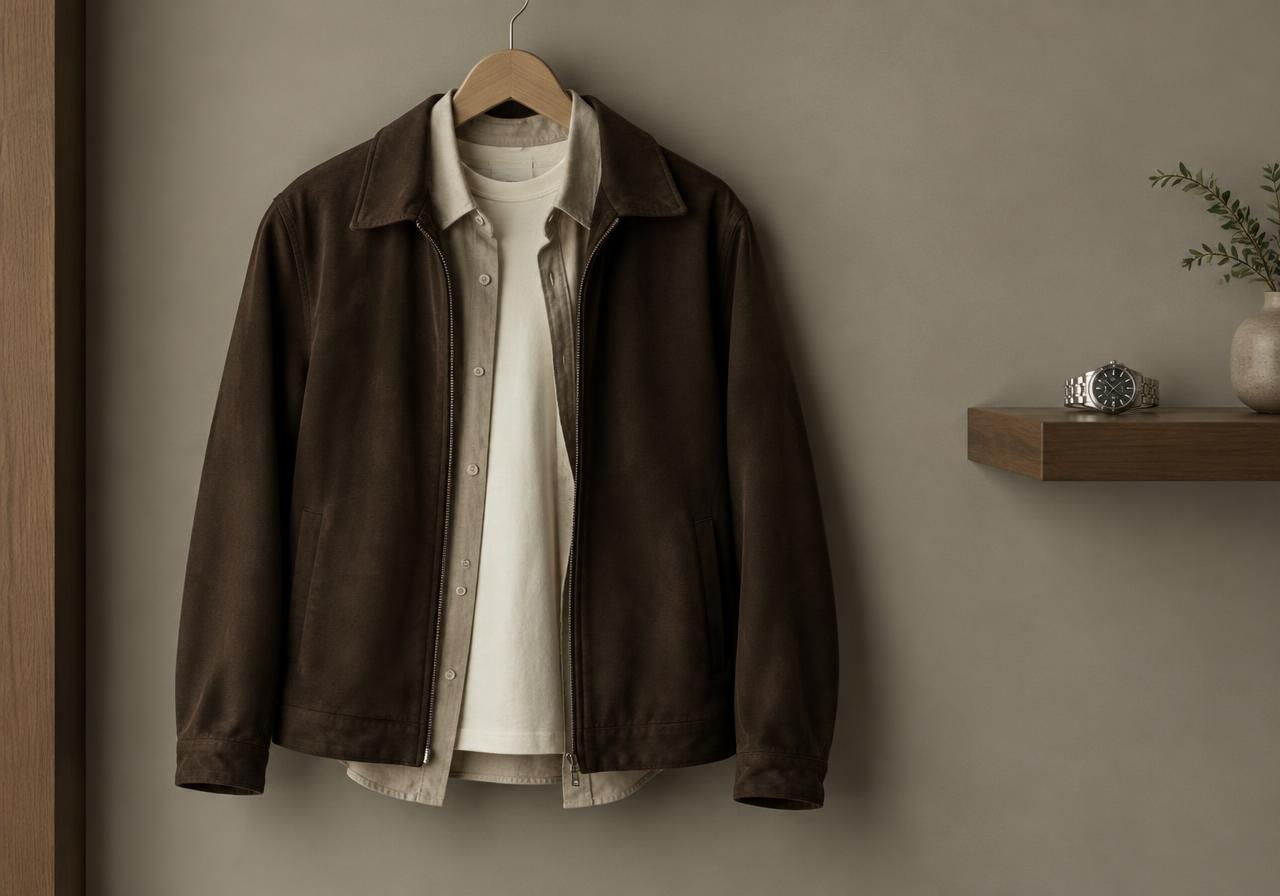
Cream T-shirt.
Stone shirt.
Brown outer layer.
The colours remain close enough to feel coherent.
The layers create enough separation to keep the outfit interesting.
This is one reason neutral wardrobes work so well in autumn.
Additional layers create variation naturally.
Accessories can add a small interruption
A restrained outfit gives accessories more presence.
A silver watch.
A leather bracelet.
A dark cap.
Sunglasses.
A small red detail.
Because everything else is quiet, even a subtle accessory becomes noticeable.
That means you usually need fewer of them.
One or two deliberate details are enough.
Avoid too many shades at once
Neutral colours combine easily.
But that does not mean every neutral needs to appear in the same outfit.
Black.
Grey.
Cream.
Stone.
Brown.
Olive.
Navy.
All together can become just as busy as a colourful outfit.
Limit the palette.
Two or three main tones are often enough.
That gives the outfit direction.
Restraint works best when it is actually restrained.
Neutrals are useful because they repeat well
One of the strongest advantages of neutral clothing is that repetition becomes easier.
The same black trousers can appear several times a week without feeling obvious.
A stone overshirt can work over white, grey and black.
A navy jacket can sit over almost everything.
That makes a smaller wardrobe feel larger.
Not because you own more.
Because the pieces cooperate.
A simple neutral outfit formula
If you are unsure where to begin:
Choose one dark tone.
Add one lighter neutral.
Introduce one texture.
That could be:
Black trousers.
White T-shirt.
Grey wool overshirt.
Or:
Stone trousers.
Cream knit.
Brown suede shoes.
Or:
Navy trousers.
Grey T-shirt.
Olive jacket.
Simple.
Balanced.
Enough variation without unnecessary noise.
Quiet does not have to mean dull
Neutral clothing works because it gives attention to everything else.
Fit.
Fabric.
Shape.
Movement.
Texture.
Detail.
When the colours stop competing, those things become easier to see.
That is why a neutral wardrobe can feel more considered rather than less expressive.
The interest is simply quieter.
And sometimes quieter is more memorable.
Less colour. More depth.
More experience. Less excess.
You might also like
Style — October 2026
How to Build a Monochrome Wardrobe Without Looking Repetitive
Style — October 2026