
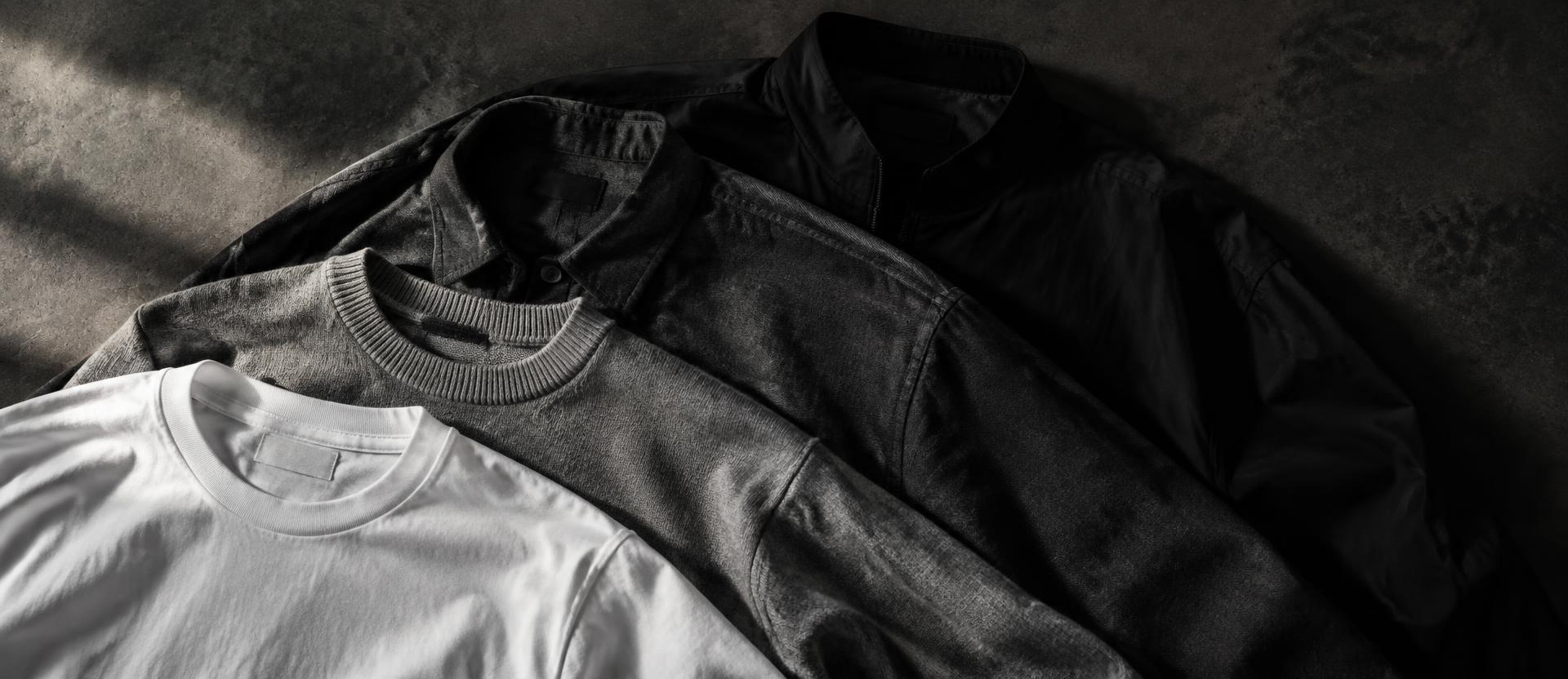
Layering sounds simple.
Put one thing over another.
Then add something else if it is cold.
The problem is that every extra layer adds fabric, weight and volume.
Done badly, an outfit can start to feel heavy very quickly.
Done well, layering creates depth without making you look bigger than you are.
The difference usually comes down to proportion.
Fabric weight.
Fit.
And knowing when to stop.
Start with the thinnest layer
A layered outfit works best when the lightest piece sits closest to the body.
Usually that means a T-shirt.
Light cotton.
Clean fit.
Nothing overly heavy.
The base layer should sit comfortably beneath everything else without creating bunching around the chest, shoulders or sleeves.
A thick T-shirt under a thick shirt under a heavy jacket may technically work.
But it creates unnecessary volume.
Start light.
Build gradually.
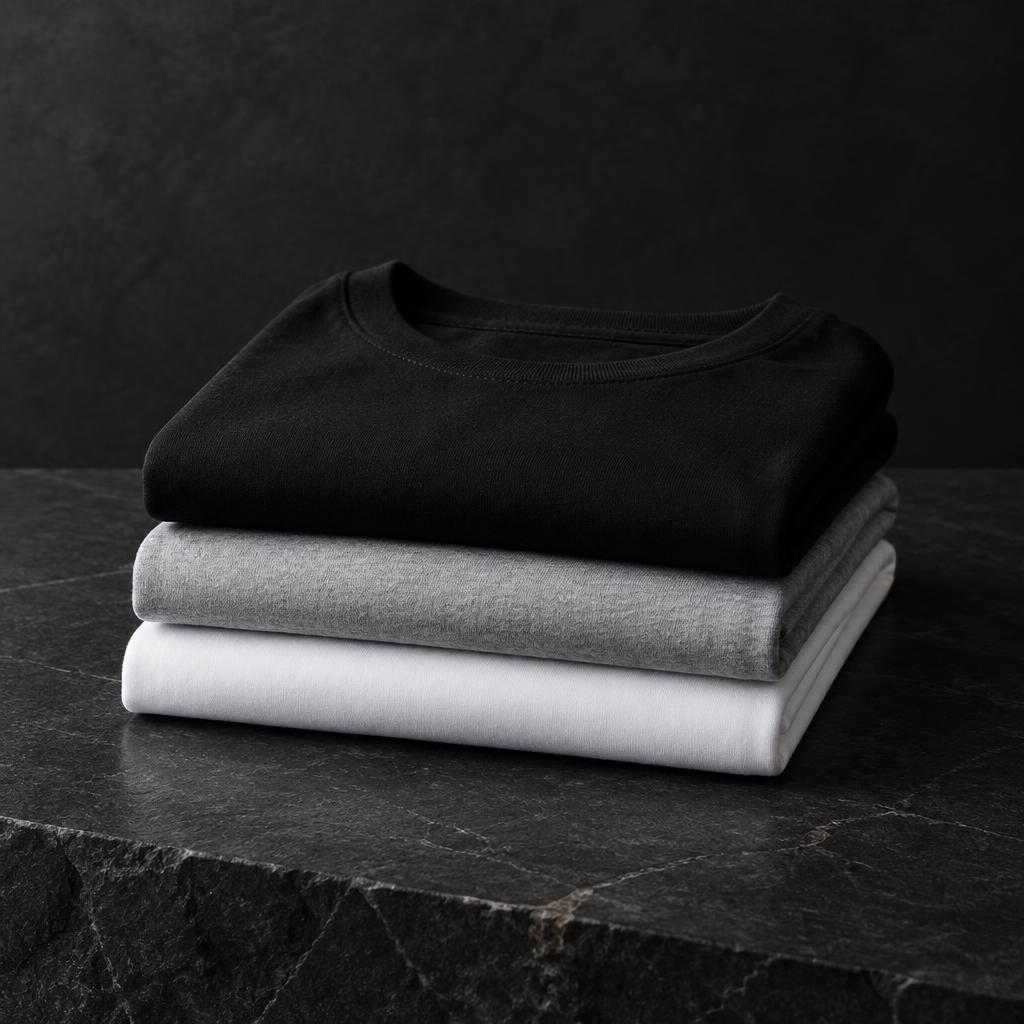
Every layer should have more room than the one beneath it
This is one of the simplest rules of layering.
The T-shirt sits closest.
The shirt or knit should have slightly more space.
The overshirt or jacket should have more again.
If the outer layer is tighter than what sits underneath it, fabric begins to gather.
Sleeves bunch.
Shoulders pull.
The front of the jacket sits awkwardly.
Layering should allow each garment to fall naturally.
Not compress everything underneath it.
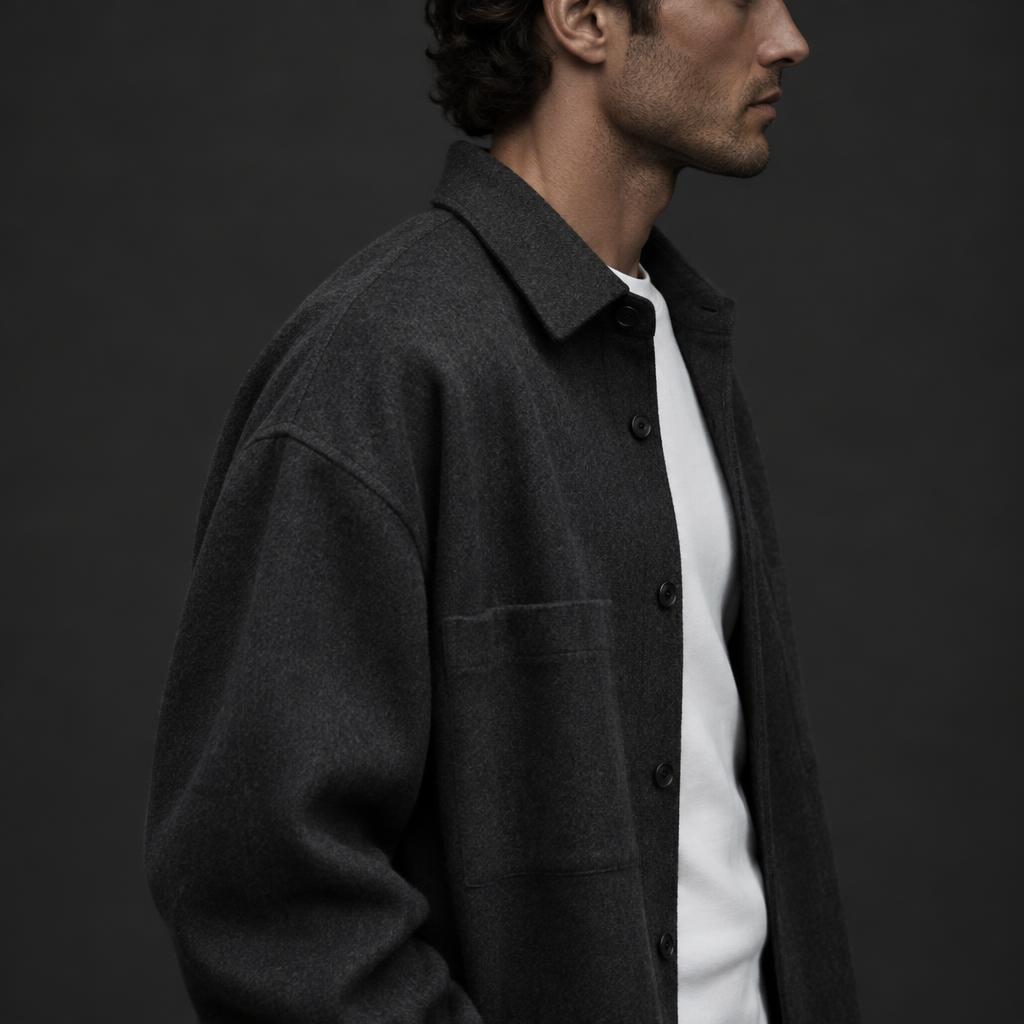
Use different fabric weights
Three heavy layers will usually feel heavy.
Three lightweight layers can feel completely different.
A useful autumn combination might be:
Light cotton T-shirt.
Midweight overshirt.
Lightweight jacket.
Each layer serves a purpose without adding unnecessary bulk.
As temperatures fall, one layer can become slightly heavier.
But they do not all need to.
The goal is warmth through combination.
Not simply weight.
Avoid too many thick pieces
Chunky knitwear has its place.
So do padded jackets.
Heavy overshirts.
Thick wool coats.
The problem comes when several of them are worn together.
If one layer is substantial, let the others stay quieter.
A heavier knit works better beneath a clean coat than underneath another bulky jacket.
A padded outer layer usually needs lighter clothing underneath.
Let one piece provide the volume.
Everything else can support it.
Pay attention to the shoulders
Shoulders reveal bad layering quickly.
If several seams are sitting in different places, the upper body can begin to look wider than intended.
A well-fitted base layer helps.
So does choosing outerwear with enough room through the shoulder and upper back.
You should be able to move naturally.
Cross your arms.
Reach forward.
Raise them.
If the outfit becomes restrictive, something underneath is probably too thick or the outer layer is too small.
A jacket that only fits over a T-shirt is not really designed for layering.
Keep the middle layer simple
The middle layer often does most of the work.
An overshirt.
Light knit.
Cardigan.
Simple shirt.
It adds texture and warmth while creating separation between the base and outer layers.
This is also where outfits can become overcomplicated.
Large pockets.
Thick collars.
Heavy buttons.
Strong patterns.
Bulky fabrics.
Add several of those at once and the middle layer begins competing with everything around it.
For a cleaner silhouette, keep it restrained.
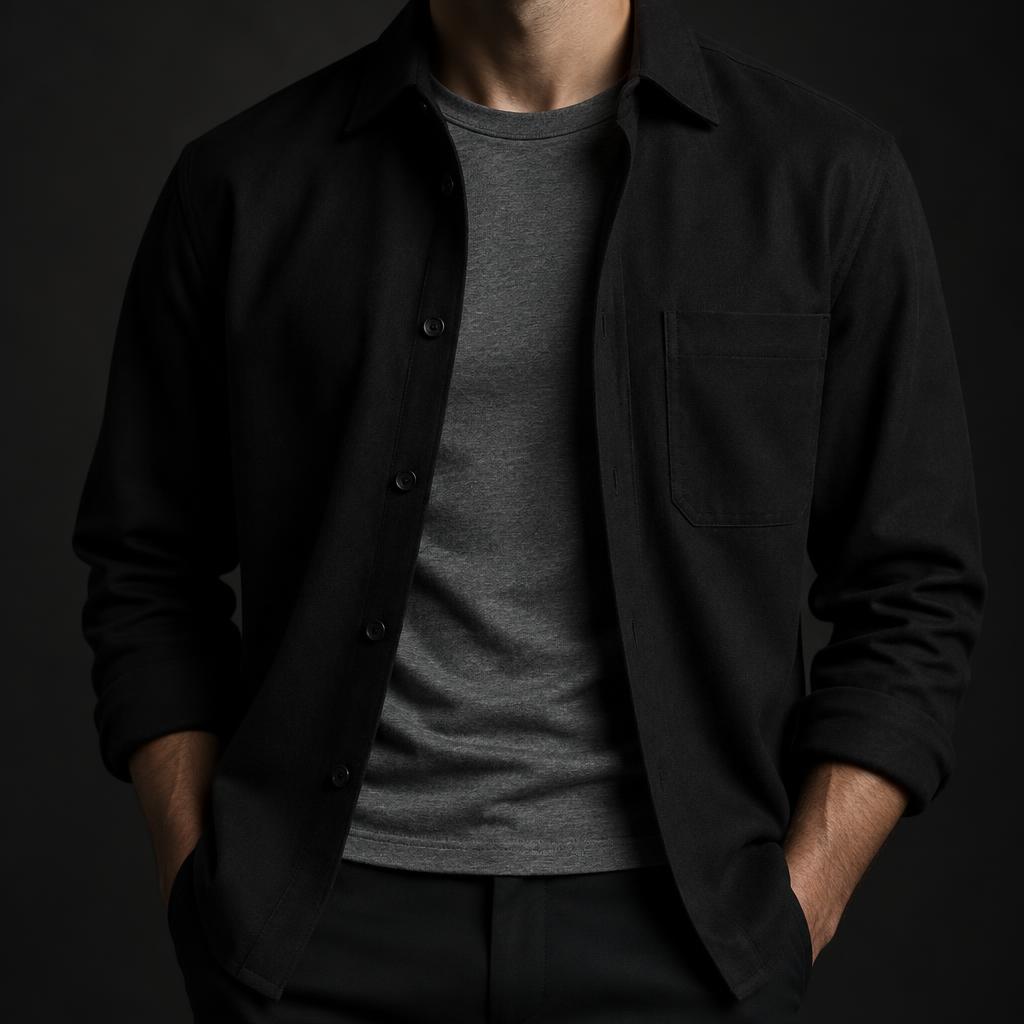
Leave some layers open
Layering becomes visually heavier when every piece is completely closed.
An open overshirt creates vertical lines through the body.
So does an unfastened jacket.
Those lines break up the outfit and make the silhouette feel longer and cleaner.
They also reveal some of the layer underneath.
That gives the outfit depth without requiring more colour or decoration.
You do not always need another garment.
Sometimes you simply need to show more of the ones already there.
Use colour to reduce visual weight
Dark colours naturally make layering easier.
Black.
Charcoal.
Navy.
Deep olive.
Dark brown.
They tend to blend into one another rather than creating strong visual breaks.
That can make several layers feel like one coherent outfit.
But dressing head-to-toe in dark colours is not the only option.
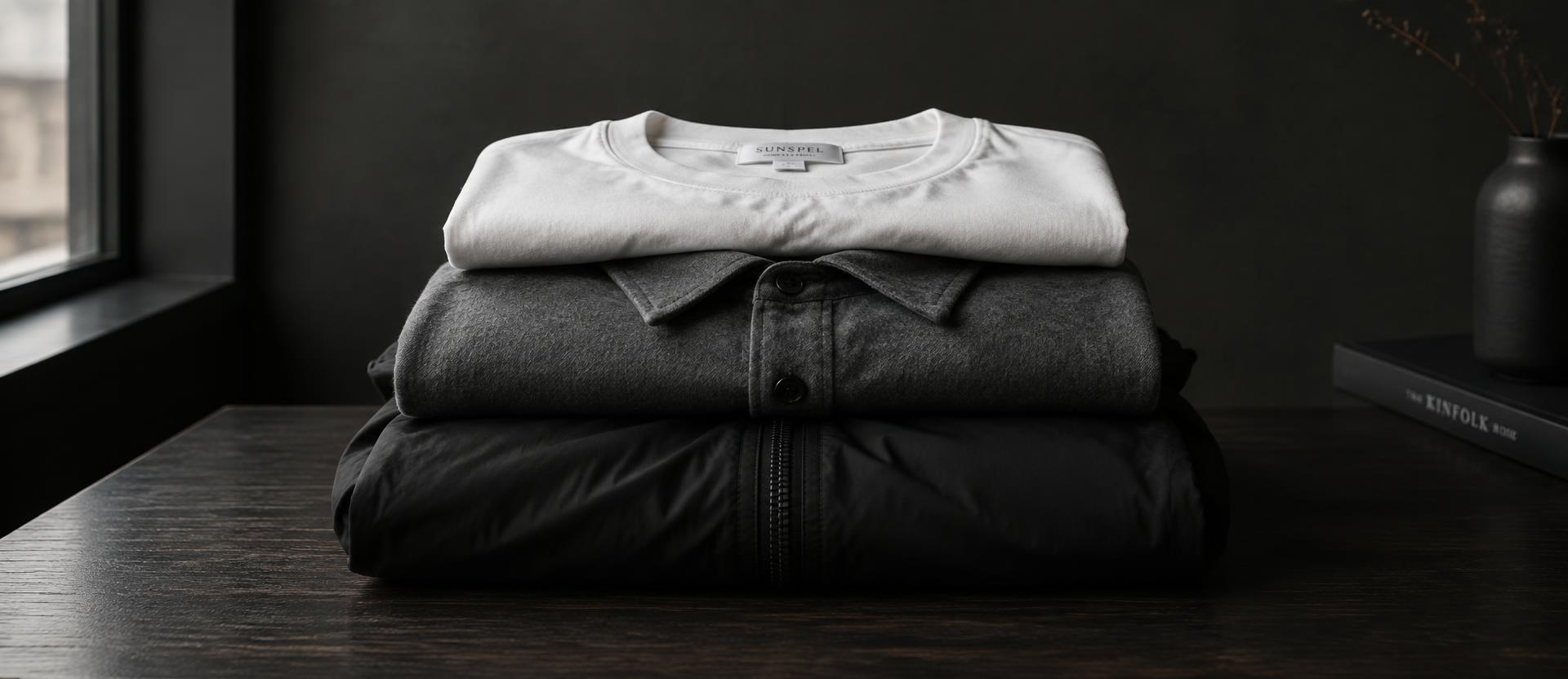
A lighter base beneath darker outer layers can create contrast without adding complexity.
White T-shirt.
Grey overshirt.
Black jacket.
Simple.
Each layer is visible.
None dominates.
Avoid too many colour changes
Layering already introduces visual information.
You do not need every layer to add a new colour.
A T-shirt in one shade.
A shirt in another.
A knit in another.
A jacket in another.
Different trousers.
Different shoes.
Very quickly, the outfit becomes fragmented.
Keeping the palette narrow makes the layers feel intentional.
Two or three main colours are often enough.
Texture can provide the rest of the interest.
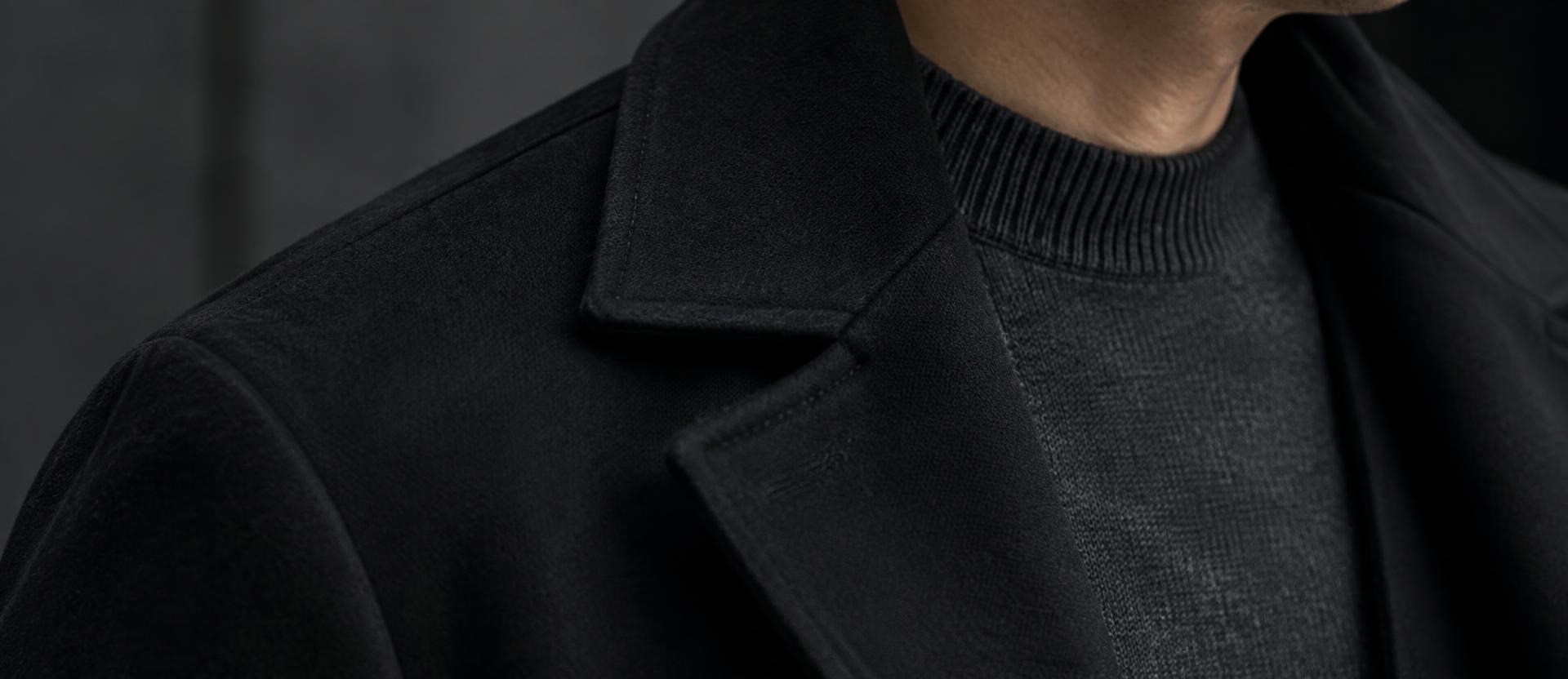
Texture is more useful than volume
Autumn clothing does not need to become bulky to feel seasonal.
Texture can do that work instead.
Brushed cotton.
Fine wool.
Corduroy.
Suede.
Canvas.
Soft flannel.
A textured layer adds depth without necessarily adding much thickness.
That is especially useful in a minimalist wardrobe.
You can keep the colours restrained while allowing the materials to create contrast.
Watch the length of each layer
Length changes the whole silhouette.
If every layer finishes at exactly the same point, the outfit can look dense.
Small differences make it feel more natural.
A T-shirt may sit slightly below an overshirt.
A jacket may finish just below the shirt.
A longer coat can sit over everything.
The differences do not need to be dramatic.
In fact, they usually look better when they are subtle.
The goal is balance.
Not creating obvious tiers.
Be careful with oversized clothing
Oversized pieces can work well in layered outfits.
But only if the proportions are deliberate.
An oversized jacket over a regular T-shirt can look clean.
An oversized T-shirt beneath an oversized shirt beneath an oversized coat can quickly create too much fabric.
Volume needs contrast.
If one part of the outfit is relaxed, another can be more controlled.
That balance stops the silhouette becoming shapeless.
Oversized should look intentional.
Not accidental.
Trousers matter too
Layering does not stop at the waist.
A bulky upper half with very narrow trousers can make the proportions feel unbalanced.
Similarly, very wide trousers combined with several loose layers above can make the entire outfit feel oversized.
A straight or gently relaxed trouser often provides the easiest balance.
Enough room to match the upper body.
Not so much that the outfit loses shape.
Think about the silhouette as one complete line.
Not separate pieces.
A simple three-layer formula
If you are unsure where to begin, start with this:
T-shirt
Overshirt
Lightweight jacket
That combination works because each layer has a clear role.
The T-shirt creates the base.
The overshirt adds texture and warmth.
The jacket provides structure and protection from the weather.
If the temperature rises, remove the jacket.
If it rises again, remove the overshirt.
The outfit still works at every stage.
That is what good layering should do.
Another easy option
For colder weather:
T-shirt
Fine knit
Coat
Again, the principle stays the same.
Thin.
Slightly heavier.
Protective outer layer.
You do not need five pieces to stay warm or make an outfit interesting.
Three considered layers will usually look better than five unnecessary ones.
Do not layer for the sake of layering
Autumn fashion often makes layering look like an objective in itself.
It is not.
If two pieces are enough, wear two.
If the weather only requires a shirt and jacket, stop there.
Every additional layer should solve something.
Warmth.
Weather.
Comfort.
Visual balance.
If it does none of those things, it probably does not need to be there.
The easiest way to avoid looking bulky
Keep the first layer light.
Give each outer layer enough room.
Use one substantial piece at most.
Control the colour palette.
Pay attention to shoulders and length.
Let texture create interest.
And stop before the outfit becomes crowded.
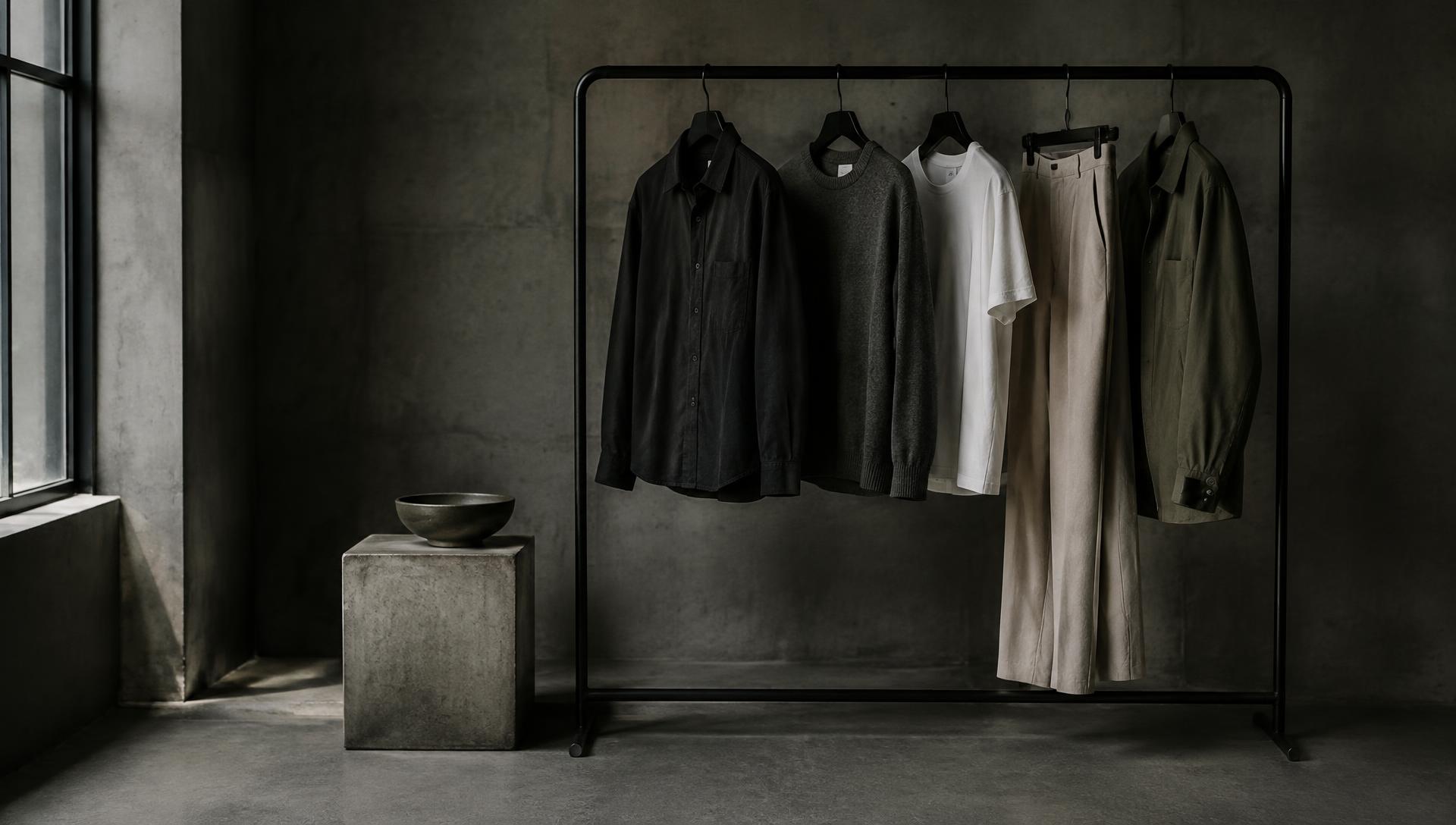
Layering works best when the pieces themselves are chosen carefully. A small group of versatile layers, like the ones in the men’s autumn capsule wardrobe, will always outperform a pile of single-purpose garments.
Layering is not about wearing more clothes.
It is about making several pieces behave like one outfit.
That should feel considered.
Not complicated.
Layer with purpose. Remove what does not help.
More experience. Less excess.
You might also like
Guide — October 2026
The Men’s Autumn Capsule Wardrobe: What You Actually Need
Guide — September 2026