
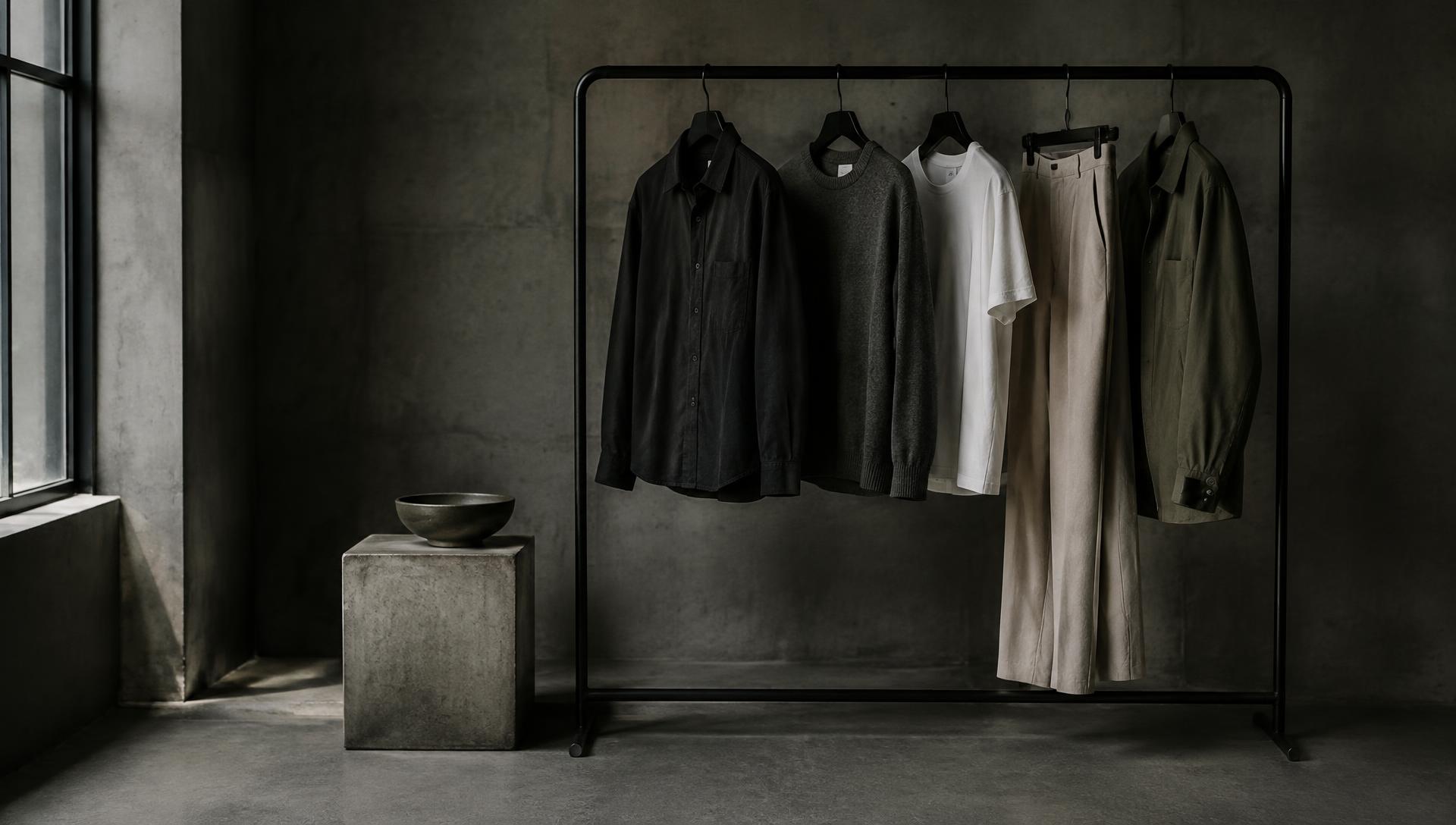
Autumn is where wardrobes start becoming complicated again.
Summer is easy.
A T-shirt.
Shorts.
A shirt.
One pair of shoes.
Then the temperature drops and everything starts multiplying.
Jackets.
Knitwear.
Overshirts.
Heavier trousers.
Different shoes.
More layers.
More decisions.
A good autumn wardrobe does not need to become much bigger.
It just needs to become more adaptable.
What is an autumn capsule wardrobe?
A capsule wardrobe is simply a small group of clothes that work well together.
Nothing revolutionary.
The value comes from compatibility.
Your trousers work with your shirts.
Your outerwear works with almost everything underneath it.
Your shoes do not require a completely different wardrobe around them.
You can get dressed without planning the entire outfit in advance.
Autumn is particularly suited to this approach because layering creates variety without requiring dozens of individual pieces.
Start with a restrained colour palette
The easiest way to make fewer clothes work harder is to keep the palette controlled.
Black.
White.
Grey.
Navy.
Stone.
Olive.
Brown.
Muted natural tones.
You do not need all of them.
Choose a few that already feel like you.
The important thing is that they work together.
When most pieces can be combined without much thought, the wardrobe becomes easier to use.
That matters more than having endless choice.
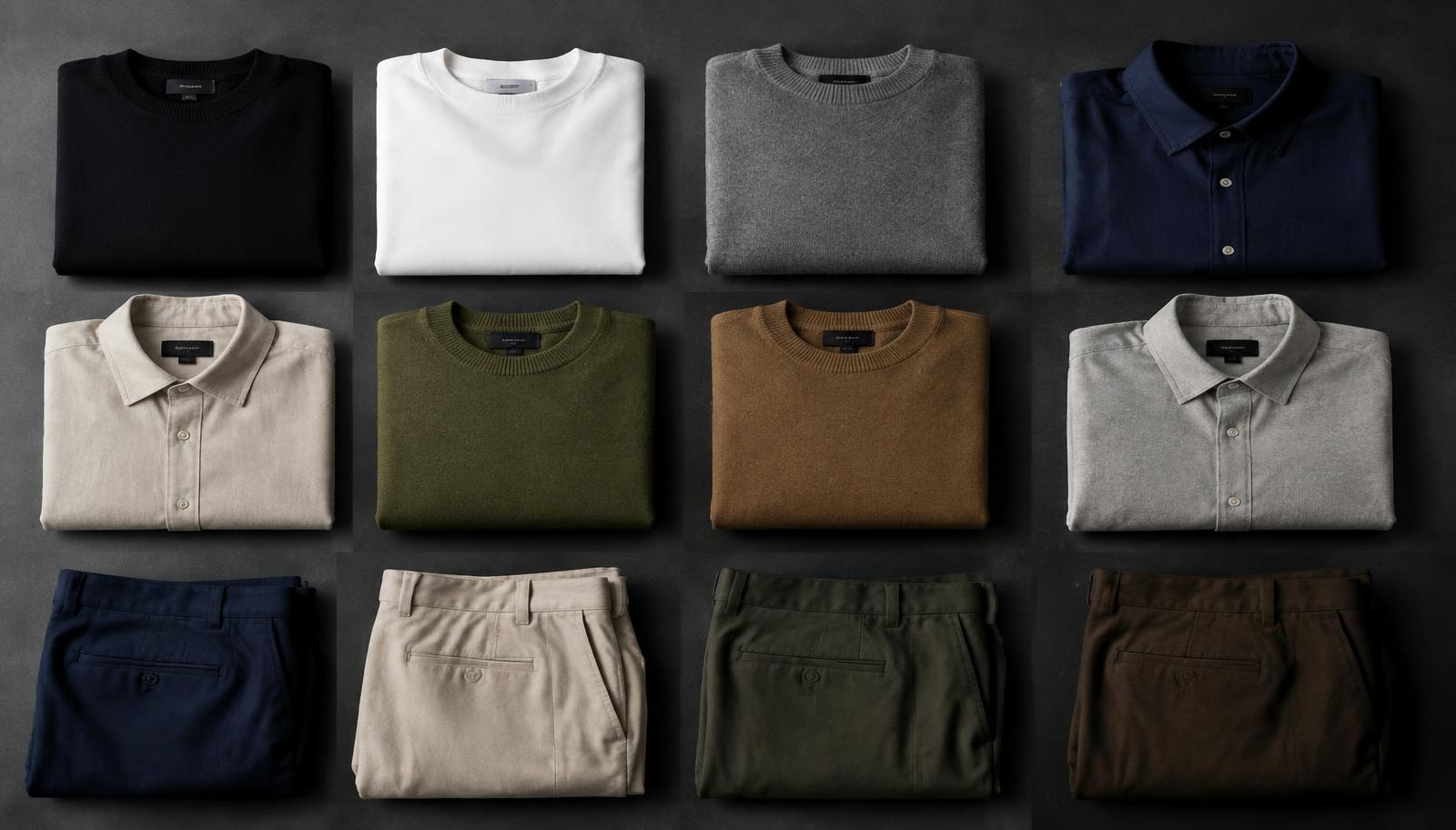
Three or four T-shirts
T-shirts do not disappear when summer ends.
They become foundations.
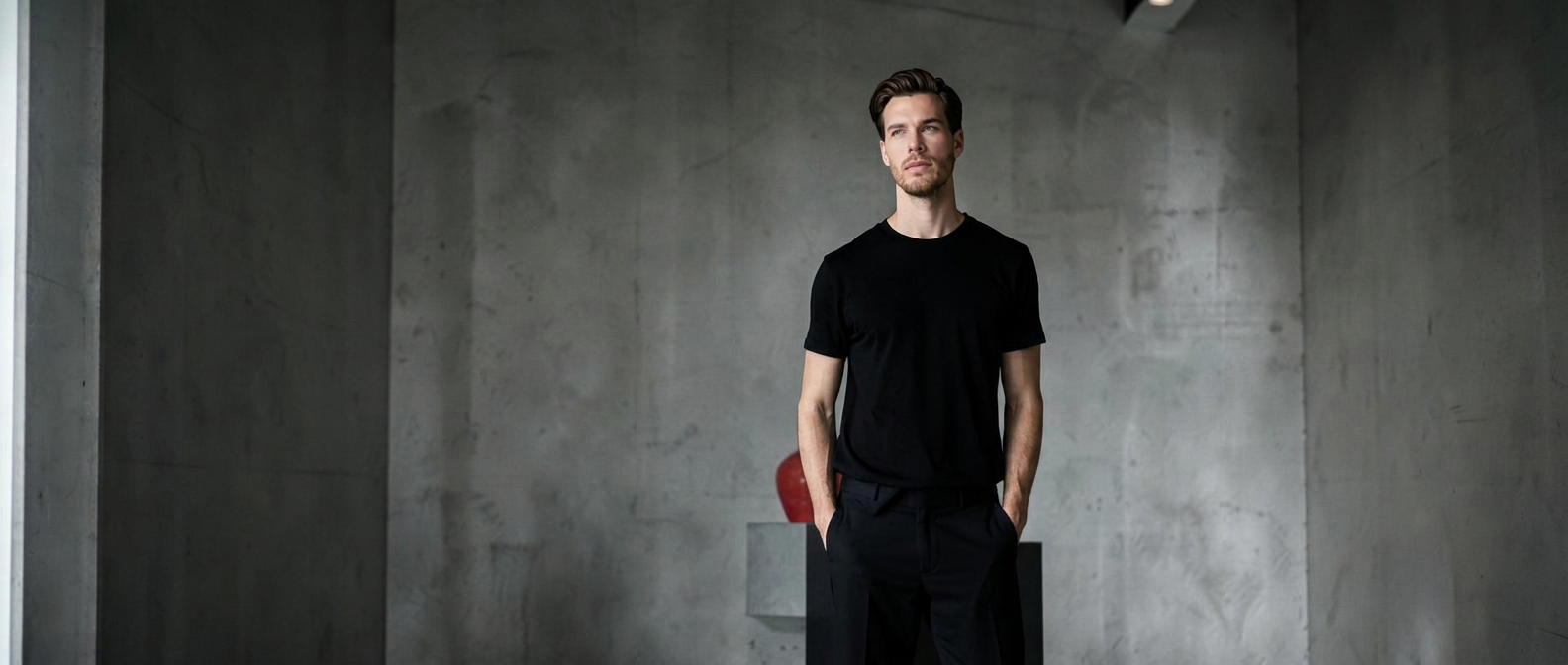
A good autumn T-shirt works on its own during warmer afternoons and underneath shirts, overshirts and jackets when the temperature drops.
White and black are obvious choices.
Grey or another muted tone adds variation without making combinations difficult.
Fit matters.
So does fabric weight.
Autumn allows slightly more substantial cotton than summer, but it still needs to sit cleanly beneath another layer.
The T-shirt should support the outfit.
Not fight with it.
Two shirts
A good shirt can move through autumn easily.
One lighter option.
One darker.
That may be enough.
Oxford cotton, brushed cotton and heavier linen blends can all work depending on the climate.
The useful shirt is one that can be worn in several ways.
Buttoned.
Open over a T-shirt.
Under an overshirt.
Under a jacket.
Sleeves rolled when the day is warmer.
The more ways a garment can be worn, the more valuable it becomes.
One overshirt
Few pieces earn their place in an autumn wardrobe as easily as an overshirt.
It sits somewhere between a shirt and a jacket.
That makes it useful when the weather cannot decide what it is doing.
Wear it over a T-shirt in the afternoon.
Add another layer underneath when the temperature drops.
Choose something relatively simple.
Minimal pockets.
Clean shape.
Enough room for layering without becoming oversized.
Black, navy, olive or stone are easy choices.
An overshirt should become the thing you reach for without thinking.
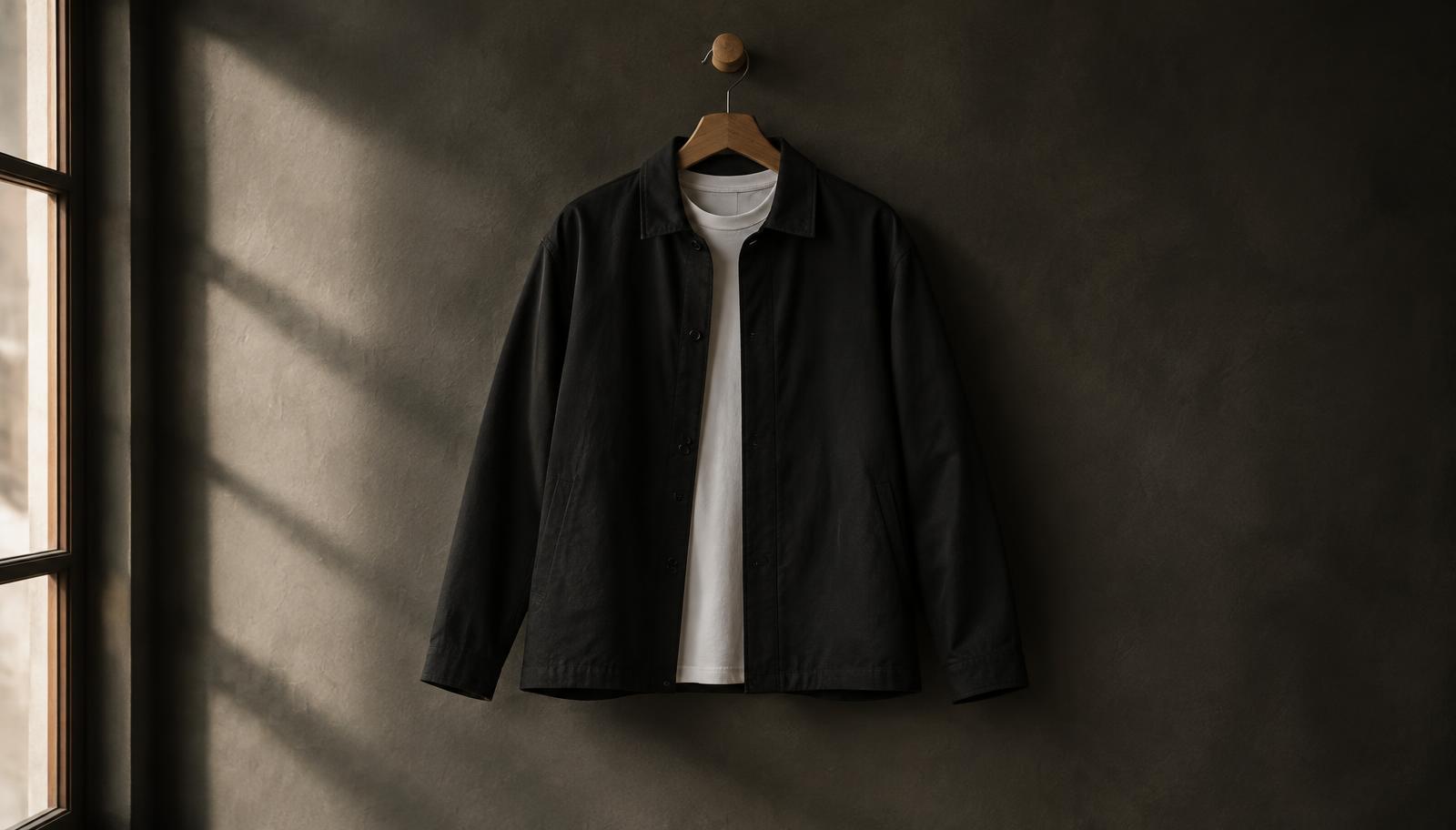
One lightweight jacket
You probably do not need several autumn jackets.
One good option can cover most situations.
A simple bomber.
Minimal field jacket.
Unstructured jacket.
Lightweight technical shell.
The exact style matters less than versatility.
It should work with trousers.
Denim.
A shirt.
A T-shirt.
And ideally both casual and slightly smarter settings.
Avoid buying outerwear that only works with one specific look.
Autumn jackets take up too much space to have only one purpose.
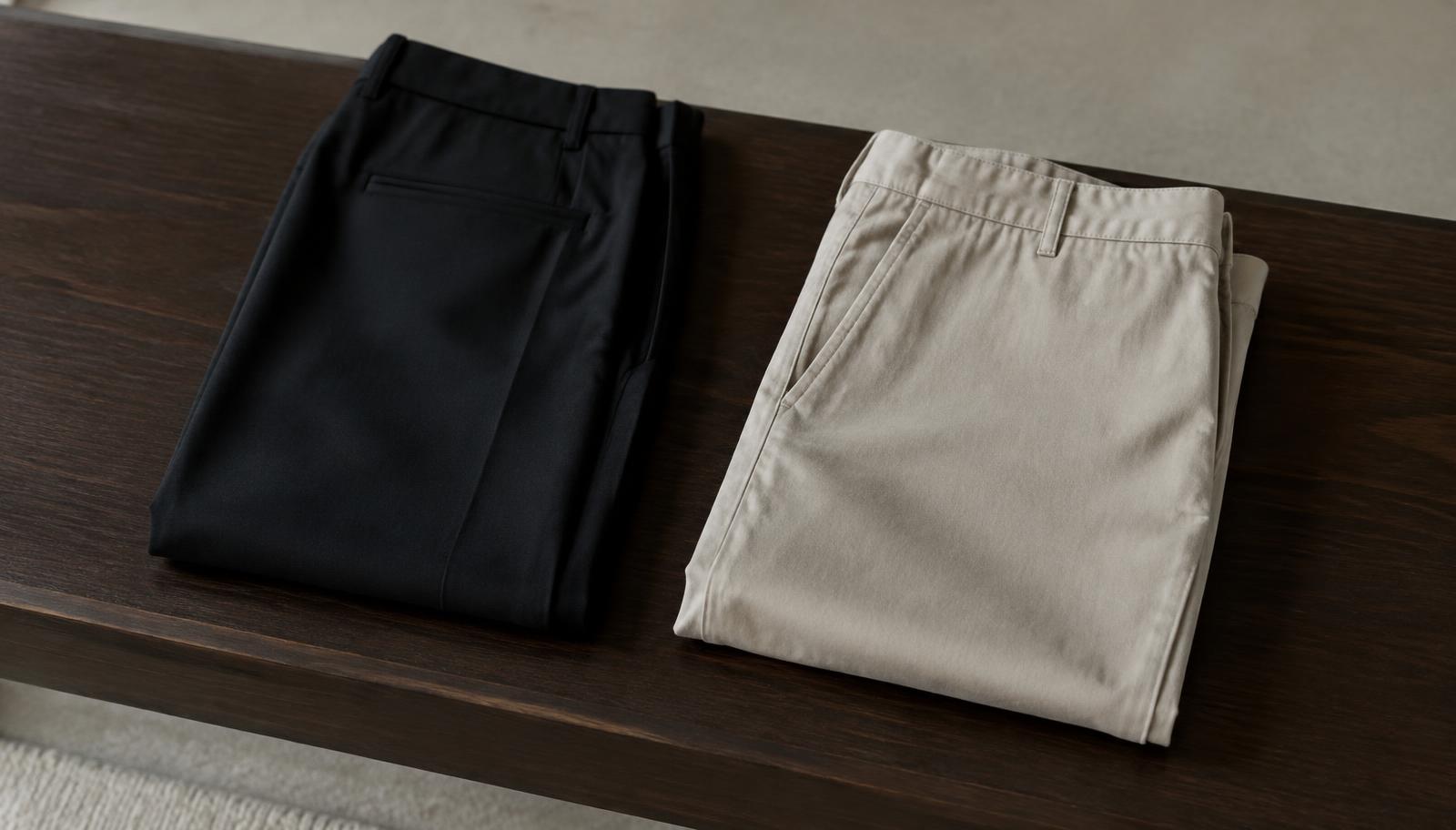
Two pairs of trousers
This is where a small wardrobe can still provide enough variation.
One darker pair.
One lighter or more relaxed pair.
That might mean:
Black trousers and stone chinos.
Navy trousers and grey denim.
Olive trousers and dark denim.
The combinations are less important than the balance.
One pair should feel slightly more structured.
The other can be more casual.
Together they should cover most everyday situations.
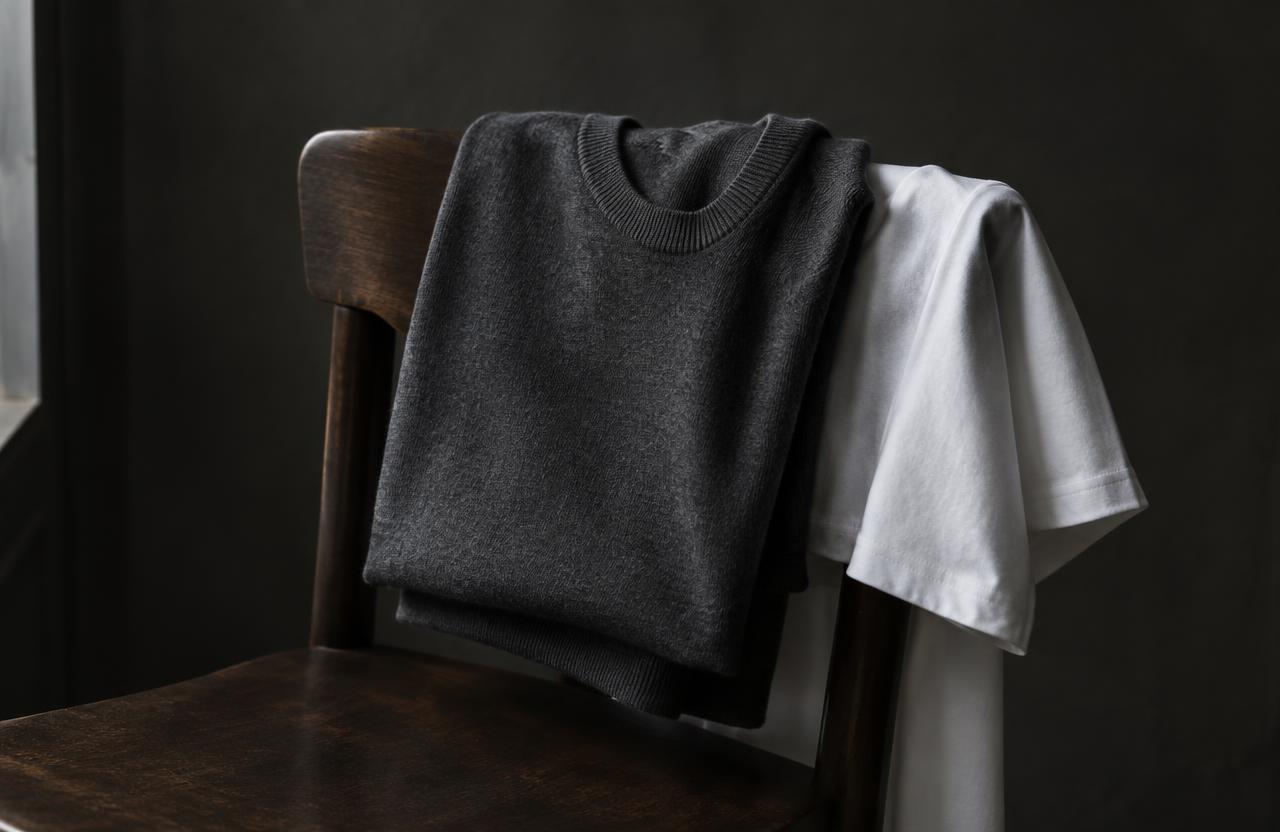
Add knitwear carefully
Autumn often becomes the excuse to buy too much knitwear.
You probably need less than you think.
One good knit can be enough.
A crew neck.
Fine wool.
Merino.
Cotton knit.
Something simple enough to wear over a T-shirt or shirt.
Choose a colour that works with everything else in the wardrobe.
Knitwear should add warmth and texture.
Not create another category of clothing that requires its own combinations.
Keep footwear simple
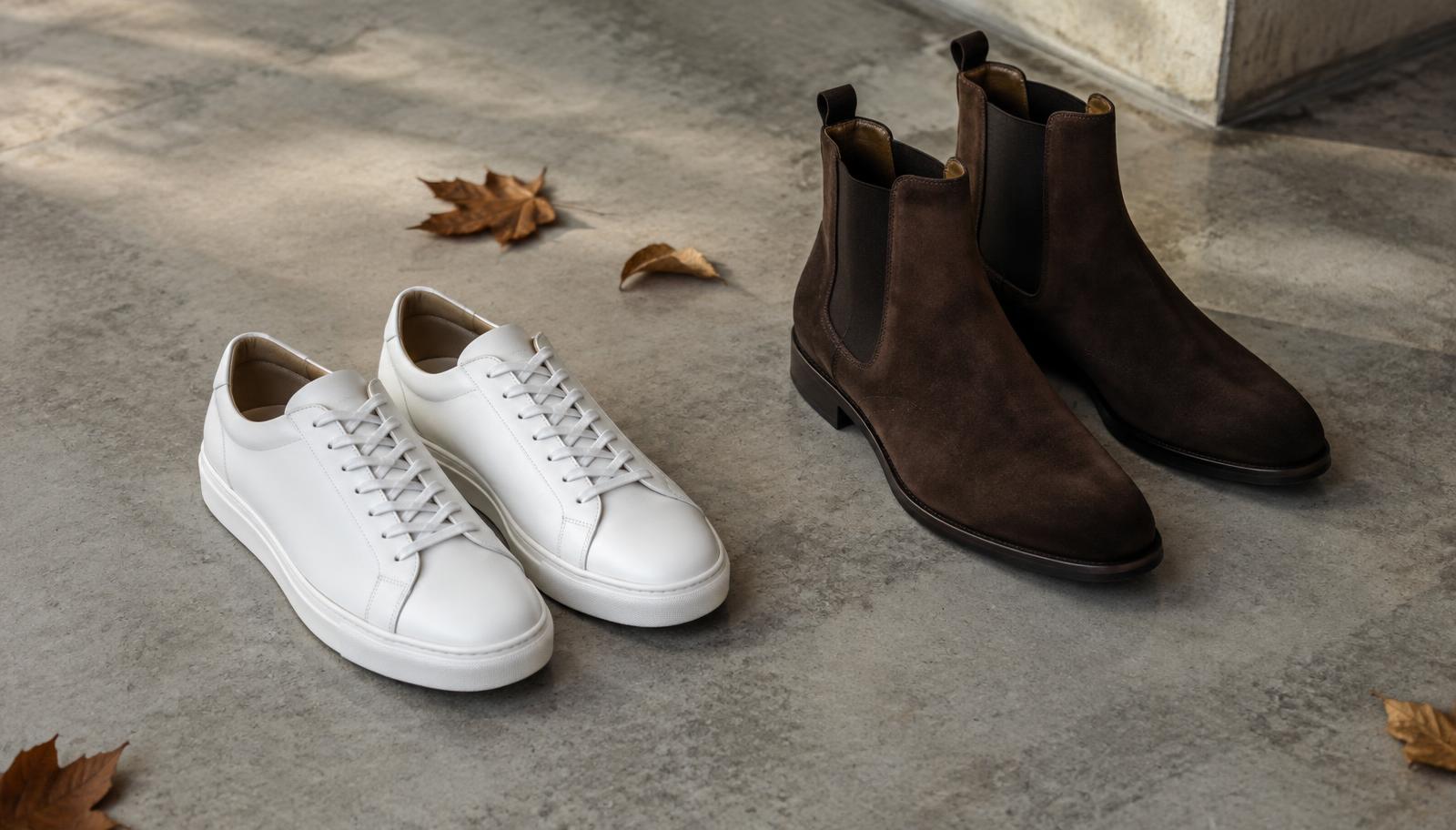
Two pairs are usually enough for most men.
One everyday option.
One slightly smarter or heavier option.
That could mean minimal trainers and leather boots.
Or loafers and a clean casual shoe.
Or a simple sneaker and suede boot.
The point is not to own the correct autumn shoes.
It is to own shoes that work with the rest of your clothes.
Avoid the pair that only looks right with one outfit.
Use texture instead of more colour
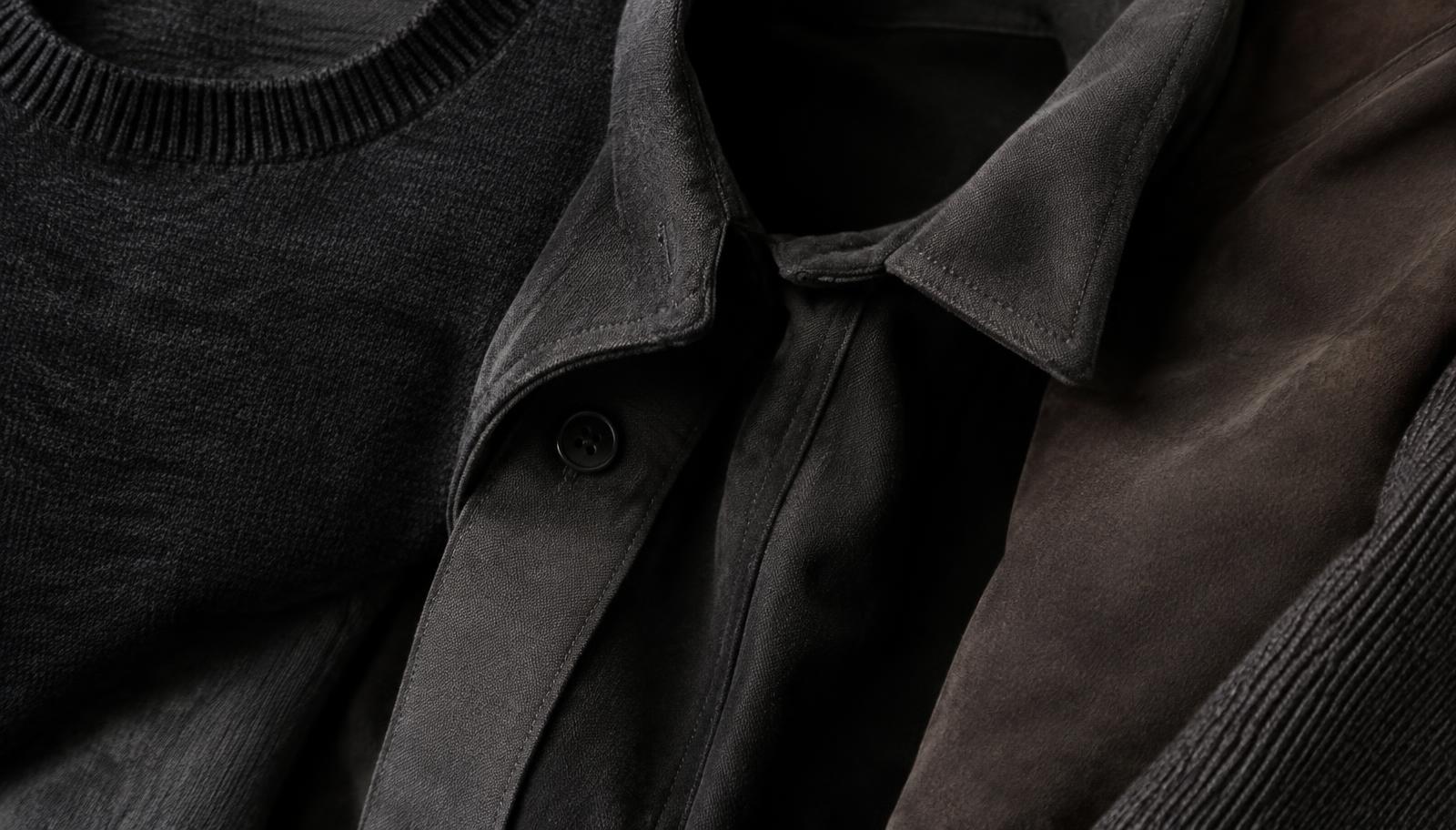
Autumn naturally introduces heavier materials.
That creates interest without needing louder clothing.
Wool.
Brushed cotton.
Suede.
Canvas.
Corduroy.
Heavier jersey.
You can wear black, grey and navy and still create depth simply by changing texture.
A smooth T-shirt beneath a brushed overshirt already gives the outfit contrast.
Minimal does not have to mean flat.
Layer without over-layering
Autumn is about layers.
That does not mean wearing all of them at once.
A good rule is to make every layer useful on its own.
T-shirt.
Shirt.
Overshirt.
Jacket.
If each piece works independently, you can add or remove them throughout the day.
That is much more practical than building an outfit that collapses when one layer comes off.
Layering should create flexibility.
Not complexity.
A simple autumn capsule wardrobe
For most men, something like this is enough to start:
4 T-shirts
2 shirts
1 overshirt
1 lightweight jacket
1 knit
2 pairs of trousers
2 pairs of shoes
Add underwear, socks and any personal accessories you wear regularly.
That small group can create far more outfits than it first appears.
Especially when everything works together.
Do not rebuild your wardrobe every season
A capsule wardrobe should evolve.
Not reset.
Most of your autumn wardrobe probably already exists.
The white T-shirt from summer still works.
The black shirt still works.
The trousers still work.
Autumn simply adds weight, texture and a few additional layers.
That is a better way to think about seasonal dressing.
Less replacing.
More adapting.
Buy the gap, not the trend
Before adding something new, ask what is actually missing.
Do you need another jacket?
Or do you simply keep seeing jackets advertised?
Do you need another pair of trousers?
Or would one useful overshirt solve more problems?
The best additions often fill an obvious gap.
They make the clothes you already own more useful.
That is more valuable than buying something simply because it belongs to the season.
Wear what works
The strongest autumn wardrobe is usually the one that becomes repetitive.
The same jacket.
The same trousers.
A familiar T-shirt.
A shirt added when needed.
That repetition is not boring.
It means the wardrobe is working.
Clothes should make your day easier.
Not give you another system to manage.
Autumn adds layers.
It does not need to add excess.
Fewer pieces. More combinations.
More experience. Less excess.
You might also like
Guide — September 2026
How to Build a Minimalist Capsule Wardrobe for Men
Guide — September 2026