
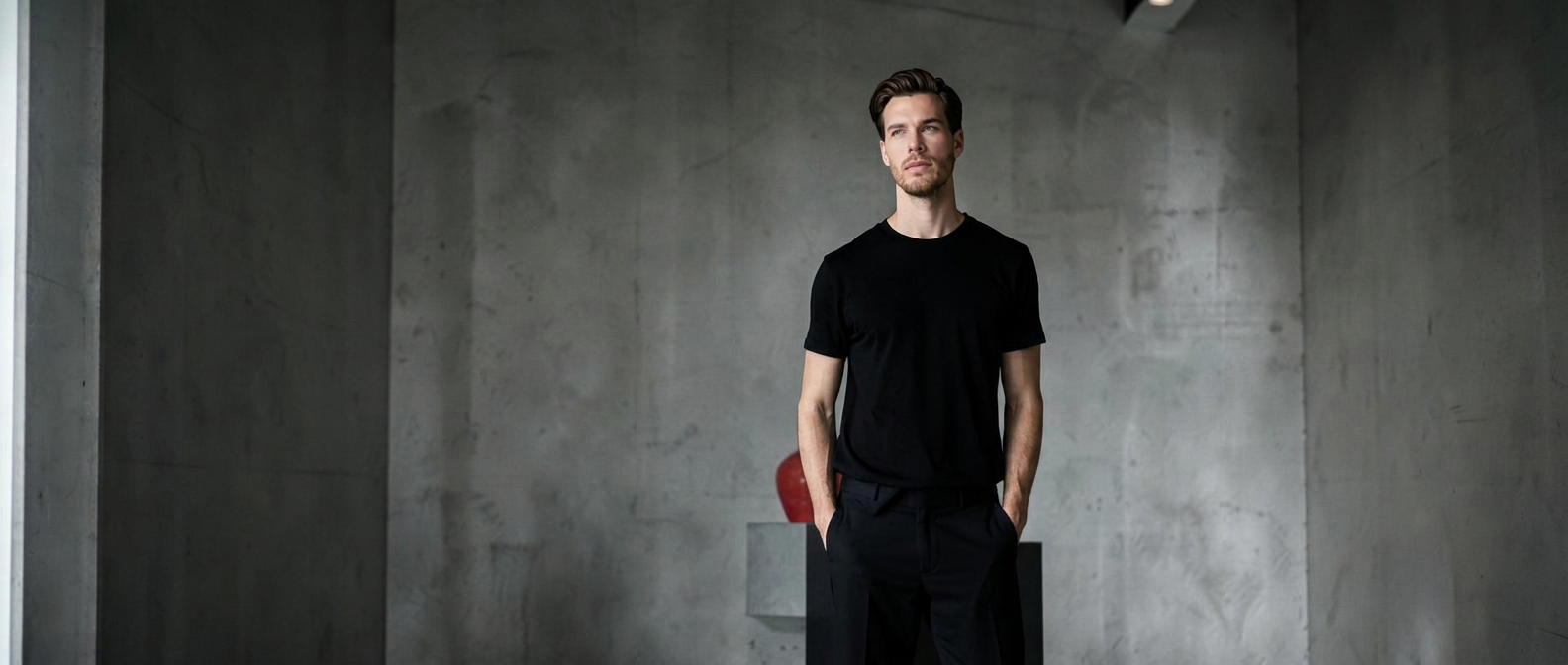
Minimalist style is often reduced to a look.
Black T-shirts.
White trainers.
Neutral colours.
Clean interiors.
Very little on display.
But dressing minimally is not really about making everything look the same.
It is about removing what does not help.
Fewer pieces that rarely get worn.
Fewer colours that only work once.
Fewer details added simply because there was space for them.
A good minimalist wardrobe should not feel empty.
It should feel resolved.
Minimalist style is not about owning almost nothing
There is no prize for having the smallest wardrobe.
Owning ten garments does not automatically mean you dress better than someone who owns thirty.
The useful question is not:
How little can I own?
It is:
How much of what I own do I actually value and wear?
Most wardrobes contain a familiar pattern.
A relatively small number of pieces are worn repeatedly.
The others remain there because they might be useful one day, once fitted differently, once matched with the right thing, or once the right occasion appears.
Minimalist style begins by paying attention to what you already choose naturally.
Those repeated choices tell you something.
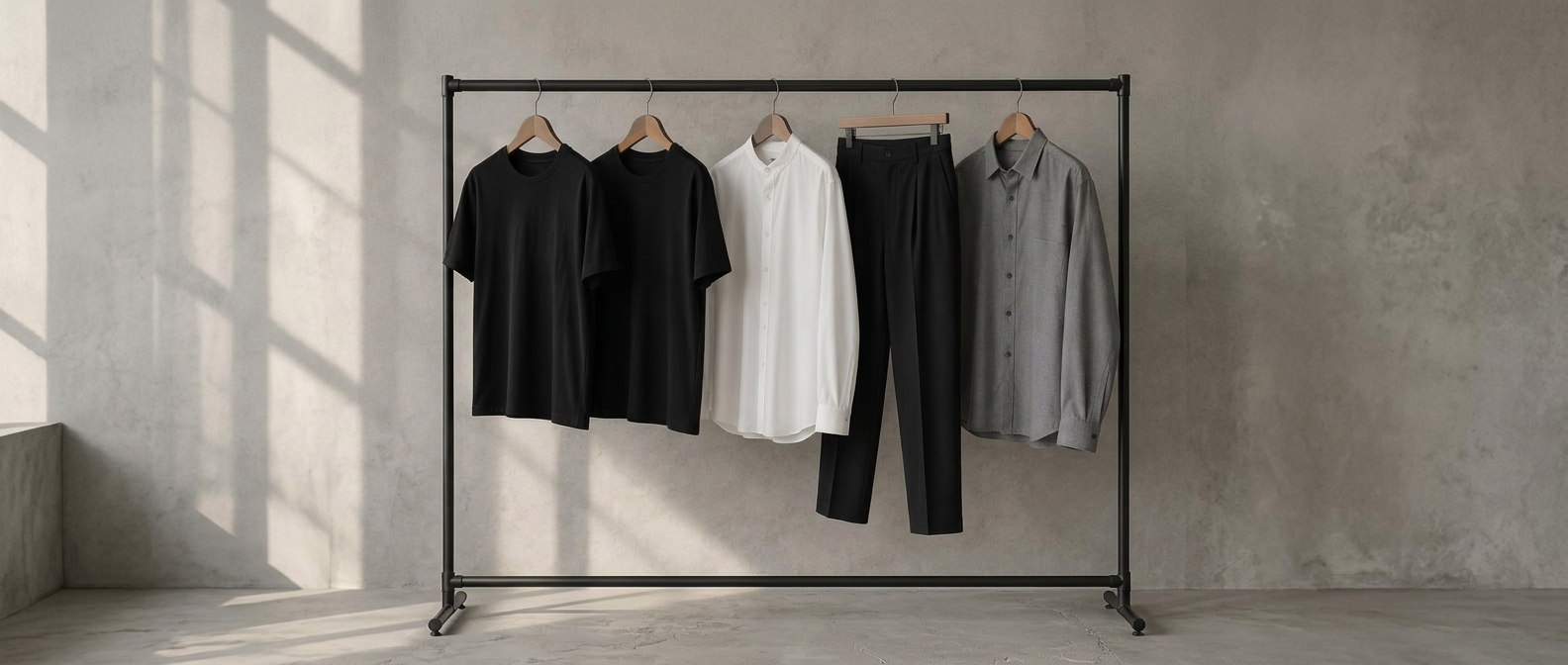
Know what you actually wear
Personal style often becomes clearer when you stop trying to invent it.
Look at what you reach for without thinking.
The same shirt.
The same trousers.
A particular T-shirt.
One pair of shoes.
The same jacket whenever the weather changes.
Those pieces are already doing the work.
Rather than constantly searching for something different, there is value in understanding why those clothes work.
Perhaps the fit is right.
Perhaps the colour works with everything.
Perhaps the fabric feels good.
Perhaps you simply feel like yourself when wearing it.
That information is more valuable than almost any trend report.
Build around repetition
Repeating an outfit is not a failure of imagination.
It can be the opposite.
Many of the most recognisable personal styles are built through repetition.
Certain colours.
Certain silhouettes.
Certain types of shoe.
A preference for shirts over knitwear.
Or T-shirts over shirts.
Style becomes more convincing when it feels consistent.
You do not need to look different every day.
You need to look comfortable in what you have chosen.
Reduce the number of difficult pieces
Some clothes demand too much.
A shirt that only works with one pair of trousers.
Shoes that require a completely different colour palette.
A jacket that looks good but never feels right for the places you actually go.
Individually, none of these pieces may be bad.
The problem is that they create friction.
A useful wardrobe should make combinations easier.
Before buying something, ask:
What will I wear this with?
Not in theory.
With what you already own.
If the answer comes easily, the piece probably belongs.
If you need to buy three other things to make it work, perhaps it does not.
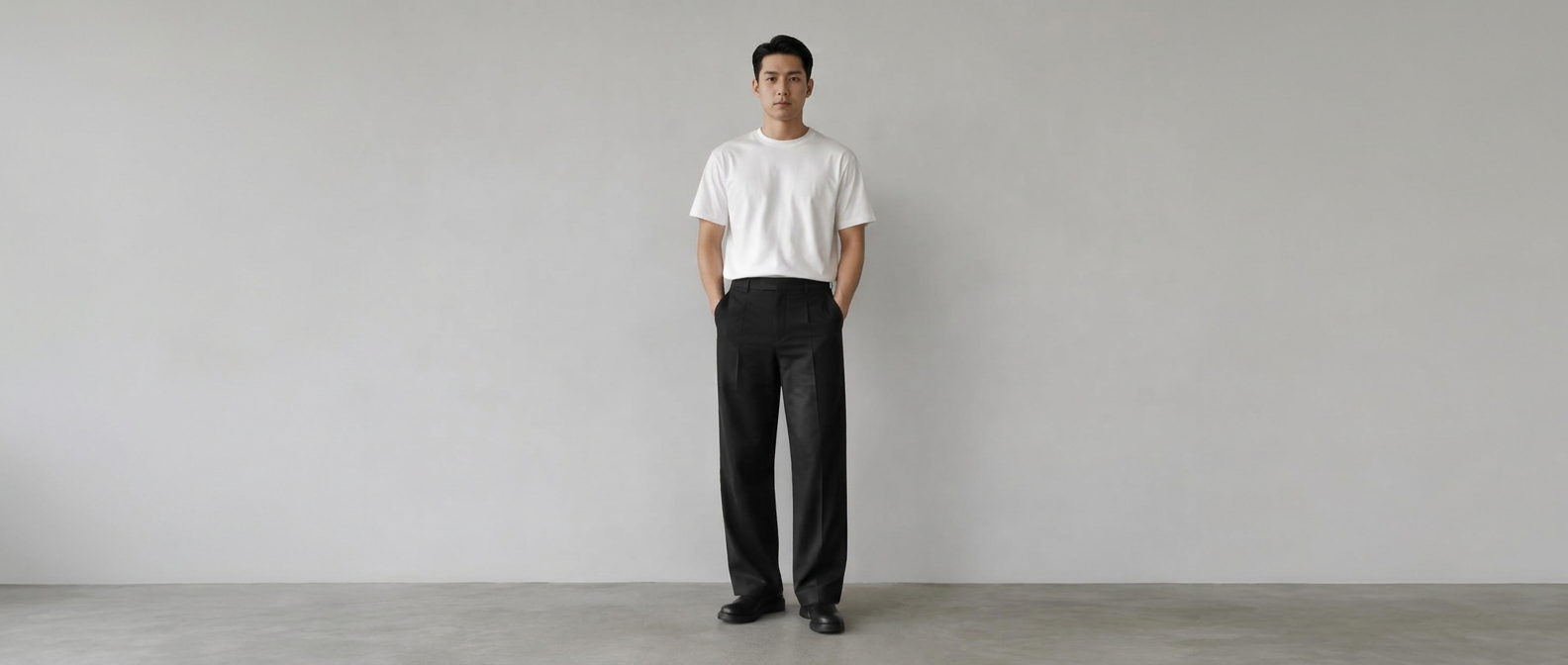
Start with proportion
Minimal clothing makes fit more visible.
When there are no loud graphics or complicated layers to distract the eye, proportion carries more weight.
Where does the T-shirt finish?
How wide are the trousers?
Where does the shoulder sit?
How much fabric is moving around the body?
These decisions matter more than whether an item looks obviously expensive.
A simple garment with the right proportions usually looks better than a complicated garment with the wrong ones.
That is one reason minimal style is deceptively difficult.
There is less to hide behind.
Use colour with intention
Minimalist menswear is often associated with neutrals.
There is a practical reason for that.
Black, white, grey, navy, stone, sand and muted natural colours tend to work easily together.
A smaller palette creates more combinations with fewer pieces.
But minimalism does not require removing colour.
A deep red.
Muted green.
Soft blue.
Even a brighter colour can work if it has a clear role.
The difference is restraint.
Colour becomes more noticeable when it is not competing with five other things.
Sometimes one small interruption is more effective than an entire outfit built around attention.
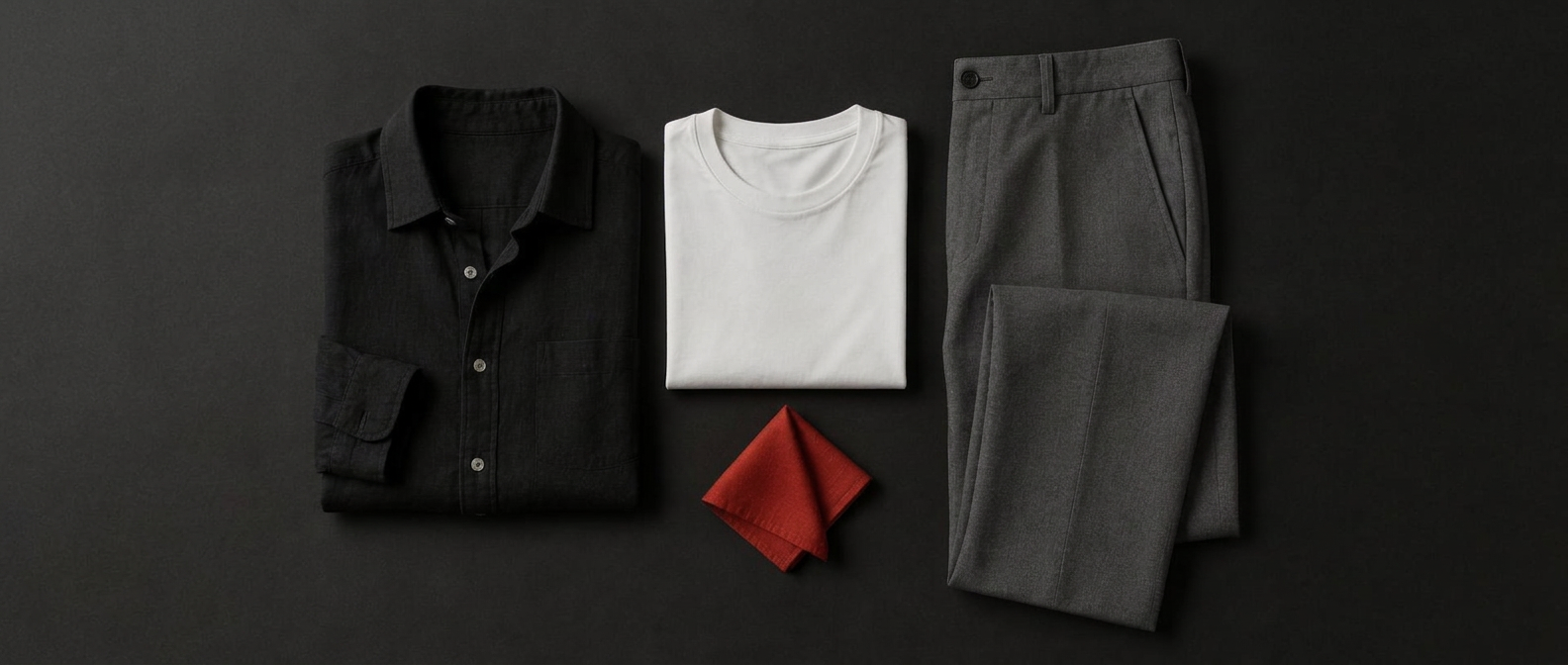
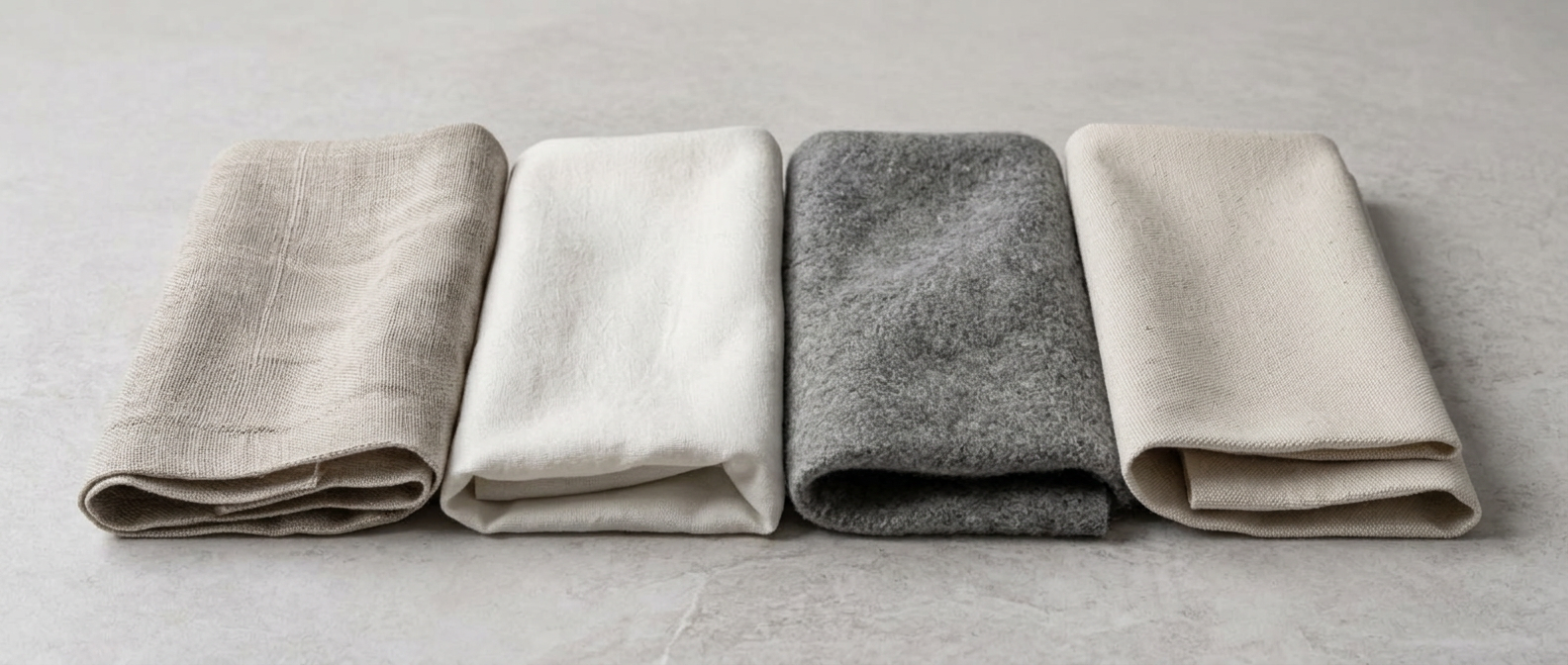
Texture can replace decoration
A restrained wardrobe does not have to be visually flat.
Texture adds depth without adding noise.
Linen.
Brushed cotton.
Wool.
Suede.
Canvas.
A structured weave.
A slightly irregular surface.
Two garments can be almost identical in colour and still feel completely different because of the material.
This is particularly useful in neutral wardrobes.
When colour is reduced, fabric becomes more important.
The interest moves closer.
You notice it rather than being told to notice it.
Logos are optional
Branding has become one of the easiest ways for clothing to communicate value.
It can also become one of the loudest.
There is nothing inherently wrong with a logo.
The question is whether it adds to the garment or takes over from it.
A small mark can identify something without becoming the reason it exists.
For minimalist style, that distinction matters.
The clothing should work before anyone knows who made it.
Fit first.
Fabric first.
Function first.
Branding afterwards.
Buy fewer versions of the same mistake
Owning less only helps if the things you own are right.
There is little value in repeatedly buying a slightly different version of something that never worked in the first place.
If five shirts all remain unworn because the fit feels wrong, a sixth similar shirt is unlikely to solve the problem.
Pause instead.
Work out what is missing.
Maybe you prefer a softer collar.
A straighter fit.
A shorter length.
A lighter fabric.
Buying more is often easier than understanding why the previous purchase failed.
But understanding is cheaper.
And more useful.
Spend where you notice the difference
Minimal style is sometimes associated with buying expensive basics.
That does not need to be the rule either.
Price and usefulness are not the same thing.
Spend more where construction, fabric or longevity genuinely matter to you.
Save where they do not.
A T-shirt worn twice a week may justify more consideration than a jacket worn twice a year.
The cost per wear can tell you more than the price tag.
The best value often comes from the things that quietly become part of your routine.
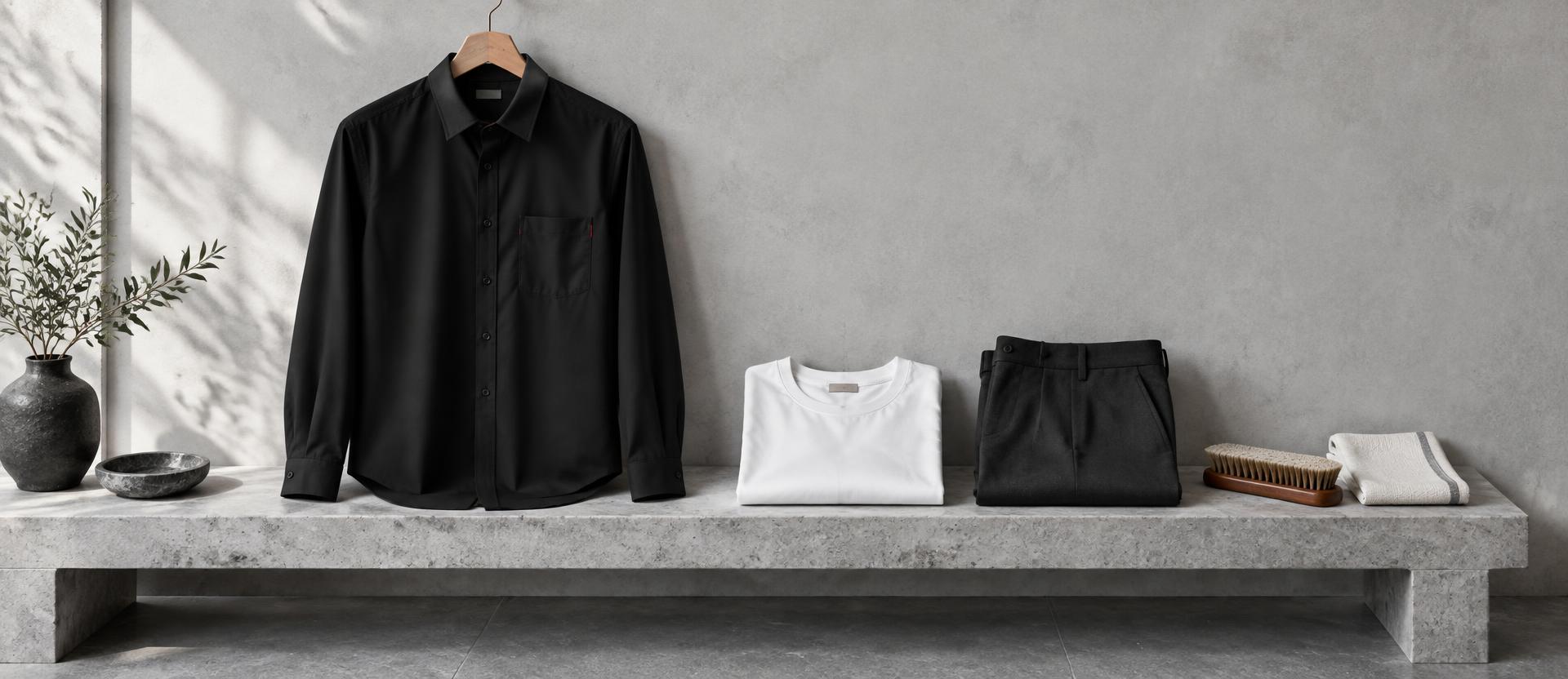
Take care of what you own
A smaller wardrobe gets worn more often.
That means care becomes more important.
Wash clothes according to what they need rather than automatically using the harshest cycle.
Avoid excessive heat where possible.
Store things properly.
Repair small problems before they become large ones.
Allow footwear to rest.
A good piece should not be treated as disposable simply because replacing it is easy.
There is something satisfying about clothing that becomes familiar over time.
The fabric softens.
The shape becomes yours.
You stop thinking of it as new.
That is often when it becomes most valuable.
Leave room for personality
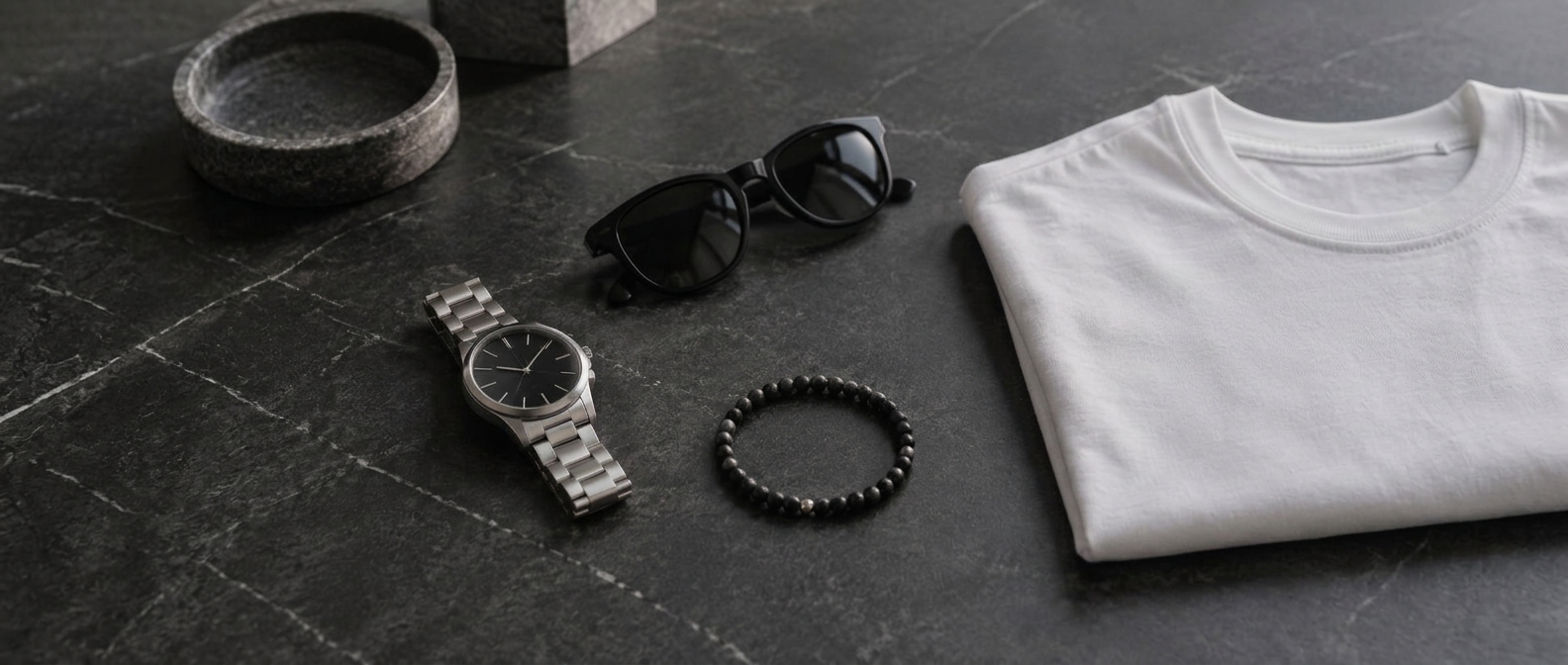
Minimalism can become sterile if treated too literally.
The goal is not to remove everything interesting.
Keep the watch you always wear.
The bracelet from somewhere important.
The unusual pair of sunglasses.
The old shirt that technically does not fit the colour palette but still feels right.
A wardrobe should contain some irrational decisions.
Personal style would be very dull otherwise.
The point is not to eliminate character.
It is to make space for it.
Ignore the idea of a perfect wardrobe
There will always be another list telling you what every man supposedly needs.
A navy blazer.
White trainers.
Oxford shirt.
Dark denim.
A particular watch.
Perhaps those things work for you.
Perhaps none of them do.
A man living in Hong Kong needs different clothing from someone living in Copenhagen.
Someone working in a creative studio has different requirements from someone working in a formal office.
A useful wardrobe reflects a real life.
Not an imaginary universal one.
Choose things that can move between settings
Versatility is one of the strongest arguments for owning less.
A good shirt should not only work in one room.
A pair of trousers should not only work with one type of shoe.
A T-shirt should be able to stand alone or sit beneath another layer.
The more situations a piece can move through naturally, the more valuable it becomes.
Day to evening.
Work to dinner.
City to travel.
Warm weather to air conditioning.
You should not need to completely reinvent yourself every time the setting changes.
Style should eventually become quieter
When you are still working out what you like, clothing can require a lot of thought.
You experiment.
Buy the wrong things.
Try different shapes.
Follow things that later stop feeling right.
That process is useful.
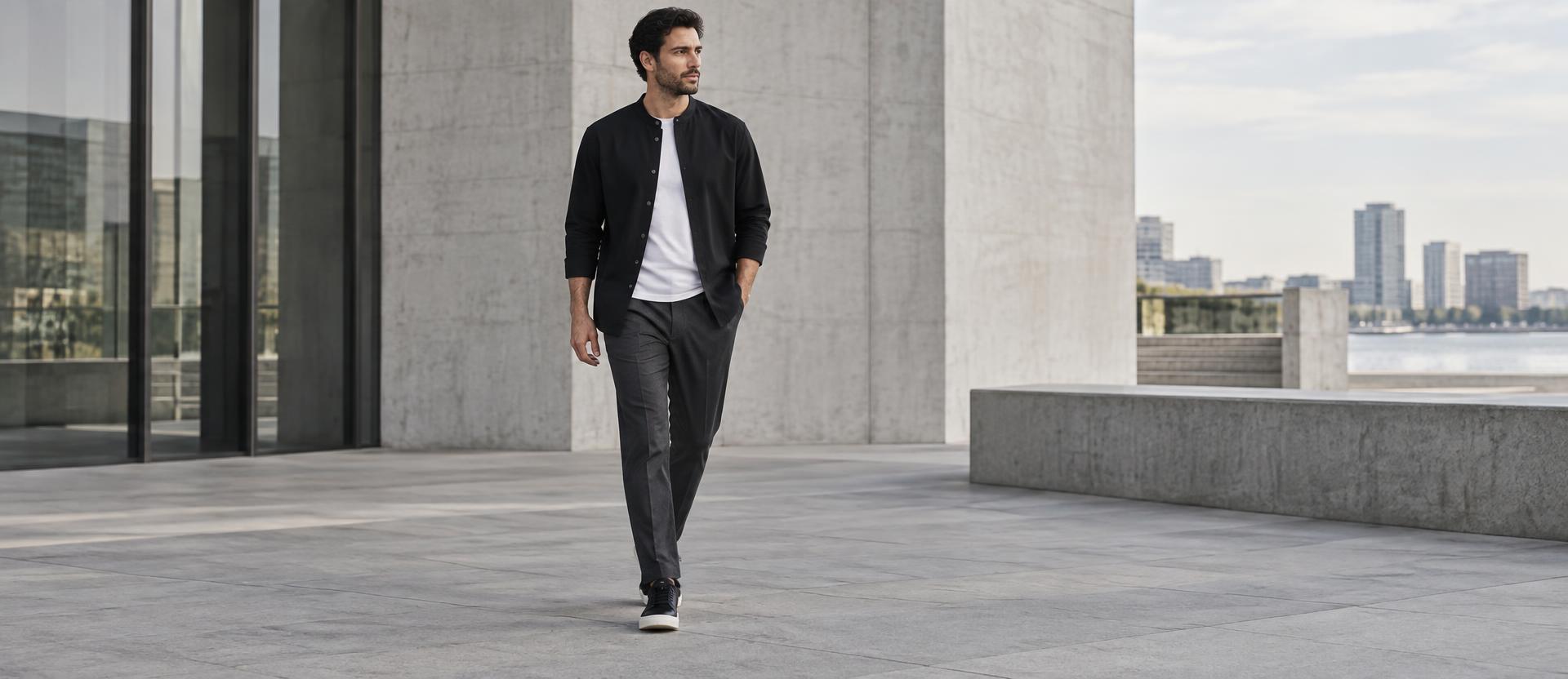
But eventually, style can become quieter.
You know the colours you prefer.
The fit you like.
The shoes you actually wear.
The details you do not need.
The wardrobe becomes less about searching for an identity and more about recognising one.
That is where simplicity becomes useful.
Wear less, better
Minimalist men’s style is not ultimately about minimalism.
It is about intention.
Wear the things that earn their place.
Repeat what works.
Pay attention to proportion.
Choose materials appropriate for how you live.
Let small details carry more weight.
Stop adding when the outfit is already finished.
The result does not have to look severe.
It does not have to look expensive.
It does not even have to look particularly "minimal".
It should simply feel like there is nothing there by accident.
That is enough.
Quiet. Minimal. Timeless.
More experience. Less excess.
You might also like
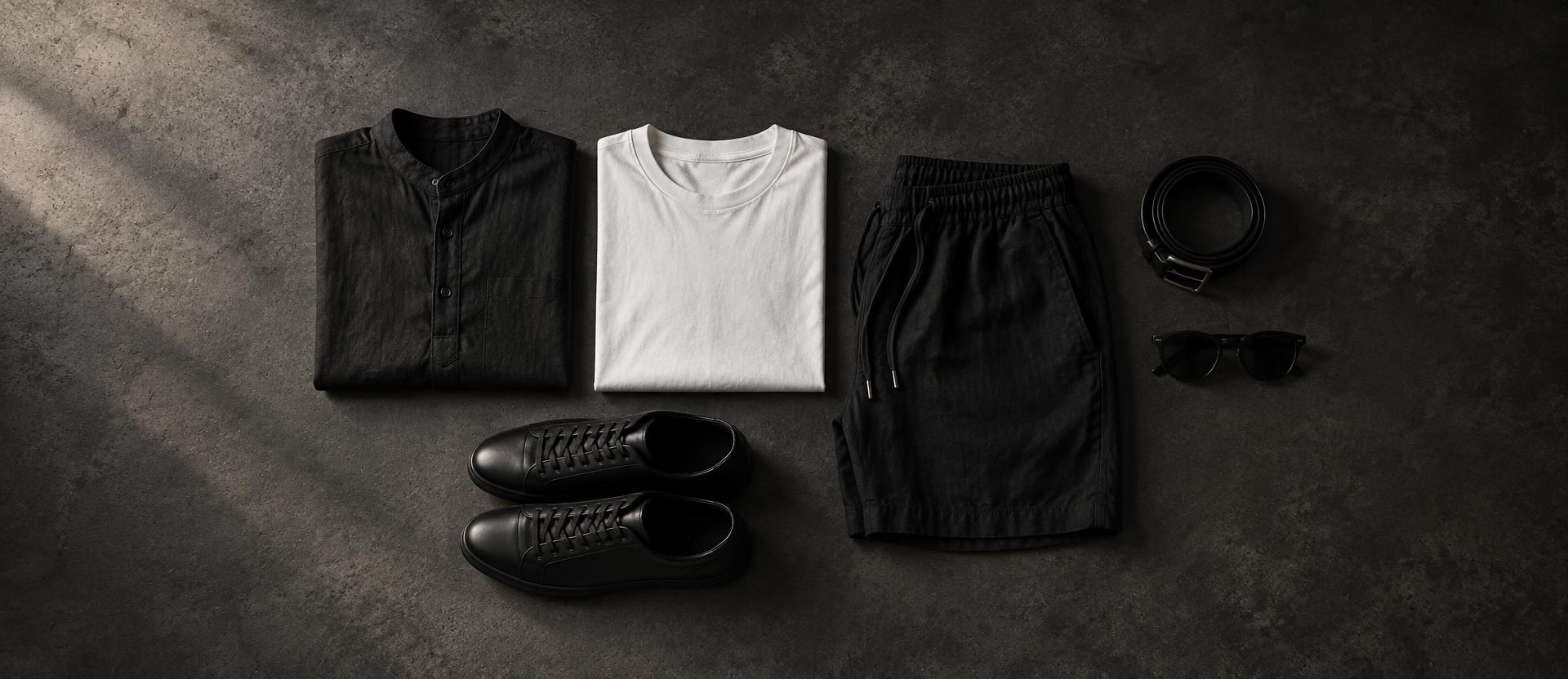
Guide — September 2026
How to Build a Minimalist Capsule Wardrobe for Men
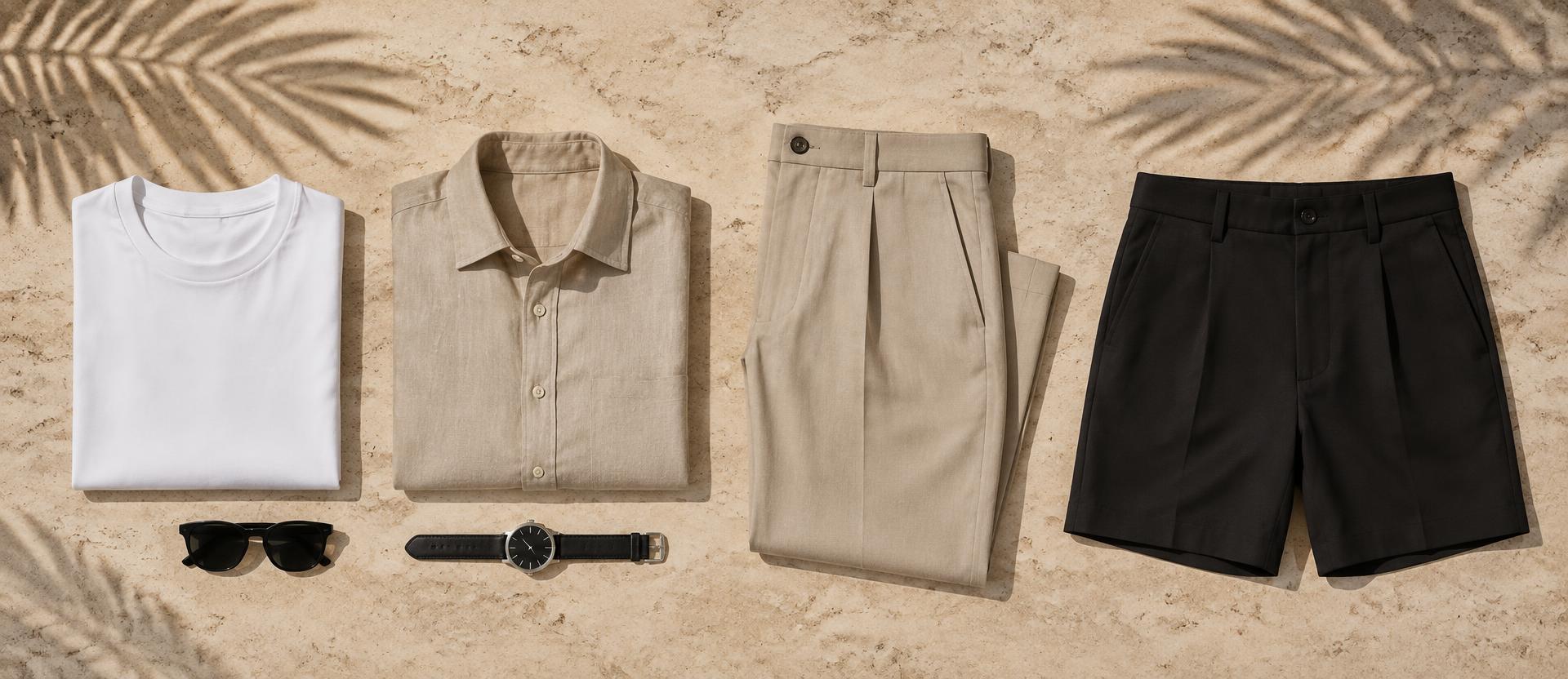
Guide — August 2026