
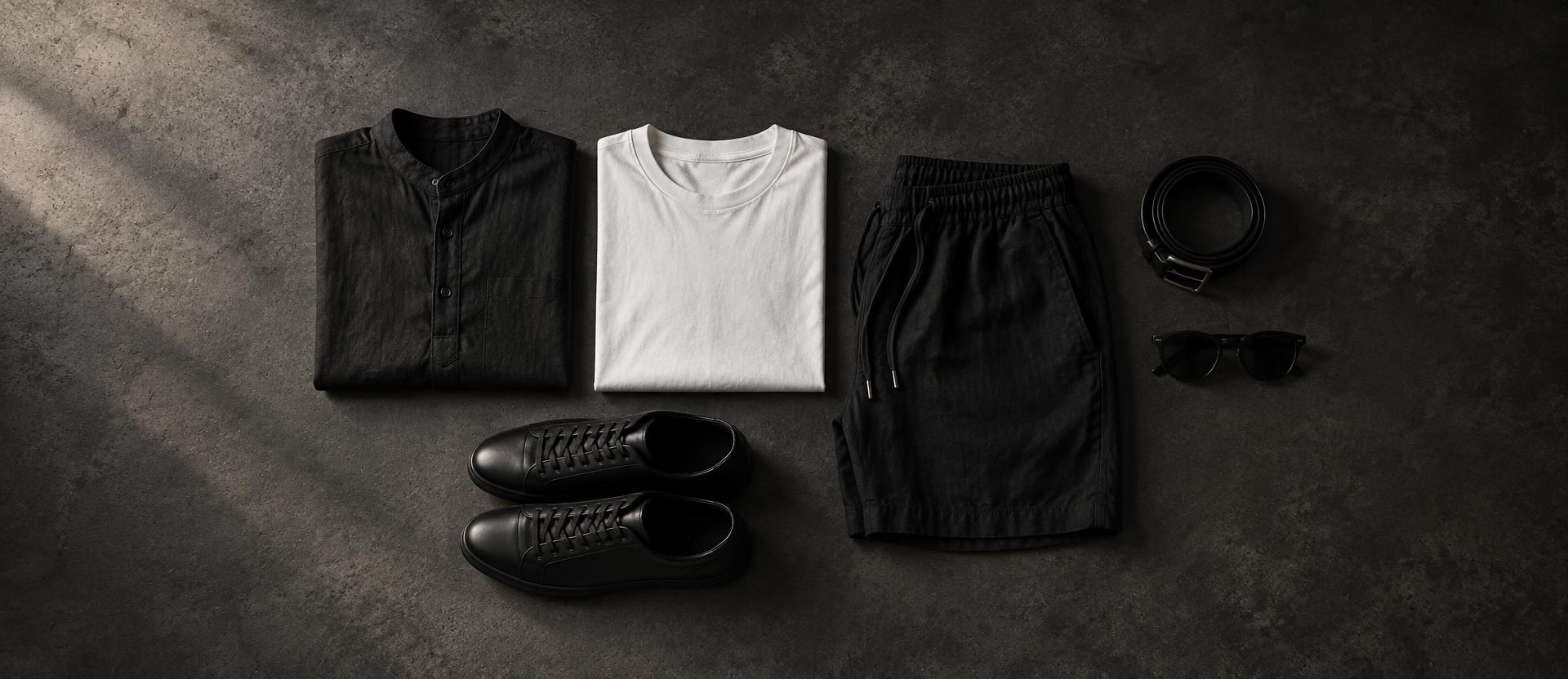
A minimalist capsule wardrobe is not about owning as little as possible.
It is about removing the clothes that add noise and keeping the pieces that make getting dressed easier.
The aim is a compact, considered collection in which almost everything works together. Fewer decisions, fewer forgotten purchases and more space for the things that matter beyond what you are wearing.
Here is how to build one.
What is a capsule wardrobe?
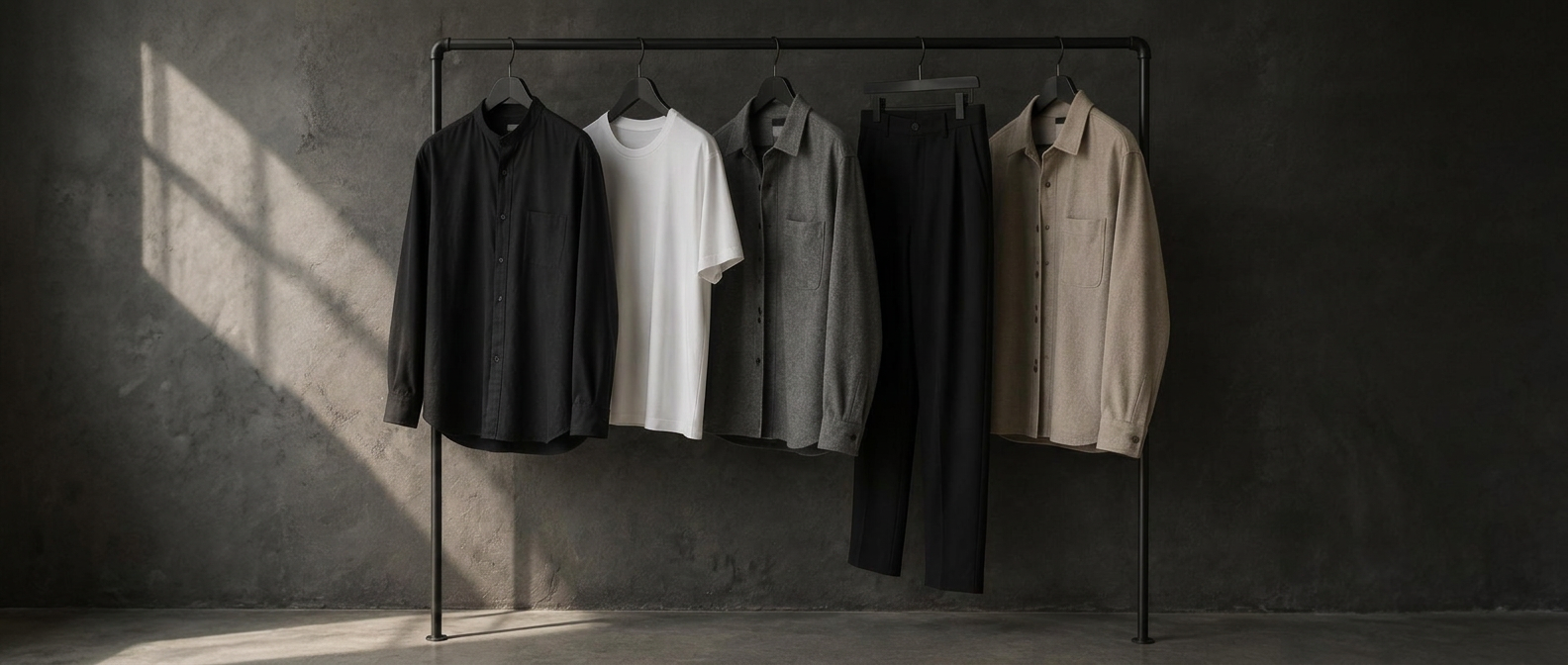
A capsule wardrobe is a small selection of versatile clothing that can be combined into a wide range of outfits.
Rather than buying individual pieces without considering how they fit into your existing wardrobe, every addition has a purpose. Colours are coordinated, shapes are easy to layer and most pieces can move between different settings.
There is no perfect number of items. For one man, a capsule wardrobe might contain 20 pieces. For another, it could be 40. What matters is that the wardrobe feels complete without becoming excessive.
Begin with the life you actually live
Before deciding what to keep, consider where your time goes.
Someone working in a formal office will need a different wardrobe from someone who works remotely or spends most of the year in a warm climate. Your clothing should reflect your real routine—not an imagined version of it.
Think about the situations you dress for most often:
Everyday work
Evenings and social occasions
Weekends
Travel
Exercise
Seasonal weather
Build most of your wardrobe around the first three. Clothing for occasional events can sit outside the main capsule.
Choose a restrained colour palette
A limited palette makes it easier to combine pieces without thinking too much about them.
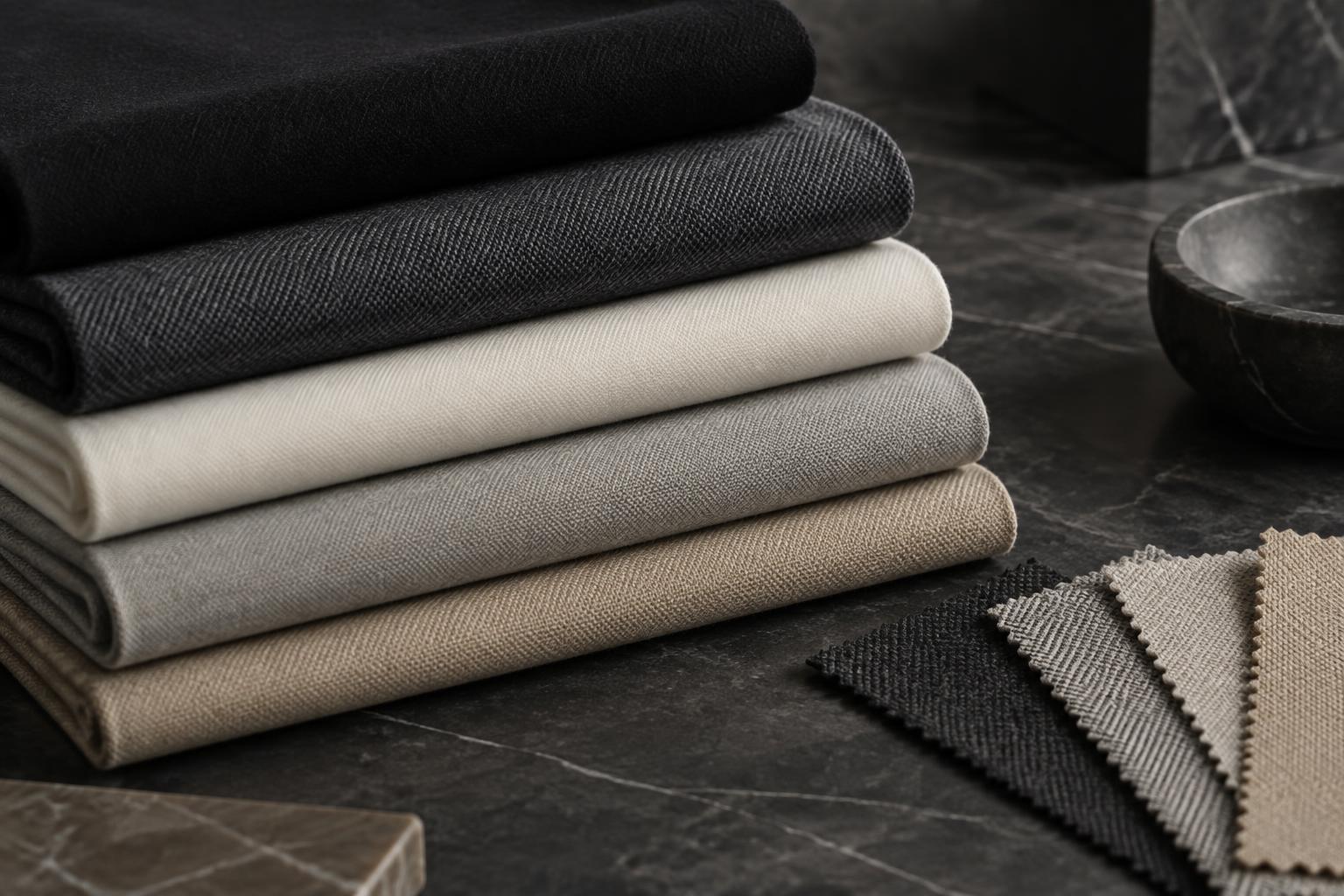
Begin with two or three neutral foundations. Black, navy, grey, white and stone are dependable choices. You can then introduce one or two quieter accent colours, such as olive, deep blue, burgundy or muted brown.
This does not mean every outfit needs to look the same. Texture, proportion and layering can create variation without relying on loud colours or obvious branding.
The simplest test is to ask whether a new piece works with at least three things you already own. If it does not, it may create more problems than it solves.
Build around reliable essentials
A practical men’s capsule wardrobe might begin with the following:
T-shirts
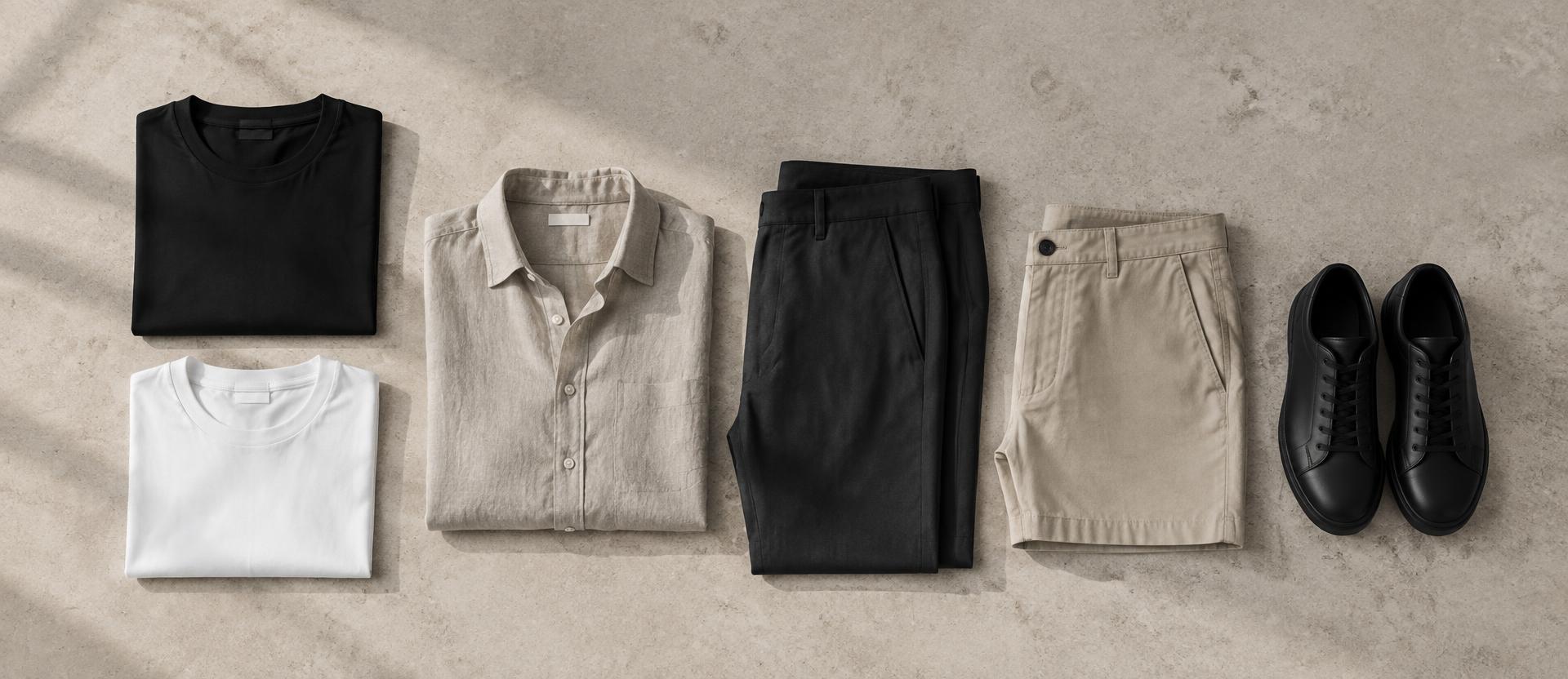
Choose three to five well-fitting T-shirts in versatile colours. A combination of black, white, grey or navy will cover most casual situations and provide a foundation for layering.
Pay attention to the fabric, collar and fit. A simple T-shirt earns its place through comfort and repeated wear, so small differences in construction matter.
Shirts and overshirts
Two or three shirts provide enough variety without becoming excessive. An Oxford shirt, a lightweight linen or cotton shirt and a relaxed overshirt can move between work, weekends and evenings.
An overshirt is particularly useful because it can be worn open like a light jacket or buttoned as a standalone layer.
Trousers
Start with two or three pairs: one dark, one lighter and one slightly more relaxed.
Straight or gently tapered trousers are usually more adaptable than strongly trend-led shapes. Depending on your routine, this might mean dark denim, tailored trousers and a pair of lightweight cotton trousers.
Shorts
For warm weather, one or two pairs of clean, well-cut shorts are enough. Choose a length and shape that can work with both a T-shirt and a casual shirt.
Layers
A lightweight knit, sweatshirt or cardigan adds warmth without taking over the wardrobe. Select a plain design that fits comfortably beneath your outerwear.
Outerwear
The right outer layer depends on where you live. A lightweight jacket or overshirt may be sufficient in warmer climates, while colder conditions may require a heavier coat.
Prioritise a clean silhouette and enough room for layering.
Footwear
Two or three pairs will cover most situations:
Minimal everyday trainers
Smarter shoes or boots
Season-specific footwear, such as sandals or weather-resistant shoes
Neutral footwear tends to work across more outfits and is easier to maintain within a reduced wardrobe.
Pay attention to fit
Minimal clothing places greater emphasis on fit. Without bold graphics or decorative details, the shape of each piece becomes more noticeable.
A T-shirt should sit cleanly across the shoulders without pulling around the chest. Sleeves should feel considered rather than excessively tight or loose. Trousers should follow the body comfortably and fall cleanly over the shoes.
The most useful fit is not necessarily the slimmest one. A balanced cut allows movement, works across different settings and is less likely to feel dated after one season.
Choose fabrics for your environment
Fabric should respond to the conditions in which it will be worn.
Linen, lightweight cotton and breathable blends work well in warm or humid weather. Wool, brushed cotton and heavier fabrics provide insulation in cooler climates.
Natural fibres can feel comfortable and age with character, but construction and fabric weight matter just as much as the fibre name. Hold the material, consider how it moves and think about how often you will realistically wear it.
Use a simple rule before buying
Before adding anything new, ask:
Does it fit properly now?
Can I wear it with at least three existing pieces?
Does it suit my actual routine?
Would I still choose it without a visible logo or trend attached?
Am I replacing a genuine gap, or simply responding to the moment?
A pause between seeing and purchasing often reveals whether an item belongs in your wardrobe.
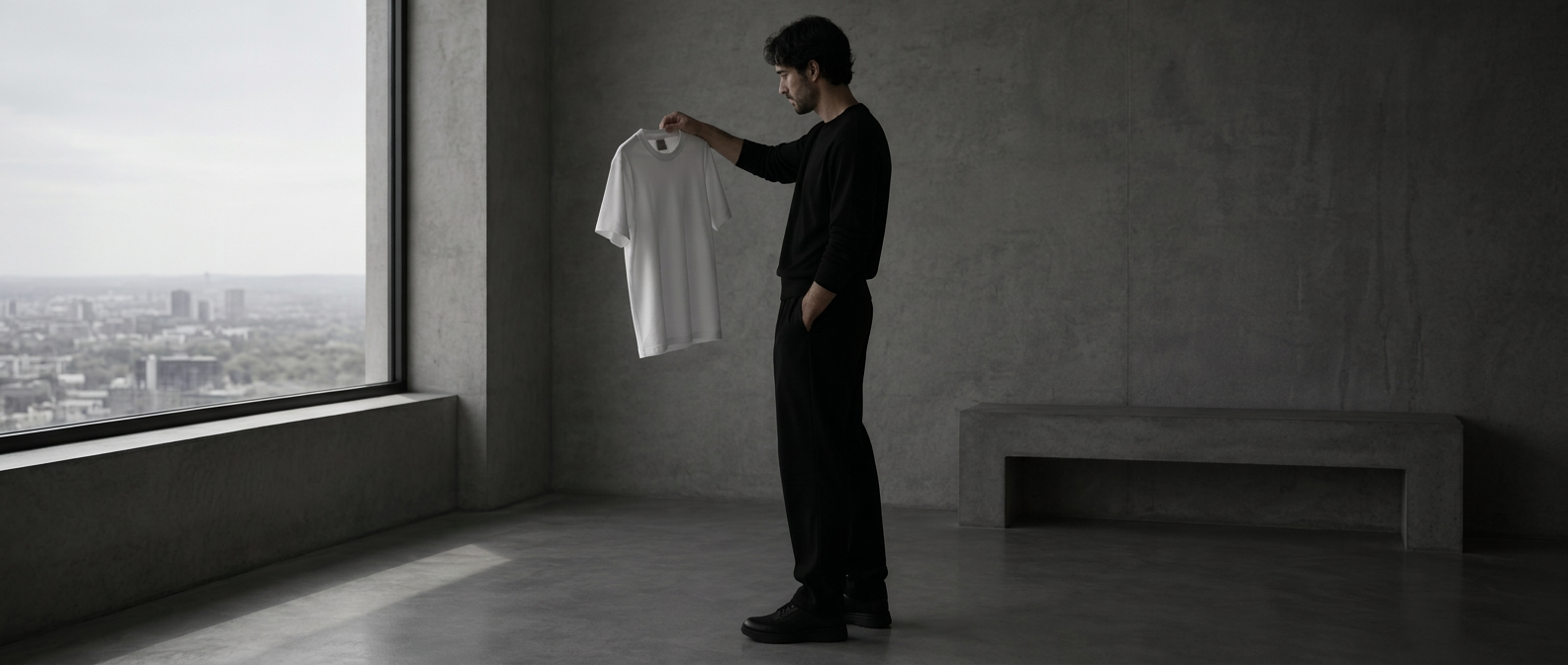
Review rather than constantly replace
A capsule wardrobe does not need to be built in one shopping trip. In fact, it is better when it develops slowly.
Wear what you already own and notice which pieces you repeatedly choose. Those choices reveal more about your personal style than a list of supposed essentials ever could.
Remove items that no longer fit, cannot be comfortably repaired or consistently go unworn. Replace them only when their absence becomes noticeable.
Over time, the wardrobe becomes quieter and more personal. Every piece has a role, but nothing feels overly planned.
The result is not simply fewer clothes. It is a wardrobe that asks less of you and gives more back: greater consistency, easier movement and more time to take in everything beyond it.
More experience. Less excess.
You might also like
Guide — September 2026
Minimalist Men’s Style: Wearing Less, Better

Guide — August 2026