
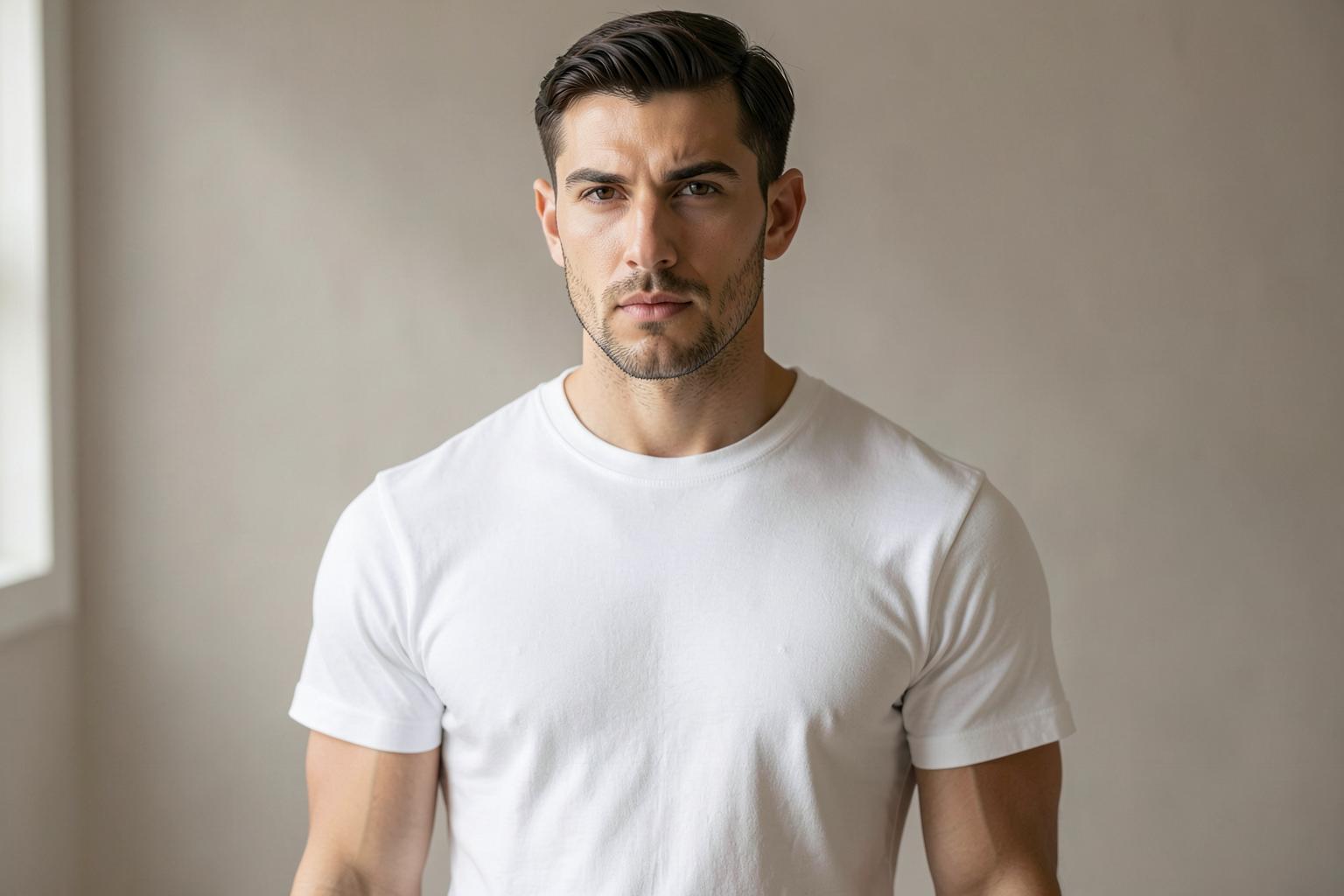
A T-shirt is one of the simplest things a man can wear.
That is exactly why fit matters so much.
There is nowhere for poor proportion to hide. No tailoring. No layering. No structure from a jacket.
Just fabric, shape and the way it sits on the body.
A good T-shirt should feel easy.
Not tight.
Not oversized for the sake of it.
Not so long that it changes the balance of the outfit.
The right fit is usually quieter than that.
Start with the shoulders
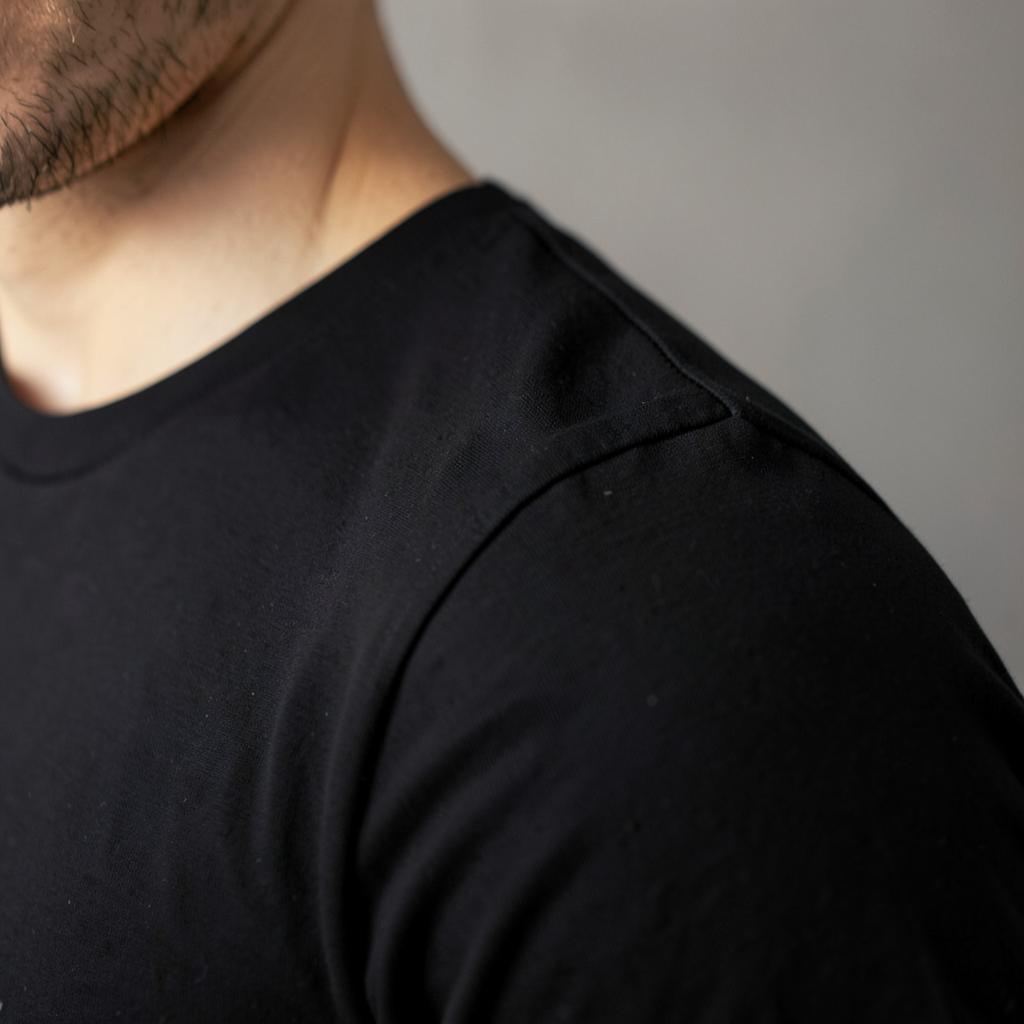
The shoulder seam is one of the easiest places to judge fit.
On a standard T-shirt, it should sit close to the edge of your shoulder.
If the seam finishes too far up, the shirt may feel tight across the chest and upper back.
If it drops too far down the arm, the T-shirt begins to look oversized.
There is nothing wrong with a dropped shoulder when that is the intended design.
But for a clean, understated fit, the shoulder should generally follow the body rather than ignore it.
The chest should have room
A good T-shirt should sit close enough to look considered without clinging to the body.
You should be able to move comfortably.
Raise your arms.
Sit down.
Walk.
Breathe.
If the fabric pulls across the chest or creates tension around the armpits, it is probably too tight.
At the other extreme, too much excess fabric can make the shape feel shapeless.
The aim is not to show the body.
It is to give it space.
The sleeves matter more than most people think
Sleeves can completely change the appearance of a T-shirt.
Too short and they can make the upper body feel overly exposed.
Too long and they begin to dominate the silhouette.
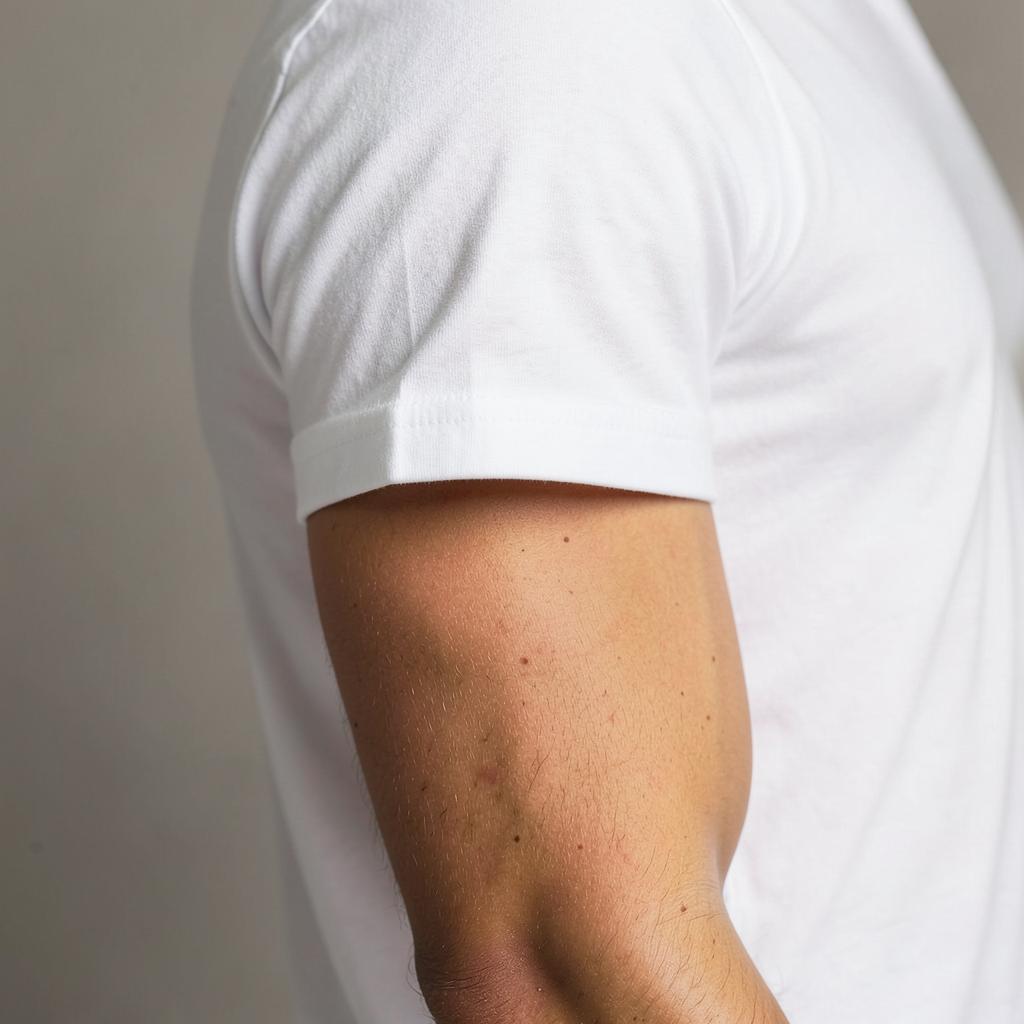
For most men, a sleeve that finishes somewhere around the middle of the upper arm gives the most balanced result.
The sleeve should also sit relatively cleanly around the arm.
Not skin-tight.
Not flaring excessively.
A small detail, but one that makes a noticeable difference.
Get the length right
Length is one of the most common problems with T-shirts.
Too short and the shirt rides up every time you move.
Too long and it can make the legs look shorter and the entire outfit feel heavier.
A useful reference point is somewhere around the middle of the trouser fly.
The exact length will depend on height, torso length and how the T-shirt is designed.
The key is balance.
A T-shirt should cover the waistband comfortably without extending far beyond what is necessary.
The neckline should stay close
The neckline frames the face and shoulders.
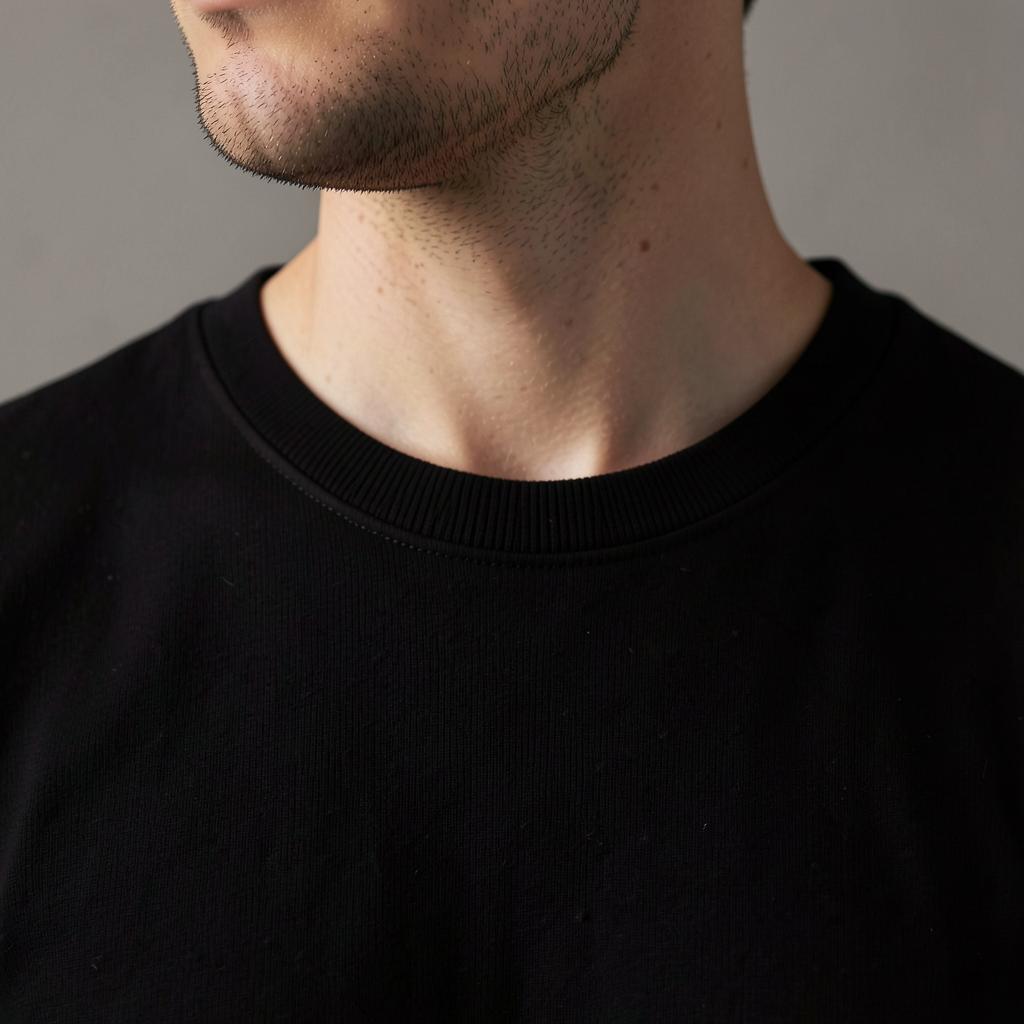
For a classic crew neck, it should sit relatively close to the base of the neck without feeling restrictive.
If the opening is too wide, the T-shirt can lose structure.
If it is too tight, it becomes uncomfortable quickly.
The rib should also recover after wear.
A neckline that stretches permanently after a few uses can make an otherwise good T-shirt look tired.
This is one of those details that becomes more important the simpler the garment is.
Slim fit or relaxed fit?
Neither is automatically better.
A slim T-shirt follows the body more closely.
A relaxed T-shirt allows more space through the chest and torso.
The right choice depends on personal preference, body shape and climate.
In warm weather, a slightly easier fit often feels more comfortable because it allows air to circulate.
That does not mean oversized.
It simply means avoiding unnecessary restriction.
For understated everyday wear, a regular or gently relaxed silhouette is often the easiest to live with.
Oversized is a style, not a sizing mistake
Oversized T-shirts can work well.
But they should look intentional.
That usually means the proportions have been designed around the larger silhouette rather than simply wearing a conventional T-shirt several sizes too big.
The shoulder may be dropped.
The sleeve may be longer.
The body may be wider.
But the overall shape still needs balance.
There is a difference between volume and excess.
Fabric changes the fit
Fit is not only about measurements.
Fabric affects how a T-shirt hangs.
A heavyweight cotton fabric tends to hold its shape and sit further away from the body.
A lighter cotton fabric drapes more easily and may follow the body more naturally.
Neither is inherently better.
In hot weather, lighter fabrics can make sense because they feel less substantial.
But they still need enough structure to avoid becoming shapeless.
The best fit is therefore a combination of cut and material.
How should a T-shirt fit around the waist?
A T-shirt does not need to taper aggressively.
It should usually fall cleanly from the chest through the torso.
A slight shape can help, but too much tapering creates tension around the stomach and hips.
That can make a T-shirt feel smaller than it actually is.
For most men, a straight or gently shaped body is more versatile.
It works with shorts.
Trousers.
Denim.
Layers.
And it usually feels more comfortable throughout the day.
Fit changes with body shape
There is no single measurement that works for everyone.
Broad shoulders may require more room through the upper body.
A longer torso may need additional length.
A slimmer frame may suit less width.
The useful approach is to look at proportion rather than obsess over the size label.
A medium in one brand may fit like a small in another.
The label does not matter.
The silhouette does.
How to check the fit in a mirror
A good T-shirt should look balanced from more than one angle.
From the front:
The shoulder seams should sit correctly.
The chest should have room.
The body should fall cleanly.
From the side:
The T-shirt should not pull across the stomach or back.
From behind:
There should be enough room across the shoulders without large folds of excess fabric.
Then move.
Raise your arms.
Sit.
Walk.
If the T-shirt only looks good while standing completely still, it does not fit properly.
Should you tuck a T-shirt in?
Sometimes.
A tucked T-shirt can work well with tailored trousers or a more structured outfit.
An untucked T-shirt usually feels more natural with shorts, relaxed trousers or denim.
The important thing is length.
A T-shirt designed to be worn untucked should finish at a point that looks deliberate.
If it is much too long, tucking it in may simply be hiding the problem.
The most common T-shirt fit mistakes
The biggest mistakes are usually simple.
Buying too tight because you want the T-shirt to look fitted.
Buying too large because you want it to feel relaxed.
Ignoring sleeve length.
Ignoring overall length.
Choosing fabric that works against the silhouette.
And assuming that a more expensive T-shirt will automatically fit better.
Price does not solve proportion.
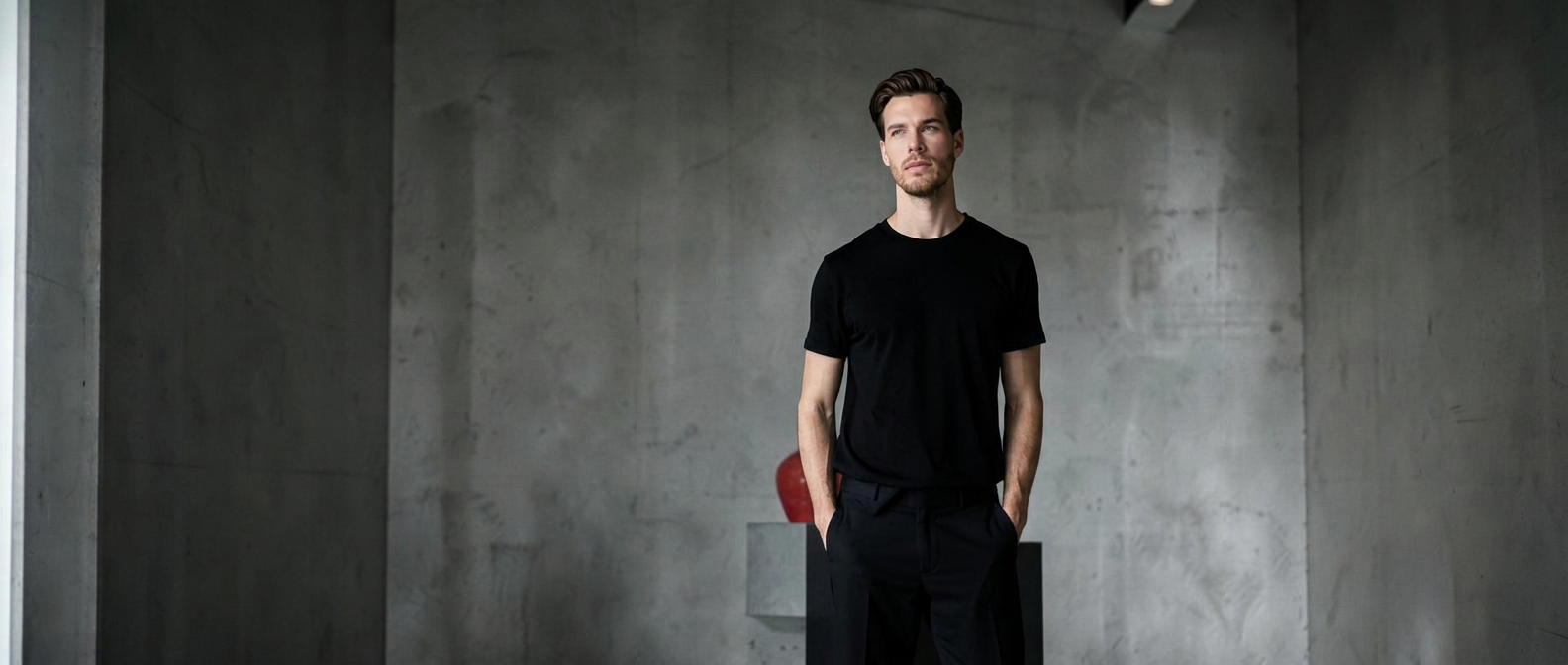
What does a good T-shirt fit actually look like?
It looks easy.
The shoulders sit where they should.
The chest has room.
The sleeves feel balanced.
The body falls cleanly.
The length works with the rest of the outfit.
Nothing looks forced.
That simplicity is harder to achieve than it appears.
Which is why the T-shirt remains such an important piece of menswear.
When there is less going on, the details matter more.
A good T-shirt does not need to announce itself.
It just needs to fit properly.
Quiet. Minimal. Timeless.
More experience. Less excess.
You might also like
Guide — September 2026
How to Build a Minimalist Capsule Wardrobe for Men
Guide — September 2026