
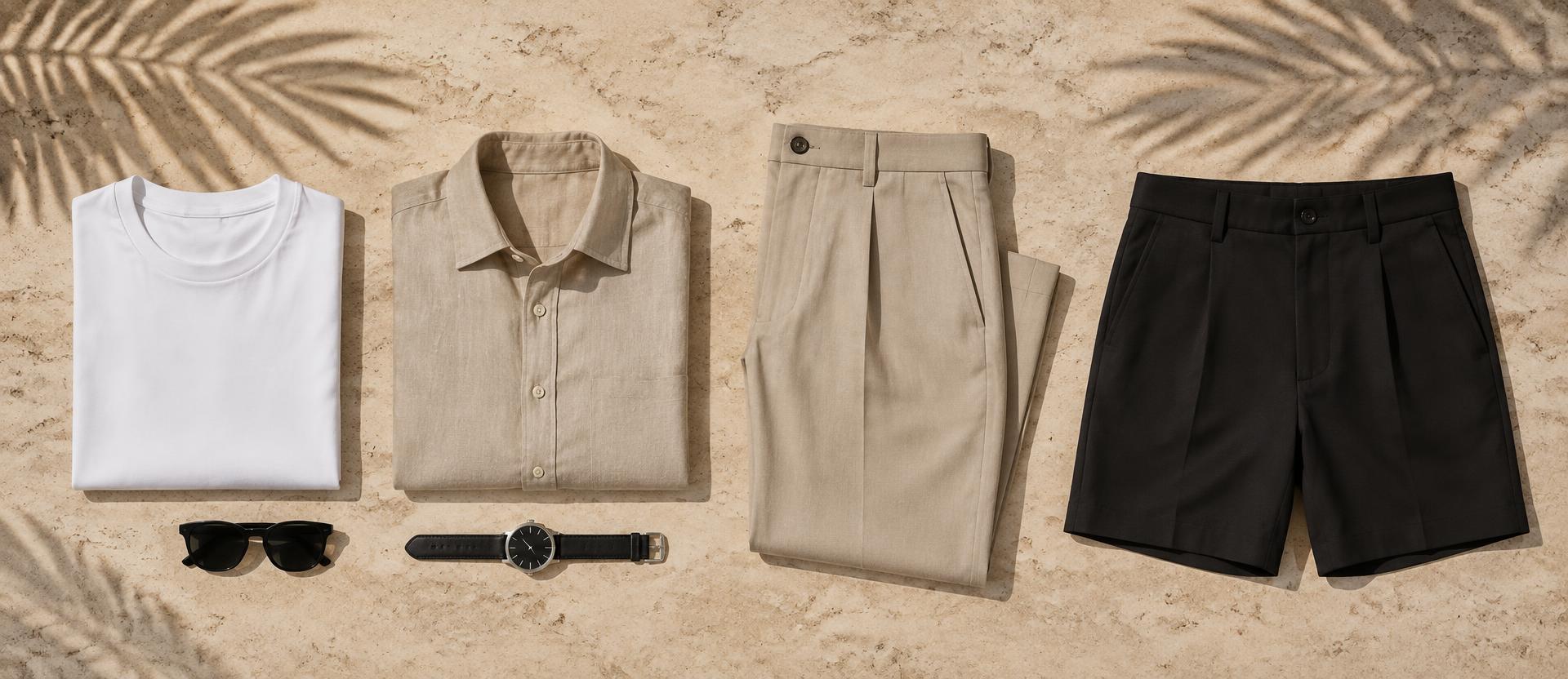
Summer wardrobes have a habit of becoming more complicated than they need to be.
More colours.
More footwear.
More shirts.
More shorts.
More combinations.
And somehow, still the familiar feeling of having nothing obvious to wear.
A minimalist summer wardrobe takes the opposite approach.
Fewer pieces.
Better combinations.
Lighter fabrics.
A restrained colour palette.
Clothing that works across more than one setting.
The goal is not to own as little as possible.
It is to remove what does not add much.
What is a minimalist wardrobe?
Minimalism in clothing is often misunderstood.
It does not mean wearing the same black T-shirt every day.
It does not mean rejecting colour.
And it certainly does not mean owning almost nothing.
A useful minimalist wardrobe is simply one in which the pieces work together.
The shirt works with several pairs of trousers.
The shorts work with every T-shirt.
The shoes do not require a completely different outfit around them.
There are fewer dead ends.
That makes getting dressed easier.
And in summer, when clothing is already stripped back, that simplicity becomes particularly useful.
Start with the climate
A summer wardrobe should begin with conditions, not trends.
If you live somewhere hot and humid, fabric weight matters.
If the climate is dry, layering may matter more.
If you are travelling between outdoor heat and heavily air-conditioned interiors, you may need one light additional layer.
The point is to build around how you actually live.
Not around an imagined version of summer.
A wardrobe becomes useful when it solves real problems.
Build around a small colour palette
One of the easiest ways to make fewer clothes work harder is to reduce the number of colours competing with each other.
That does not mean everything has to be monochrome.
A simple summer palette might include:
White.
Black.
Stone.
Sand.
Navy.
Grey.
Muted green.
Natural tones.
The exact colours matter less than how well they combine.
If every top works with every bottom, the number of possible outfits increases quickly without increasing the number of clothes.
That is the real advantage.
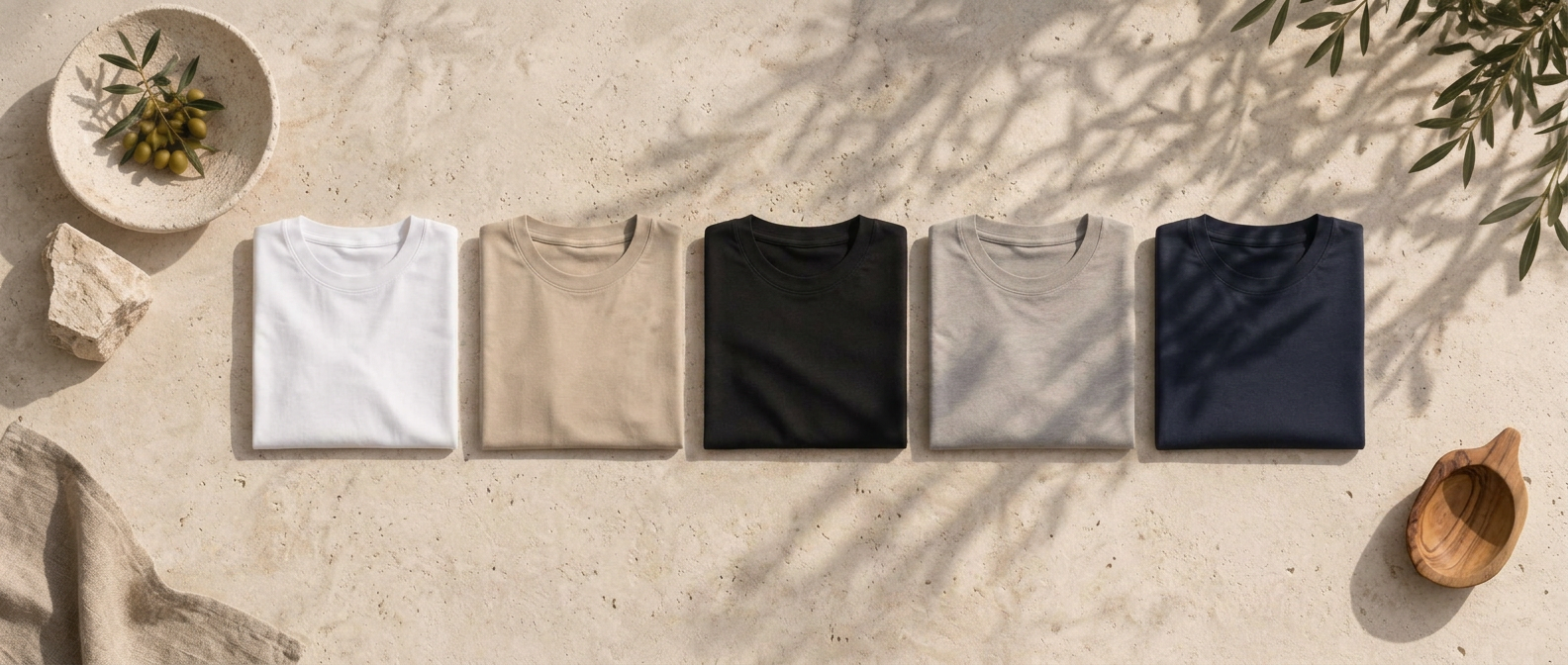
Three or four good T-shirts
A summer wardrobe usually starts here.
T-shirts do a large amount of the work.
White and black are obvious foundations because they pair easily with almost anything.
A third or fourth option could introduce a softer neutral or muted tone.
The important things are fit and fabric.
A summer T-shirt should be light enough to remain comfortable in heat, while still holding its shape.
It should work on its own.
Under a shirt.
With shorts.
With trousers.
And ideally with more than one pair of shoes.
Versatility is more useful than novelty.
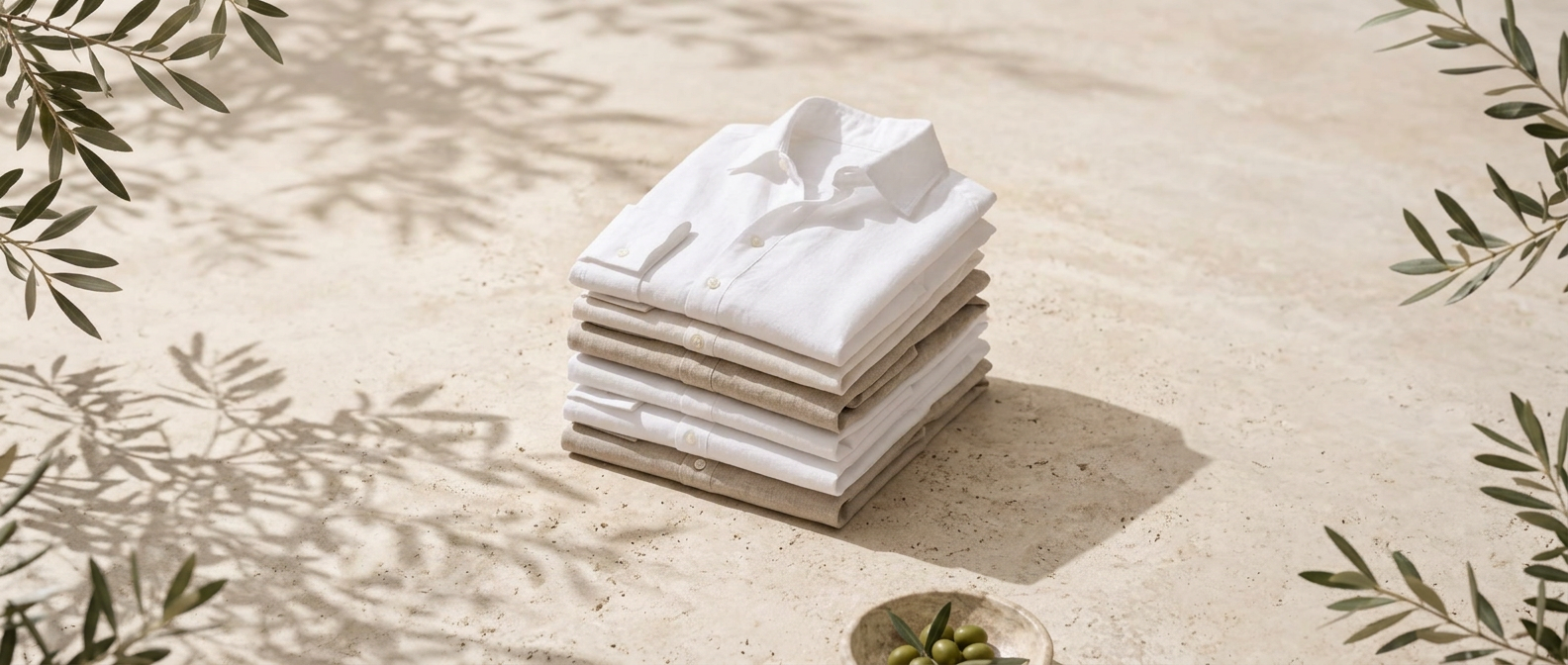
Two shirts are often enough
A small summer wardrobe does not need ten shirts.
Two well-chosen ones can cover a surprising amount.
One could be a lightweight white or natural shirt.
The other might be black, navy, muted green or another darker neutral.
Linen and linen-cotton blends work particularly well because they can be worn more casually without looking unfinished.
A shirt should work buttoned.
Open over a T-shirt.
Sleeves down.
Sleeves rolled.
Daytime.
Evening.
The more ways it can be worn, the more useful it becomes.
One pair of shorts that works with everything
Shorts are often where summer wardrobes become fragmented.
Different colours.
Different lengths.
Different styles.
Most men probably need fewer pairs than they think.
A clean pair in stone, sand, black, navy or another neutral shade can work with almost every top in the wardrobe.
The cut matters.
Not too long.
Not excessively short.
Enough room to move.
A simple shape that does not rely on obvious branding or unnecessary detailing.
The aim is to make them disappear into the outfit.
Add lightweight trousers
Summer does not always mean shorts.
Evenings, restaurants, work, travel and more formal settings often call for trousers.
The key is choosing a pair that still feels appropriate for warm weather.
Lightweight cotton.
Linen.
A linen blend.
Tropical wool.
Something that allows movement and does not feel overly structured.
A good pair of summer trousers should be able to work with a T-shirt during the day and a shirt in the evening.
Again, one piece doing more than one job.
Keep footwear simple
Shoes can multiply a wardrobe very quickly.
They can also make it unnecessarily difficult.
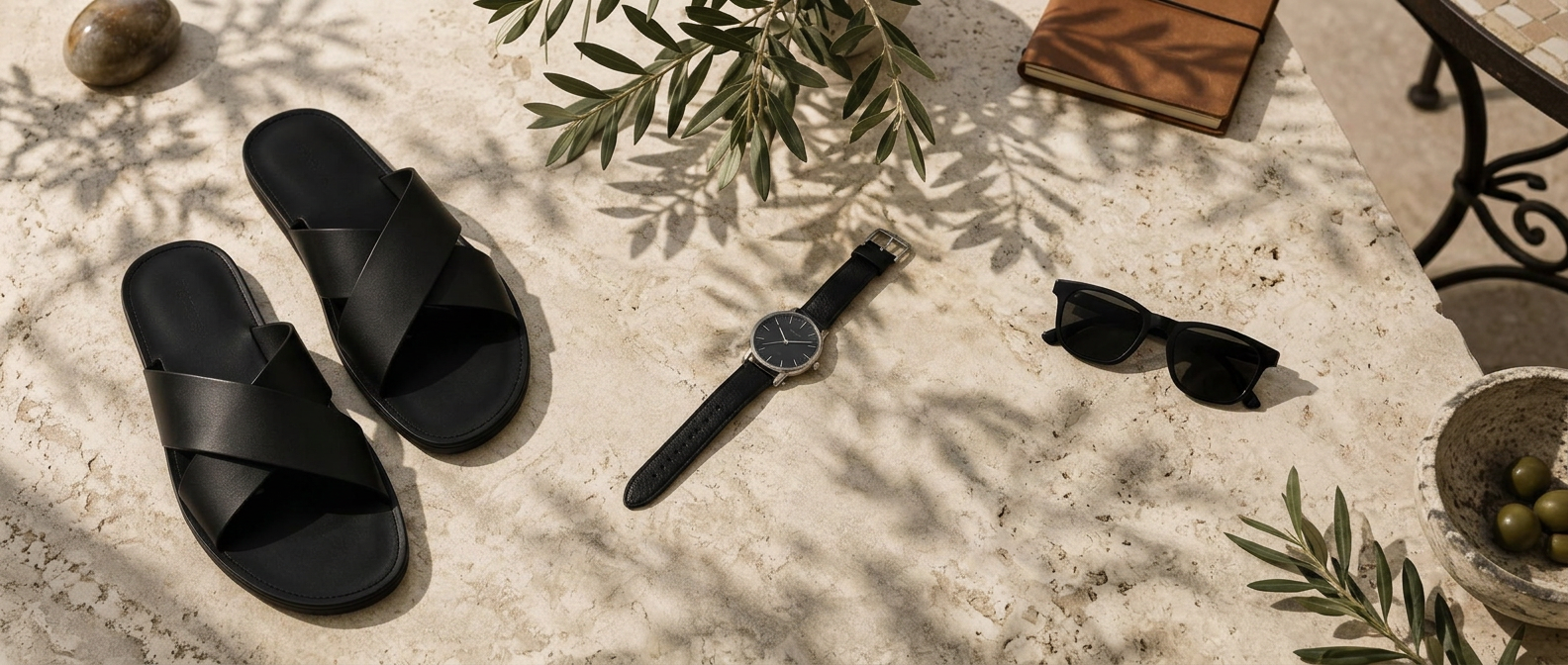
A minimalist summer wardrobe might only need two useful options.
One closed shoe.
One more open or relaxed option.
A simple trainer, slip-on or lightweight loafer can cover most everyday situations.
Sandals or flip-flops can handle the most casual settings.
The important thing is that the footwear works with the rest of the wardrobe rather than forcing a separate style direction.
If a pair of shoes only works with one outfit, it may not be earning its place.
One light layer
Even in summer, one additional layer is useful.
Not necessarily a jacket.
A lightweight overshirt can be enough.
It works in air-conditioned spaces.
On flights.
During cooler evenings.
Over a T-shirt.
And it takes up very little room when travelling.
This is particularly useful in cities where the temperature difference between indoors and outdoors can be dramatic.
The best layer is often the one that spends most of the day folded away but becomes useful exactly when needed.
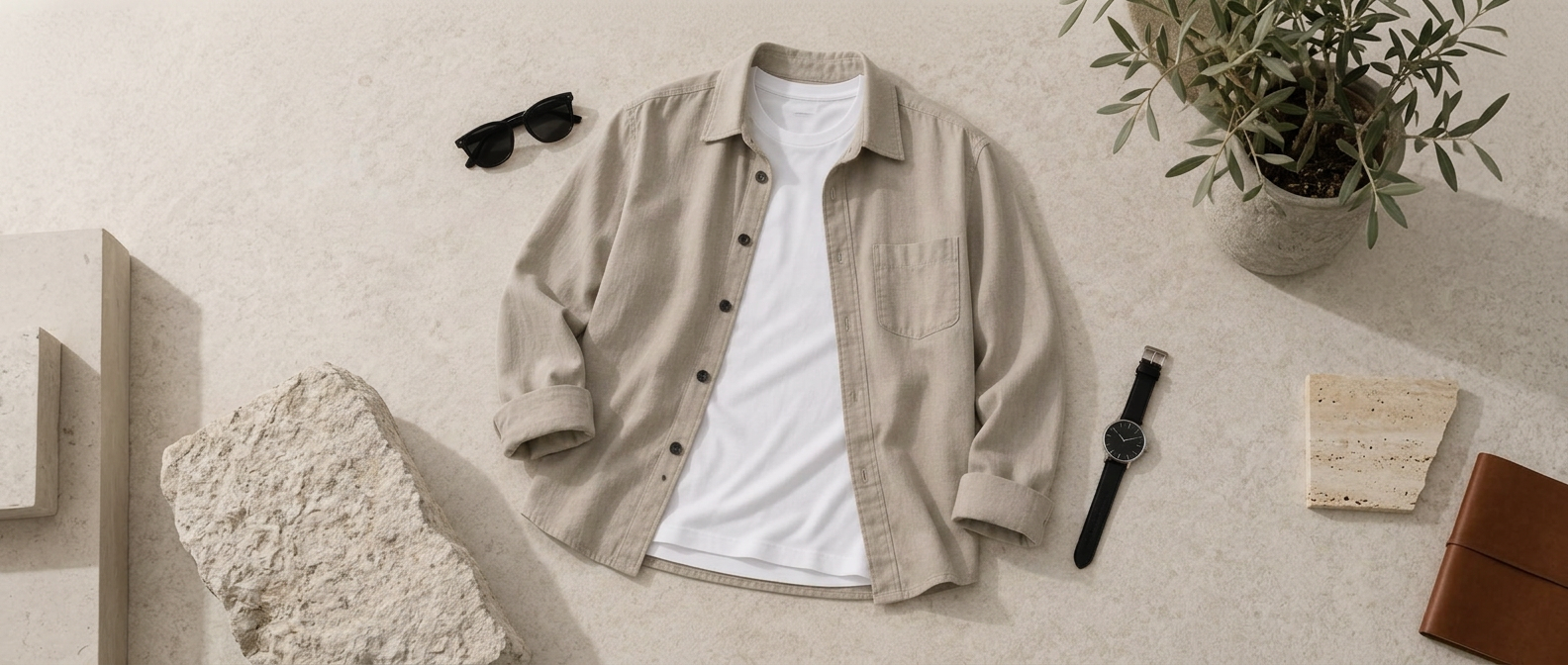
Accessories should solve something
Accessories can easily become clutter.
A minimalist wardrobe does not need to remove them completely.
It simply asks whether they add something.
Sunglasses protect your eyes.
A watch tells the time and becomes part of your personal uniform.
A cap can offer shade.
A bracelet may add a small point of detail.
There is room for personality.
The difference is intention.
You should be able to explain why something is there.
Even if the answer is simply that you like wearing it.
A simple summer wardrobe example
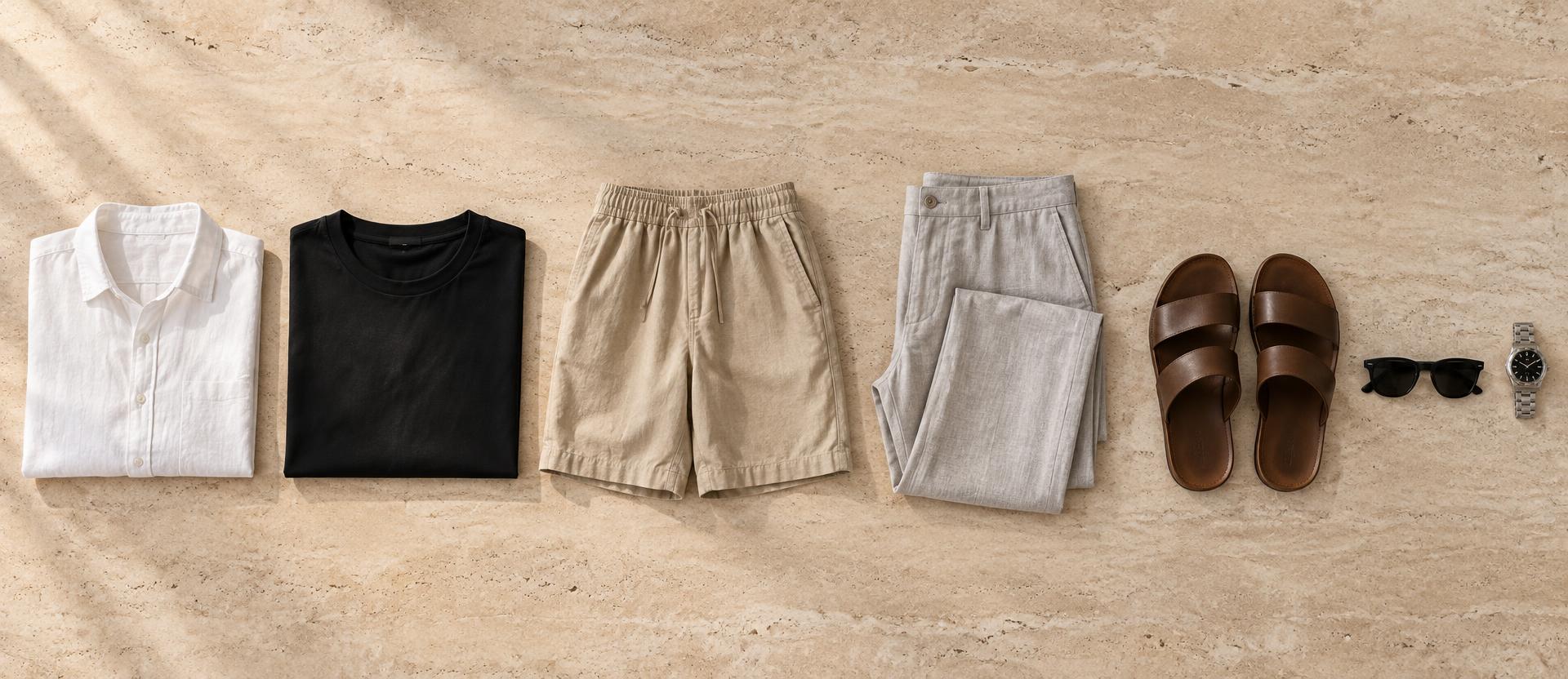
For a compact everyday wardrobe, you might start with:
Three or four T-shirts.
Two lightweight shirts.
One pair of shorts.
One pair of lightweight trousers.
One pair of everyday shoes.
One casual summer footwear option.
One lightweight overshirt.
Sunglasses.
A few personal accessories.
That is enough to create a large number of combinations without filling an entire wardrobe.
It is also enough for many short trips with only minor adjustments.
Why fewer colours make packing easier
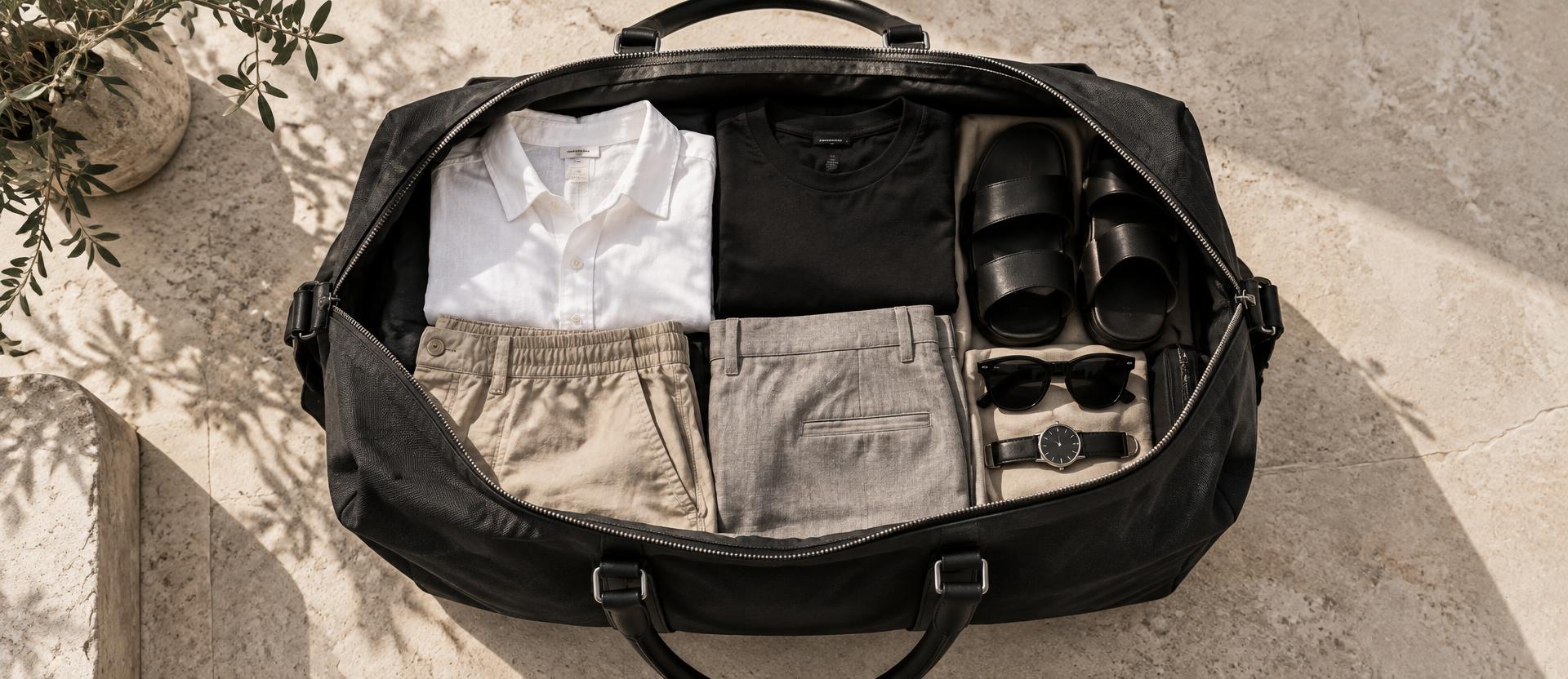
Travel exposes the weaknesses in a wardrobe quickly.
At home, you can compensate for difficult pieces by reaching for something else.
When travelling, everything has to work together.
A restrained palette solves much of this.
If your trousers work with all of your shirts, and your shoes work with everything, packing becomes almost automatic.
You stop planning individual outfits.
You simply pack a group of compatible pieces.
That leaves more space.
And fewer decisions.
Do not confuse minimalism with uniformity
A minimalist wardrobe should still feel like yours.
Texture can create variation.
Proportion can change an outfit.
A linen shirt feels different from a cotton T-shirt even if both are white.
Black trousers can feel completely different from black shorts.
Small details can carry more weight when there are fewer distractions.
Minimalism does not remove character.
Done well, it makes character easier to see.
Buy for combinations, not individual outfits
One useful question before buying something is:
What do I already own that this works with?
If the answer is one specific outfit, the piece may be difficult to use.
If the answer is five or six things you already wear regularly, it probably makes more sense.
This changes the way a wardrobe grows.
Instead of accumulating isolated pieces, you build a system.
That system does not have to be rigid.
It just needs to make sense.
Repeat outfits
There is nothing wrong with wearing the same combination regularly.
In fact, most men already do.
The favourite T-shirt.
The trousers that always work.
The shoes that get chosen without thinking.
A successful wardrobe tends to reveal its own favourites.
Minimalism simply accepts that instead of pretending every item deserves equal attention.
If you repeatedly choose the same pieces, there is probably a reason.
Listen to it.
Replace carefully
A minimalist wardrobe also makes quality easier to judge.
When something gets worn regularly, you discover quickly whether it actually works.
Does the neckline hold its shape?
Does the fabric improve with wear?
Are the seams still clean?
Do you still reach for it after a year?
Those answers are more useful than a label or a price tag.
When something eventually needs replacing, you have a clearer understanding of what you want next.
Less does not automatically mean better
There is no ideal number of clothes.
Owning twelve pieces is not morally superior to owning thirty.
The aim is not deprivation.
It is usefulness.
A wardrobe of fifteen pieces you genuinely enjoy wearing is better than one of fifty pieces that constantly creates indecision.
But if thirty pieces all have a purpose, there is nothing wrong with that either.
Minimalism works best when it remains practical rather than becoming another set of rules.
Build around the life you actually live
The most useful wardrobe reflects routine.
Where you go.
How you move.
What the weather is like.
How formal your days are.
What you naturally reach for.
That may mean more T-shirts and fewer shirts.
More trousers and fewer shorts.
One pair of shoes instead of three.
There is no fixed formula.
The principle is simply to remove the things that make dressing harder without making life better.
A good summer wardrobe should give you less to think about when leaving the house.
Not more.
Choose pieces that work together.
Choose fabrics that work with the climate.
Keep what earns its place.
And leave room for everything else.
More experience. Less excess.
You might also like
Guide — September 2026
Minimalist Men’s Style: Wearing Less, Better

Guide — June 2026