
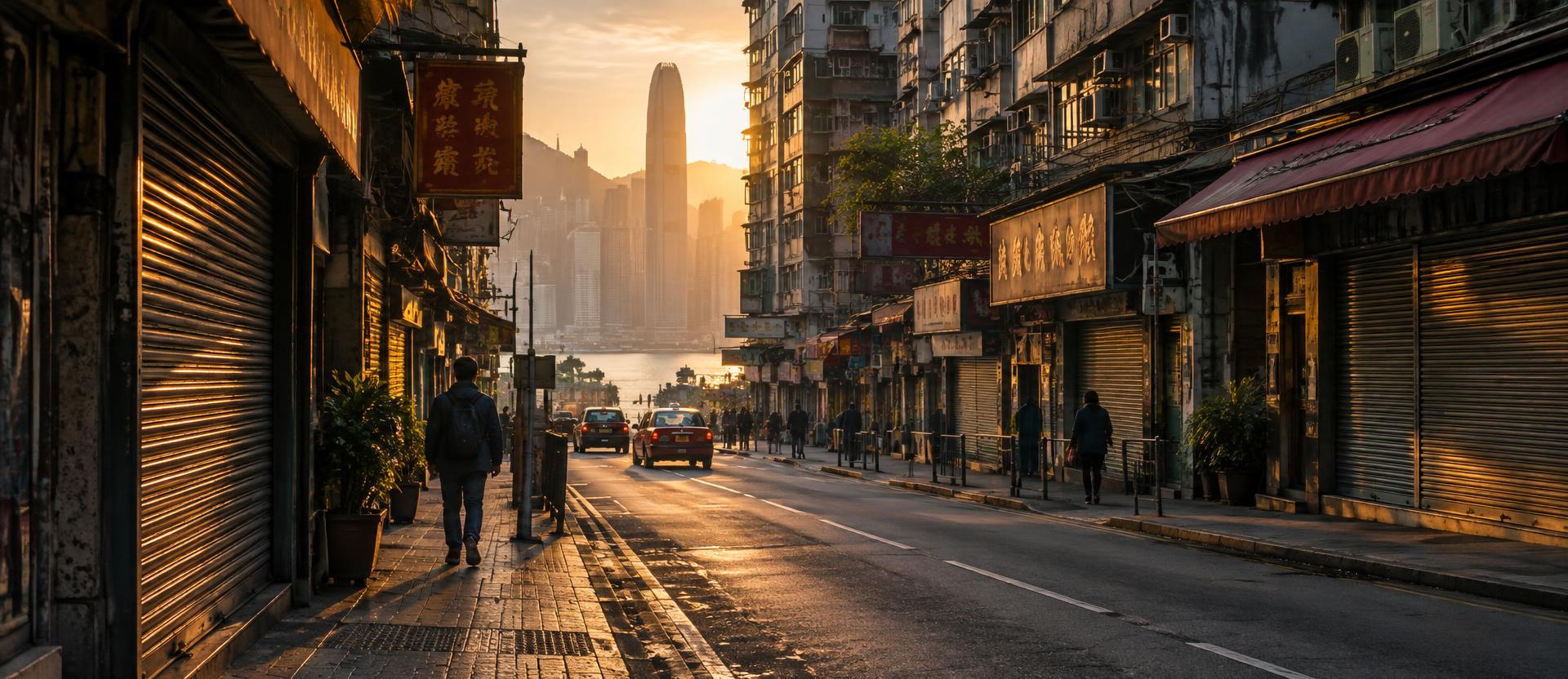
There is a version of Hong Kong that disappears surprisingly quickly.
Before the pavements fill.
Before shops open properly.
Before the heat settles between the buildings.
Before the city becomes the Hong Kong most people recognise.
Go out early enough and everything feels slightly different.
The streets are not empty.
Hong Kong is rarely empty.
But there is more space to notice what is happening.
And much of the city is already at work.
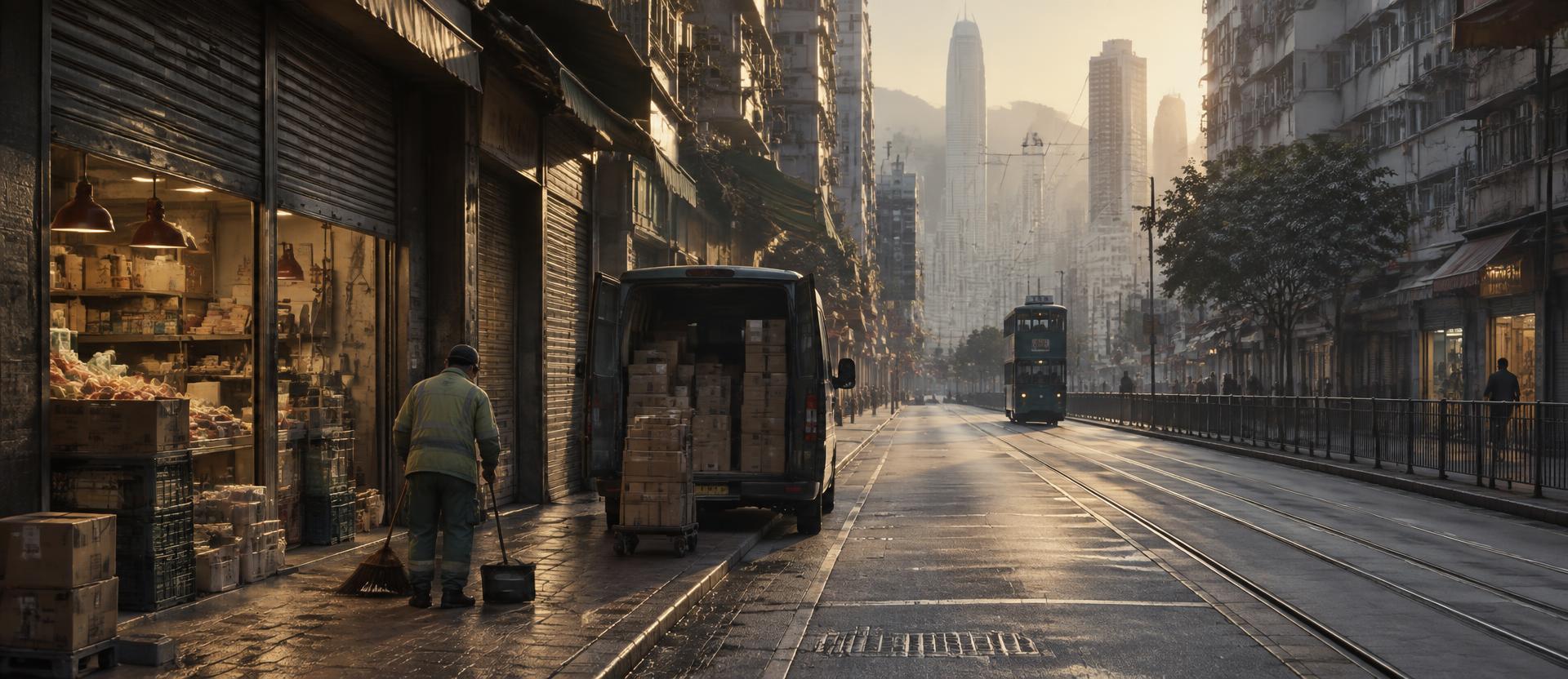
Before the rush
Morning arrives gradually.
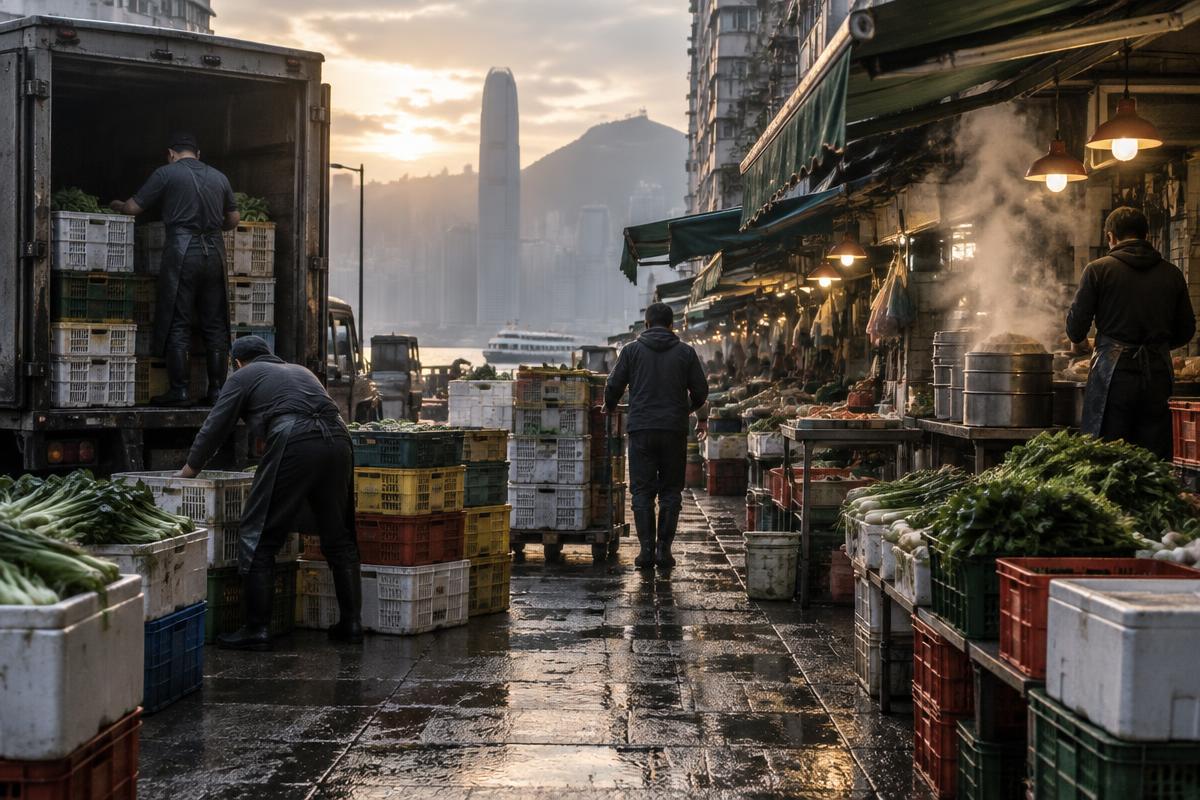
Delivery vans sit with their doors open.
Boxes are stacked beside shopfronts.
Restaurants begin preparing for the day.
Street cleaners move along pavements that will soon become considerably harder to navigate.
Some shutters are still down.
Others are halfway up.
Office workers begin appearing with coffee in hand.
People queue for breakfast.
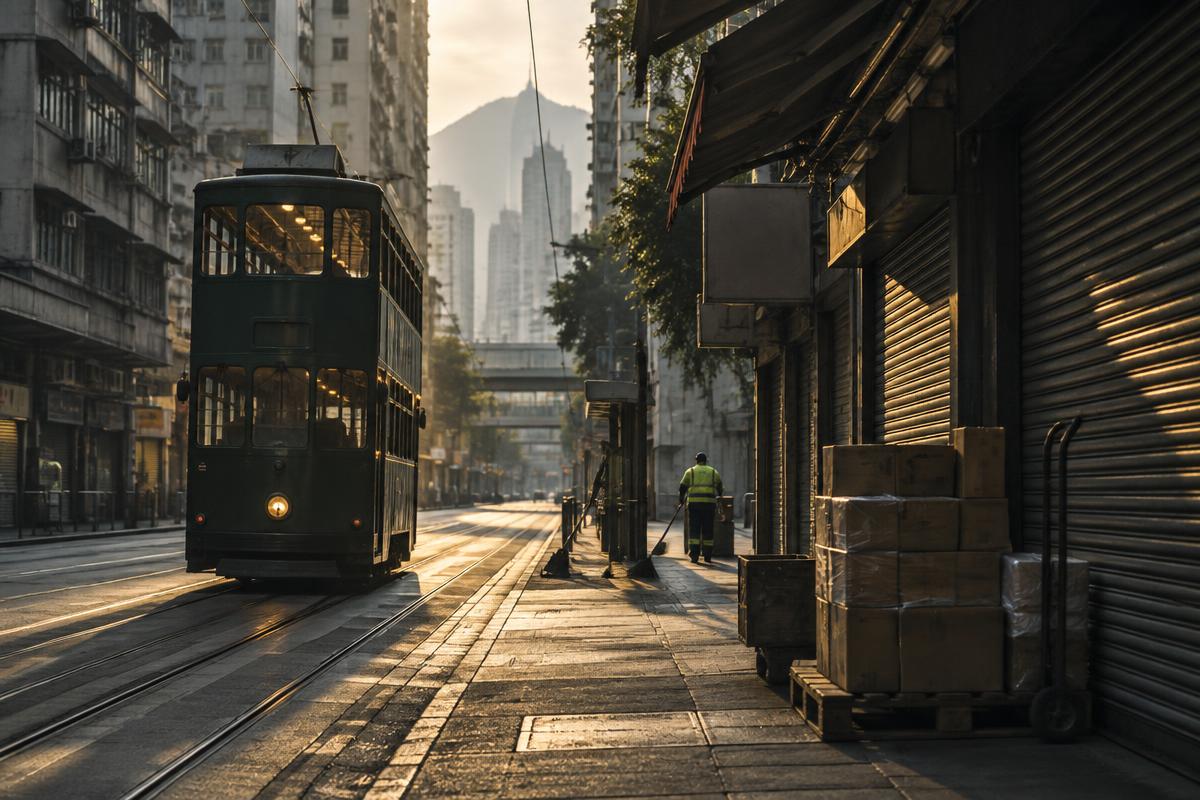
Trams move along streets that have not yet filled with traffic.
Nothing particularly remarkable is happening.
That is what makes it interesting.
Hong Kong before 8AM is less about landmarks and more about routine.
For a short period, you get to see the machinery of the city before the finished version appears.
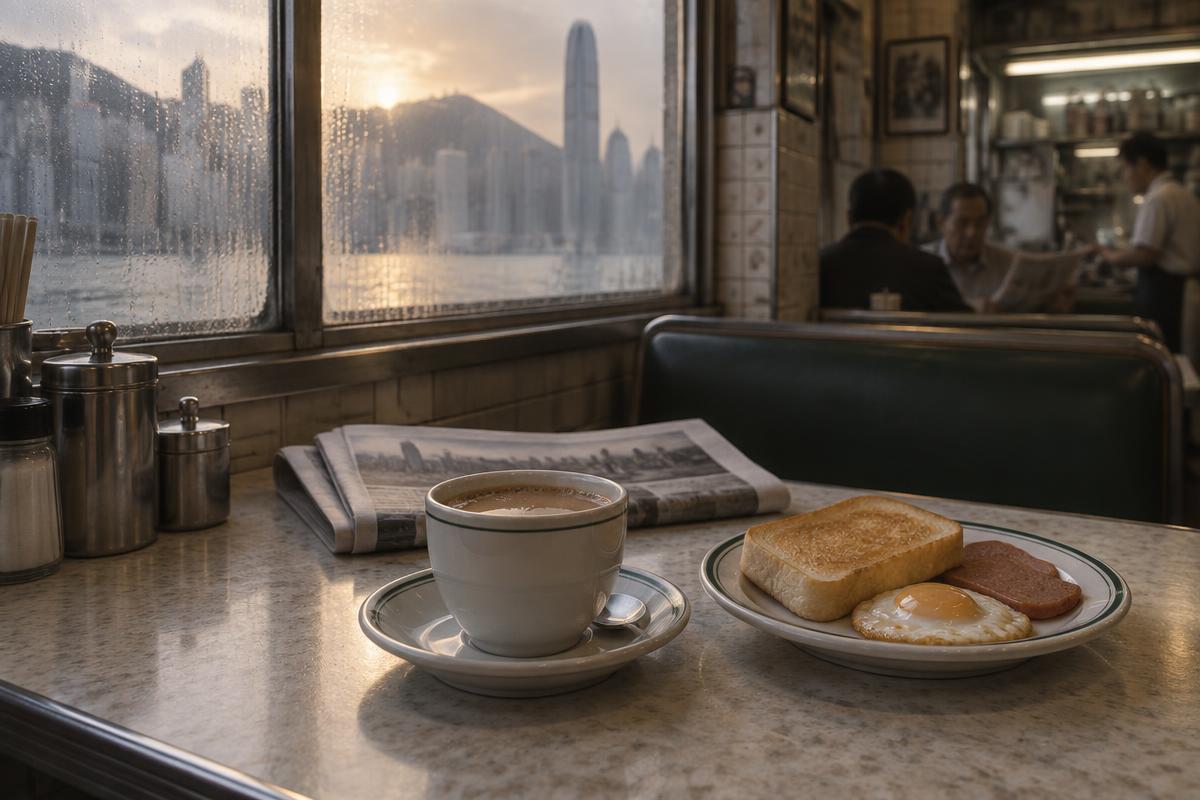
Breakfast before everything else
Morning in Hong Kong has its own rhythm.
A table.
Tea.
Coffee.
Toast.
Eggs.
Noodles.
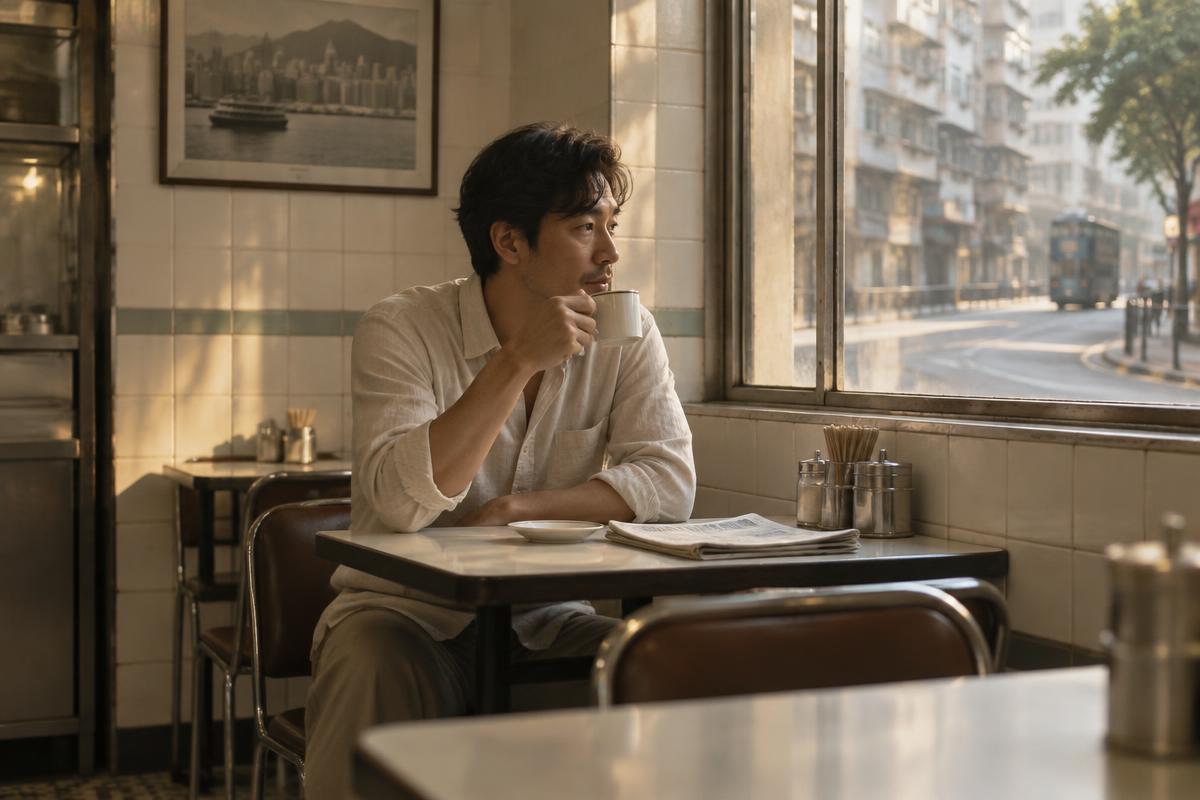
A newspaper or a phone placed beside the plate.
The cha chaan teng is part of that rhythm.
Hong Kong's cafés have always been places of practicality as much as pleasure. People arrive, order, eat and move on.
There is rarely much ceremony.
That directness feels appropriate.
Breakfast does not need to become an event.
Sometimes it is simply the beginning of the day.
And in a city known for speed, there is something appealing about sitting still for twenty minutes while everything outside starts moving.
The streets belong to different people
Walk through a city at different times and you discover different versions of it.
At midday, a street belongs to shoppers.
In the evening, perhaps to restaurants and bars.
Early in the morning, it belongs to the people who make those later versions possible.
Cleaners.
Drivers.
Market traders.
Restaurant workers.
People unloading deliveries.
People setting out stools.
People washing pavements.
People preparing things that most of us will encounter only once they are finished.
You notice the physical work of a city more clearly when there are fewer distractions around it.
The boxes have to arrive somehow.
The food has to be prepared.
The doors have to open.
Morning makes the process visible.
Take the tram early
There are faster ways to move around Hong Kong.
That is not always the point.
From the upper deck of a tram, the city passes at a pace that gives you time to look.
Windows.
Balconies.
Signs.
Market stalls.
Side streets.
People waiting at crossings.
Buildings that seem completely ordinary until you have enough time to notice them.
Early in the morning, that view becomes clearer.
Less traffic.
Softer light.
Fewer people competing for your attention.
The city feels briefly less compressed.
A journey does not always have to be reduced to the amount of time it takes to arrive.
Sometimes the slower route gives you more.
Look up
Hong Kong encourages you to look straight ahead.
There is always somewhere to go.
Someone to avoid walking into.
A crossing to make.
A train arriving.
But much of the city exists above eye level.
Air-conditioning units.
Balconies.
Old signs.
Drainage pipes.
Washing.
Windows.
Plants growing from improbably small spaces.
Entire lives stacked vertically above shops and restaurants.
Early morning light makes those details easier to see.
Some buildings catch the sun while the street below remains in shadow.
Glass towers reflect light onto older concrete blocks.
A city that often appears grey suddenly reveals far more colour.
You only need to stop looking at the pavement.
The harbour changes the pace
Then there is the water.
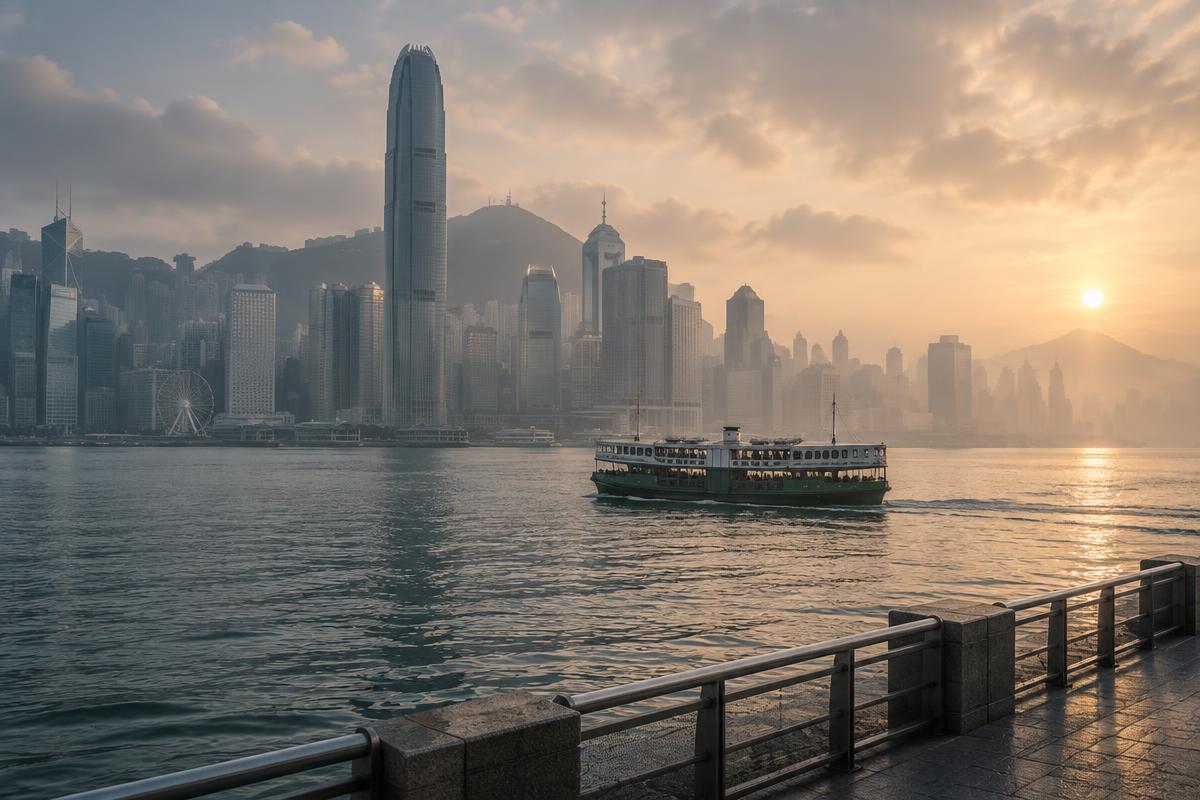
Few things change the feeling of Hong Kong as quickly as reaching Victoria Harbour.
The density opens.
Buildings move backwards.
There is suddenly distance between things.
In the morning, before the day fully develops, that space feels even more pronounced.
Ferries cross.
Boats move slowly through the harbour.
The skyline sits opposite rather than above you.
For a few minutes, Hong Kong stops feeling vertical.
That matters.
Cities need pauses.
Places where the eye can travel further than the next building.
The harbour gives Hong Kong one of its largest.
Before the heat
Summer mornings also provide a short window before the temperature begins dictating the day.
The humidity is already there.
It usually is.
But the intensity has not yet arrived.
Walking feels easier.
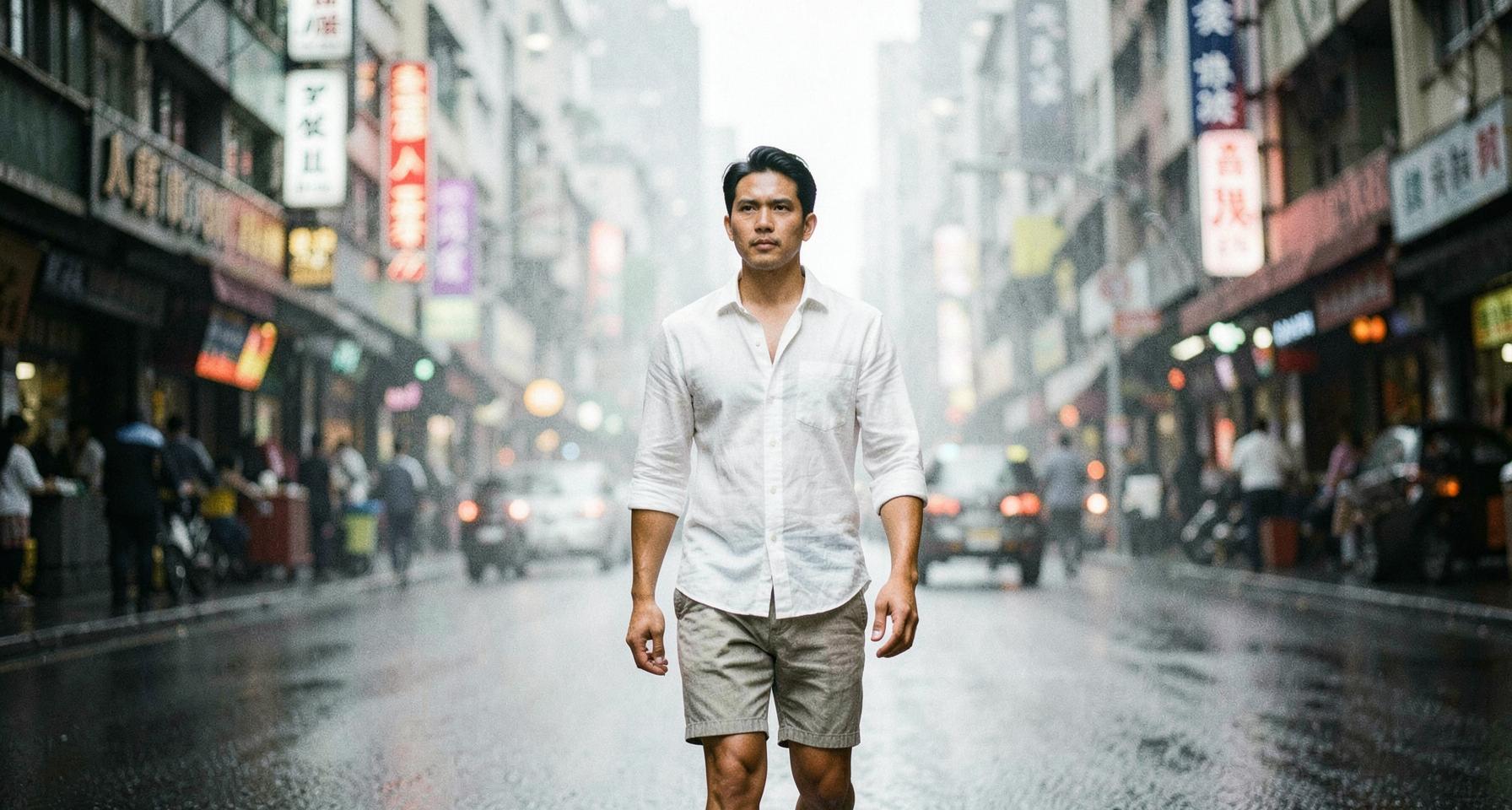
A lightweight shirt is enough.
There is less need to move immediately from one air-conditioned space to another.
You can simply keep going.
That freedom does not last forever.
By later in the day, shade becomes valuable and every unnecessary layer begins making itself known.
Early morning allows clothing to disappear into the background.
Which is exactly where good clothing often belongs.
Ordinary Hong Kong
There is a tendency when visiting somewhere to search constantly for the exceptional.
The famous view.
The photograph everyone takes.
The place recommended by every guide.
Those things can still be worth seeing.
But they rarely tell you everything.
A city reveals itself just as clearly through the ordinary.
Someone opening a shop.
A man reading at the same table he probably uses every morning.
A tram stopping for one passenger.
Condensation running down a café window.
A red taxi turning into an otherwise quiet street.
Plastic crates stacked outside a market.
A ferry pulling away.
None of those moments asks to be photographed.
That may be why they stay with you.
Take it in
EUVRΛN began with the idea of experiencing more without constantly adding more.
Hong Kong makes that idea feel particularly relevant.
There is already enough happening.
You do not need to manufacture interest.
You just need to pay attention.
Go out earlier.
Walk instead of taking the quickest route.
Sit somewhere for a while.
Take the tram.
Cross the harbour.
Look above the shopfronts.
Notice what changes as the city wakes.
By 8AM, Hong Kong is already becoming something else.
The shutters are up.
The roads are filling.
The light is changing.
The quieter version of the city begins disappearing into the day.
Tomorrow morning, it starts again.
Take it in.
More experience. Less excess.
You might also like
City — August 2026
Why Hong Kong? The City Behind Volume 01
Guide — June 2026