
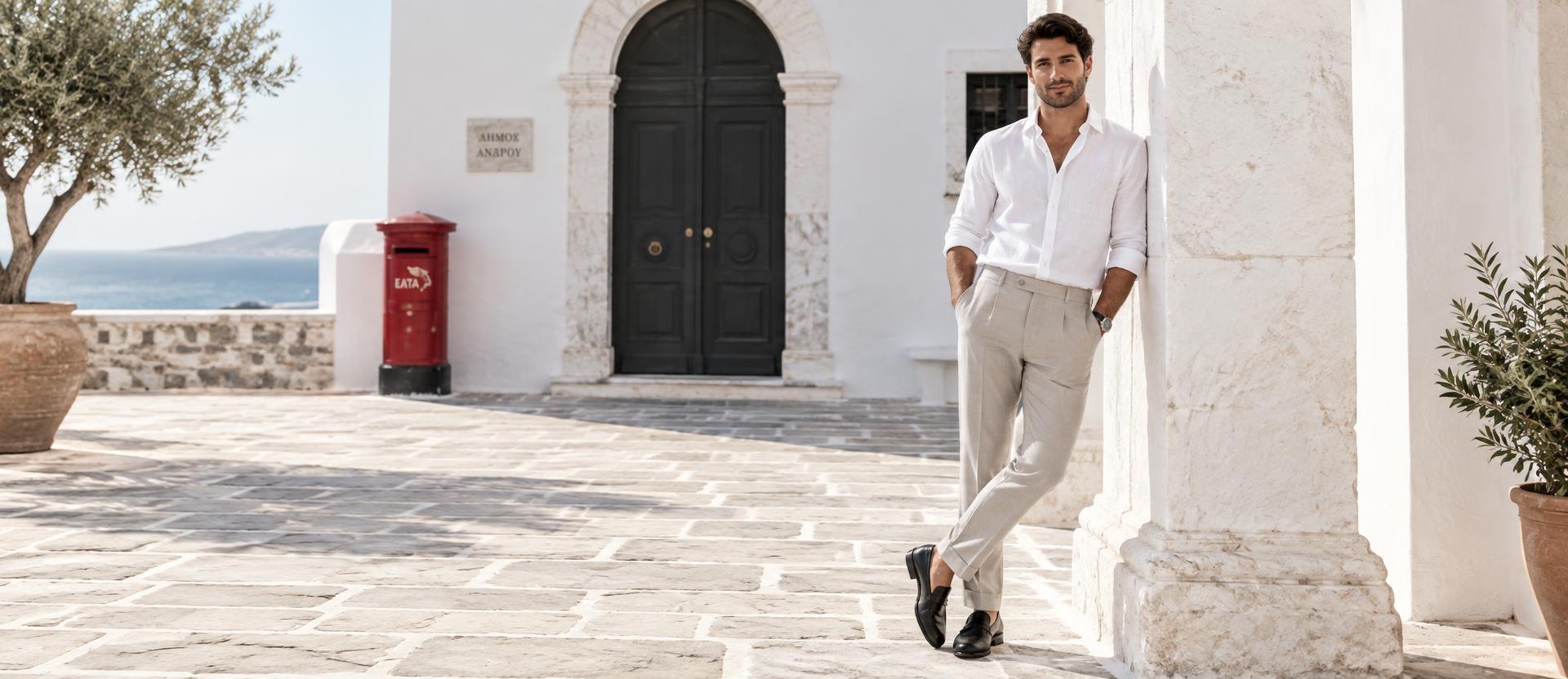
Smart casual becomes harder when the temperature rises.
The usual solutions — layers, heavier fabrics, jackets, structured trousers — suddenly stop making much sense.
But dressing well in hot weather does not mean choosing between being uncomfortable and looking too casual.
The answer is usually simpler.
Lighter fabrics.
Cleaner shapes.
Fewer layers.
And a little more attention to proportion.
Smart casual in summer should feel effortless.
Not formal.
Not beachwear.
Somewhere comfortably between the two.
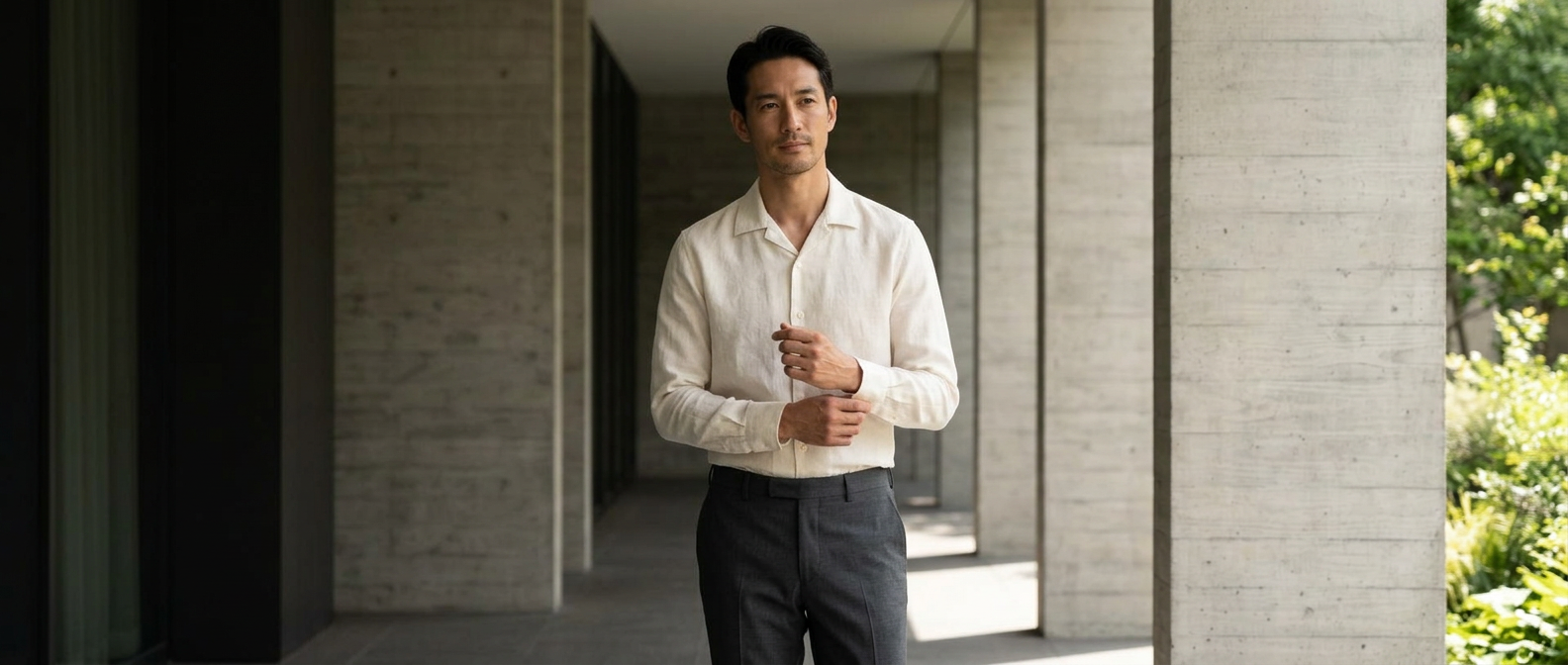
What does smart casual actually mean?
Smart casual is deliberately vague.
That is partly why people struggle with it.
It does not have one fixed uniform.
A restaurant may mean something different by smart casual than an office, hotel or evening event.
In most cases, though, the idea is straightforward.
Look considered without looking formal.
That might mean trousers with a T-shirt.
Shorts with a good shirt.
A lightweight overshirt instead of a jacket.
Clean footwear rather than formal shoes.
The individual pieces matter less than the balance between them.
Start with the fabric
In warm weather, fabric becomes the foundation of the outfit.
Heavy cotton.
Thick denim.
Dense synthetic fabrics.
Structured jackets.
All can become uncomfortable quickly.
Linen, lightweight cotton, linen-cotton blends and tropical wool are usually better suited to heat.
They allow more air to move and reduce the amount of weight sitting against the body.
A shirt can still look smart without being stiff.
Trousers can still look clean without being heavy.
Good summer clothing should feel appropriate for the climate first.
Everything else comes afterwards.
A shirt does not need to be formal
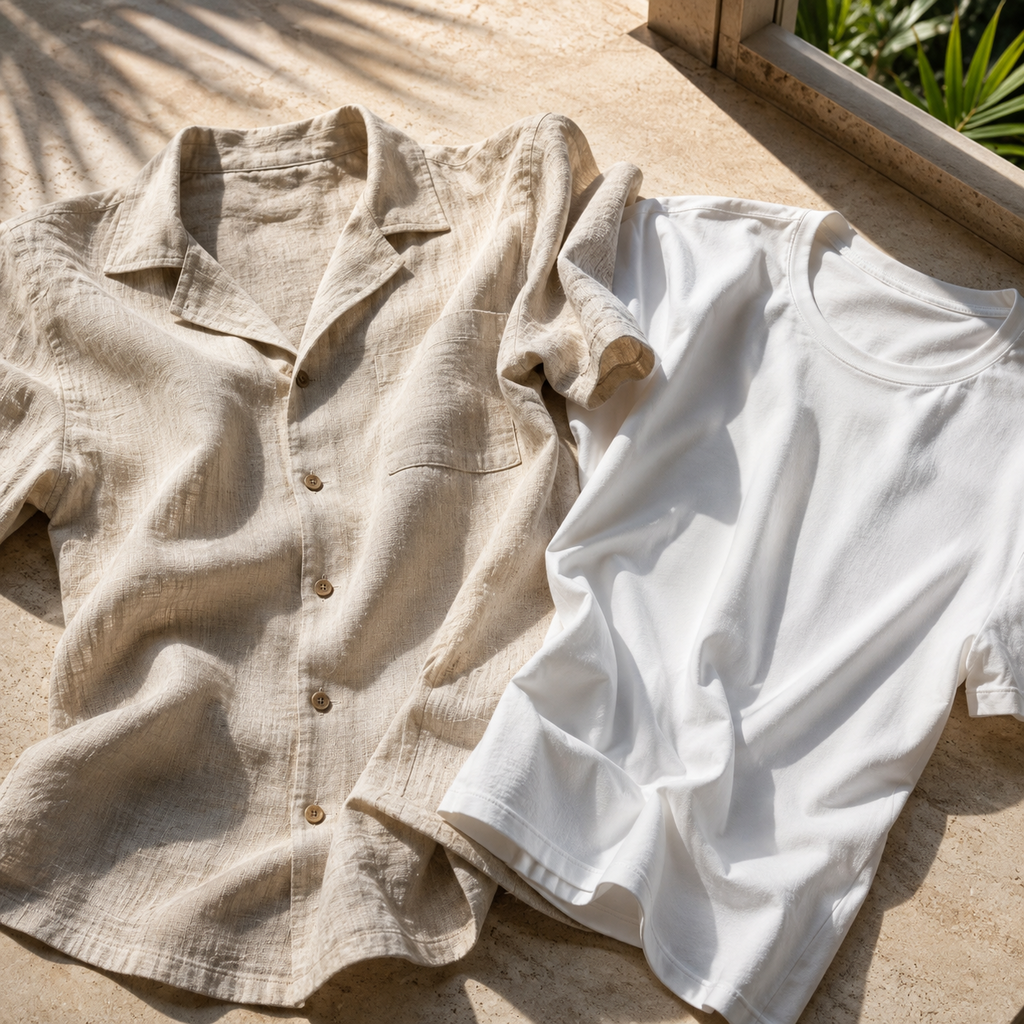
A lightweight shirt is one of the easiest ways to make an outfit feel more considered.
It creates structure without requiring a jacket.
White, stone, pale blue, navy and black all work well.
Linen is particularly useful because its natural texture stops the shirt from feeling overly formal.
A little creasing is expected.
That makes the whole outfit feel more relaxed.
Short-sleeved shirts can work well too, provided the fit is clean and the design is simple.
Avoid excessive detailing.
The shirt itself should do enough.
The T-shirt can still be smart casual
A plain T-shirt is not automatically too casual.
The difference is usually fit, fabric and what you wear with it.
A clean white or black T-shirt with lightweight tailored trousers can look far more considered than a poorly fitting shirt.
The neckline should hold its shape.
The shoulders should sit correctly.
The fabric should have enough structure to look deliberate.
And branding should be restrained.
When the T-shirt is simple, the rest of the outfit becomes more important.
Good trousers.
Clean shoes.
Perhaps a watch or pair of sunglasses.
That can be enough.
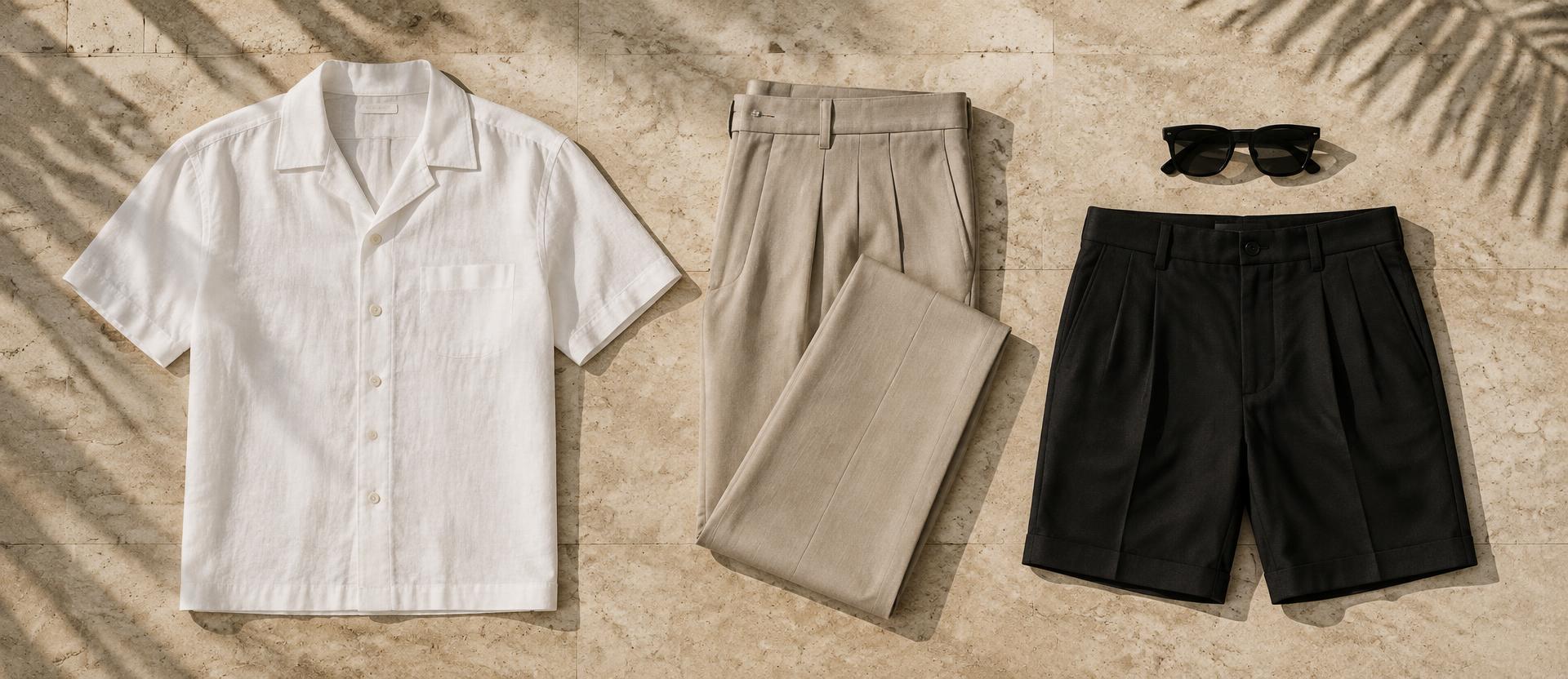
Choose trousers that breathe
Traditional formal trousers are often too heavy for summer.
Instead, look for lightweight cotton, linen blends or tropical wool.
The cut should allow movement.
Very slim trousers can become uncomfortable quickly in heat.
A straight or gently tapered leg usually works better.
Neutral colours are easiest.
Stone.
Navy.
Charcoal.
Black.
Light grey.
Olive.
They pair easily with both shirts and T-shirts and give the outfit a more structured base.
Can shorts be smart casual?
Yes.
But not all shorts.
The key is keeping them clean and simple.
Avoid anything overly sporty.
Avoid excessive cargo pockets.
Avoid cuts that are too long or too loose.
A tailored or structured short in a neutral colour can work extremely well with a linen shirt or clean T-shirt.
Length matters too.
Somewhere above the knee usually creates the most balanced shape.
The result should feel intentional.
Not as though you simply removed the trousers because it was hot.
Footwear changes everything
Shoes can push an outfit in either direction very quickly.
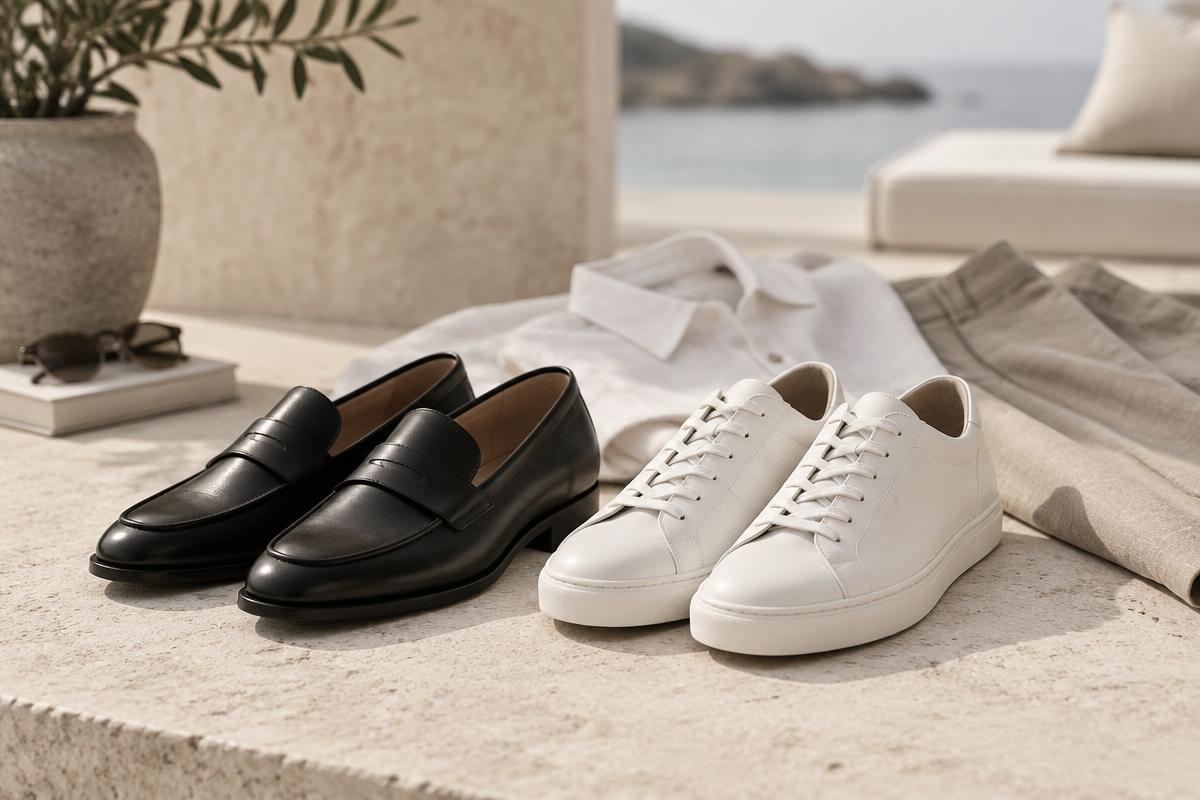
A simple pair of leather or suede loafers can make an outfit feel smarter.
Minimal trainers can keep things relaxed without looking careless.
Slip-ons can work especially well in warm climates because they feel lighter and less formal.
Sandals are more difficult, but not impossible.
A very simple, understated pair can work in the right setting.
Flip-flops usually belong firmly at the casual end of the spectrum.
The most important thing is condition.
Clean shoes almost always look smarter than complicated ones.
Do you need a jacket?
Usually not.
This is where summer smart casual becomes easier.
If the temperature makes a jacket uncomfortable, do not wear one simply because you think the outfit needs another layer.
A good shirt can provide enough structure.
An overshirt can work if the evening becomes cooler.
A lightweight unstructured blazer may make sense for more formal settings, but it should be breathable and easy to wear.
There is little value in looking perfectly dressed while visibly overheating.
Comfort is part of looking good.
Use one layer, not three
Layering is often used to make outfits more interesting.
In hot weather, that strategy has limits.
Instead of stacking multiple pieces, use one light layer properly.
A shirt worn open over a T-shirt.
An overshirt over a lightweight top.
A thin jacket in the evening.
That creates depth without adding unnecessary weight.
Summer dressing is often about removing things rather than adding them.
Keep the colours controlled
Smart casual works best when the colour palette feels coherent.
That does not mean everything has to be neutral.
But fewer competing colours usually make an outfit look more considered.
A simple combination might be:
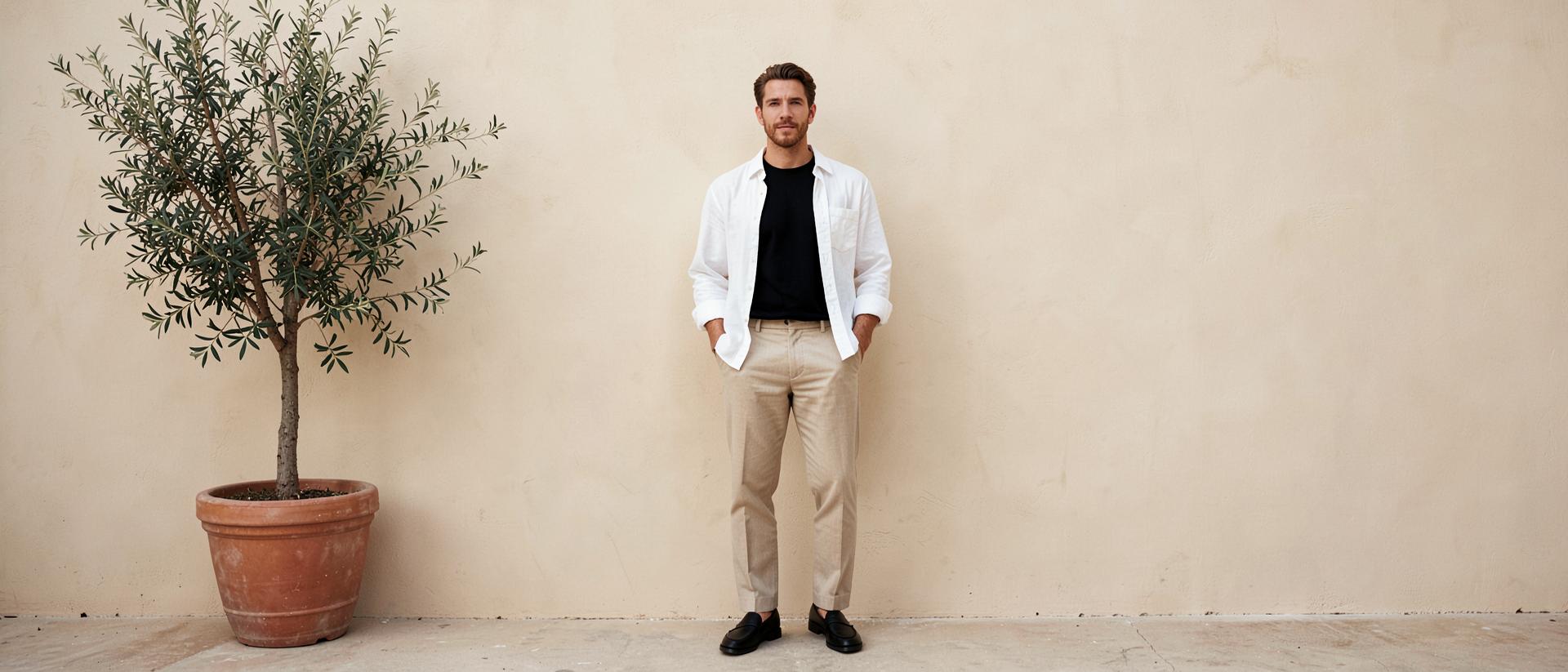
White shirt.
Stone trousers.
Black shoes.
Or:
Black T-shirt.
Lightweight grey trousers.
Minimal trainers.
Or:
Sand shorts.
White T-shirt.
Dark overshirt.
The simplicity makes the proportions and materials more noticeable.
That is usually a good thing.
Accessories should stay restrained
Summer outfits often involve fewer clothes.
That can make accessories more visible.
A watch.
Sunglasses.
A bracelet.
Perhaps a simple cap in more casual settings.
You do not need all of them at once.
One or two details are usually enough.
The aim is to finish the outfit rather than decorate it.
Smart casual for a summer dinner
For an evening restaurant, a simple formula works well:
Lightweight shirt.
Relaxed trousers.
Clean loafers or minimal shoes.
No jacket required unless the setting demands it.
The shirt can be linen.
The trousers can be lightweight cotton or wool.
The colours can remain neutral.
There is no need to make it more complicated.
Smart casual for the office in hot weather
Work adds a little more structure.
A lightweight shirt.
Breathable trousers.
Simple closed shoes.
If a jacket is necessary, choose something unlined or lightly constructed.
Avoid heavy layers underneath.
The goal is to maintain a clean silhouette without dressing as though the temperature does not exist.
Professional does not have to mean uncomfortable.
Smart casual for travel
Travel requires versatility.
You want clothing that can handle walking, sitting, changing temperatures and arriving somewhere without looking completely creased.
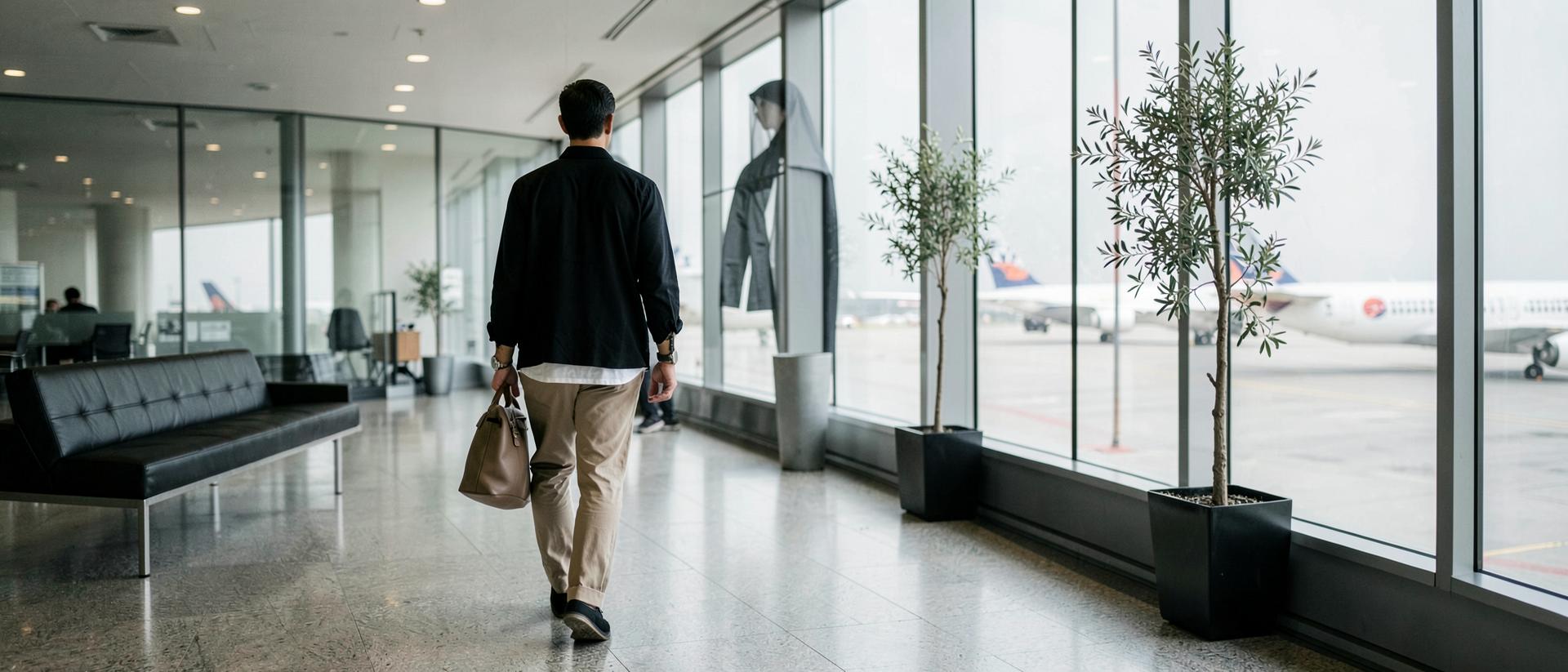
A useful combination might be:
Plain T-shirt.
Lightweight trousers.
Overshirt.
Comfortable slip-ons or minimal trainers.
The overshirt can be removed outside and added again in airports, hotels or air-conditioned spaces.
Few pieces.
Several uses.
That is usually enough.
Avoid trying too hard
The biggest mistake with smart casual is often overthinking it.
Too many details.
Too many layers.
Too much effort to prove that the outfit is smart.
Summer clothes work best when they feel lighter in every sense.
Use better materials.
Get the fit right.
Keep the colours controlled.
Wear clean shoes.
Stop before the outfit becomes complicated.
The simplest formula
If you are unsure what to wear, start here:
One well-fitting shirt or T-shirt.
One clean pair of lightweight trousers or tailored shorts.
One pair of simple shoes.
One or two restrained accessories.
That is enough for most smart casual situations.
The climate should influence the clothes.
Not be ignored by them.
Dressing well in heat is not about forcing formal clothing into summer.
It is about finding a lighter version of being considered.
Less structure. Less weight. Less excess.
More experience. Less excess.
You might also like
Guide — June 2026
What to Wear in Hong Kong in Summer
Material — August 2026