
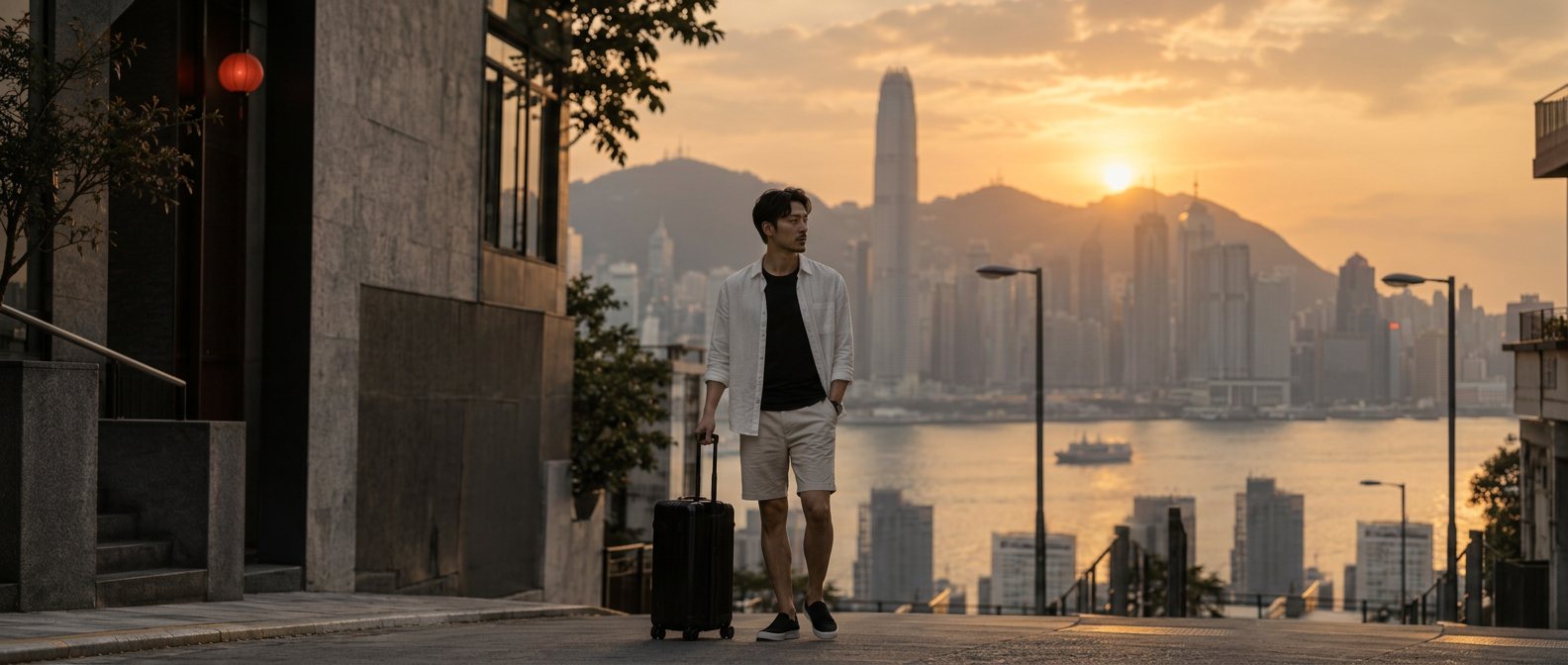
Packing for Hong Kong is mostly about preparing for contrast.
Heat outside.
Air conditioning inside.
Sudden rain.
Long walks.
Casual days.
Smarter evenings.
A trip can move through all of those in the space of a few hours.
That does not mean you need to pack for every possible situation.
It means the pieces you bring should work harder.
A good Hong Kong packing list is light, adaptable and easy to combine.
The aim is not to take more.
It is to need less.
Start with the weather
Hong Kong is warm for much of the year, but summer is where clothing choices become particularly important.
Heat and humidity can make heavy fabrics uncomfortable quickly.
Rain can arrive without much warning.
And indoor spaces can feel considerably cooler than the streets outside.
That makes lightweight, breathable clothing the obvious starting point.
Cotton.
Linen.
Linen blends.
Lightweight trousers.
Simple layers.
Anything that feels heavy before you have even left the hotel probably does not need to come with you.
Pack clothes that work together
The easiest way to overpack is to plan every outfit separately.
One shirt for this restaurant.
Different trousers for another evening.
A pair of shoes that only works with one look.
Very quickly, the suitcase fills with pieces that depend on each other.
A better approach is to choose a small group of clothes that can all be combined.
If every T-shirt works with every pair of shorts or trousers, getting dressed becomes much easier.
It also means you can change plans without needing a completely different outfit.
That matters in a city where the day often develops as you go.
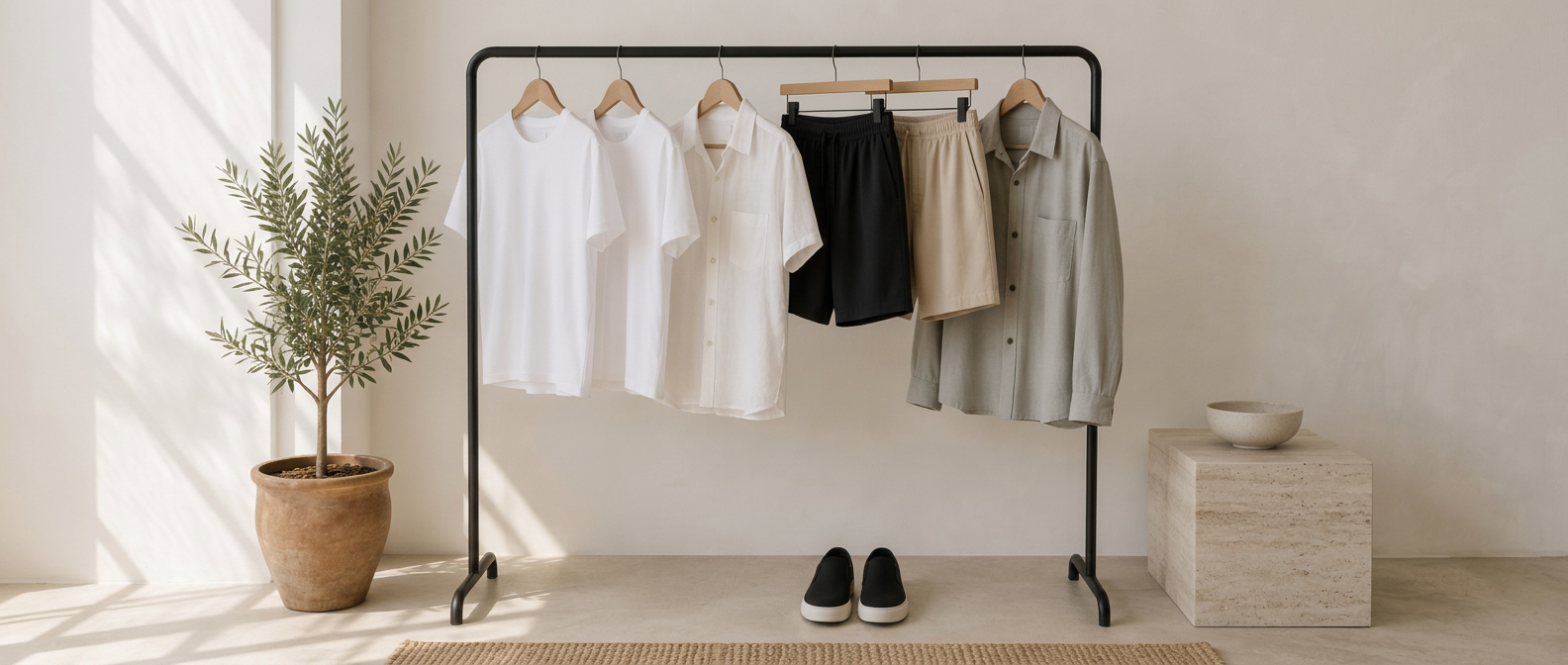
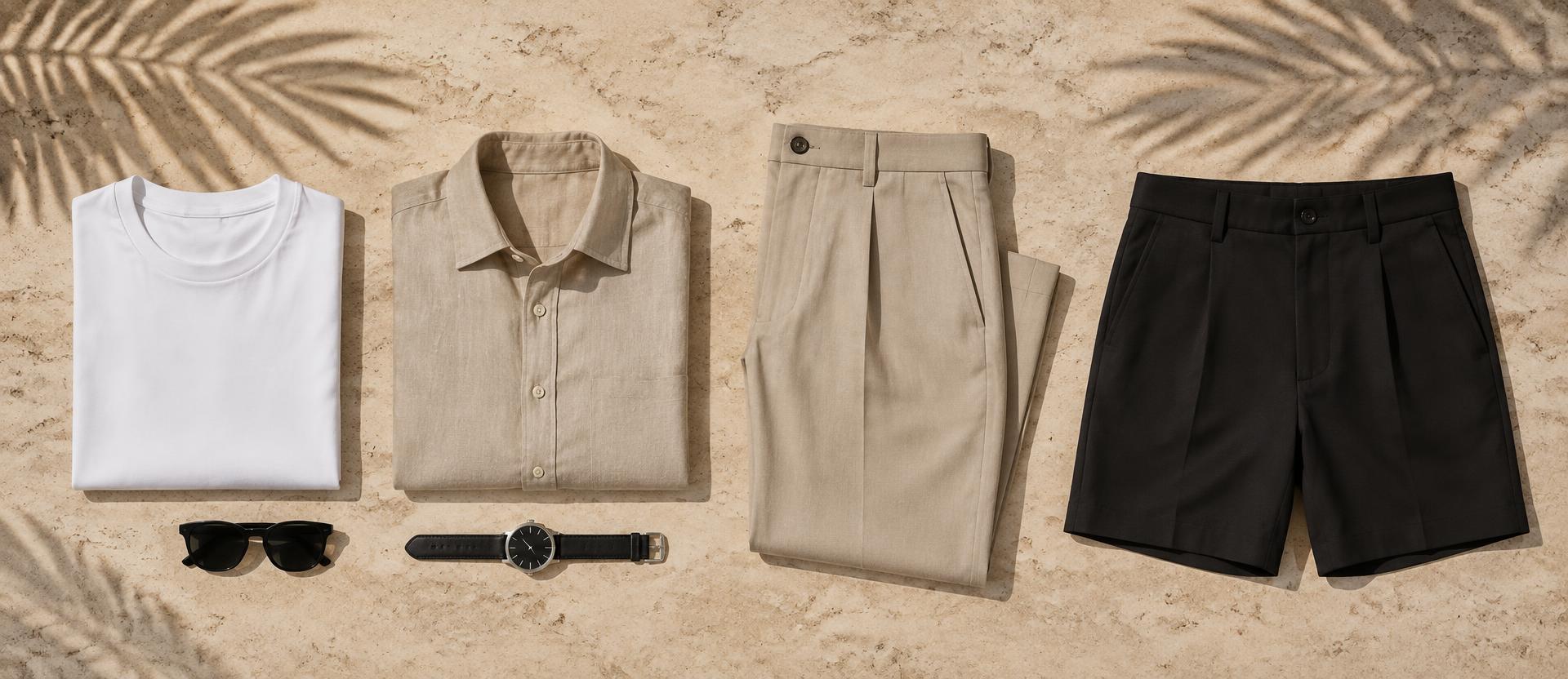
Three or four T-shirts
For a short trip, three or four good T-shirts will cover most situations.
Choose lightweight cotton rather than anything excessively heavy.
White and black are easy foundations.
Then add one or two neutral or muted colours if you want more variation.
Fit matters.
A T-shirt should have enough room to remain comfortable in humidity without becoming oversized.
It should also work on its own rather than relying on another layer to make the outfit feel complete.
In Hong Kong summer, that will often be exactly how you wear it.
One or two lightweight shirts
A breathable shirt adds a surprising amount of versatility.
Linen works particularly well.
So does a lightweight cotton or linen-cotton blend.
A shirt can be worn by itself during the day.
Open over a T-shirt.
With shorts.
With trousers.
To dinner.
Inside a heavily air-conditioned space.
One light shirt can solve several different packing problems at once.
That is exactly what you want when travelling.
One pair of shorts
For many trips, one good pair is enough.
Choose a neutral shade that works with every top you are bringing.
Stone.
Sand.
Black.
Navy.
Muted green.
The exact colour matters less than compatibility.
The shorts should be comfortable enough for walking but structured enough that they do not feel limited to the beach.
Clean lines and useful pockets are generally more valuable than extra detailing.
One pair of lightweight trousers
Even during summer, trousers are worth packing.
Some restaurants and venues feel more appropriate in them.
They are useful during travel.
They can also make an evening outfit feel more considered without adding much complexity.
Look for lightweight cotton, linen blends or another breathable fabric.
Avoid anything overly heavy or restrictive.
A single neutral pair can work with every shirt and T-shirt in your bag.
That is enough.
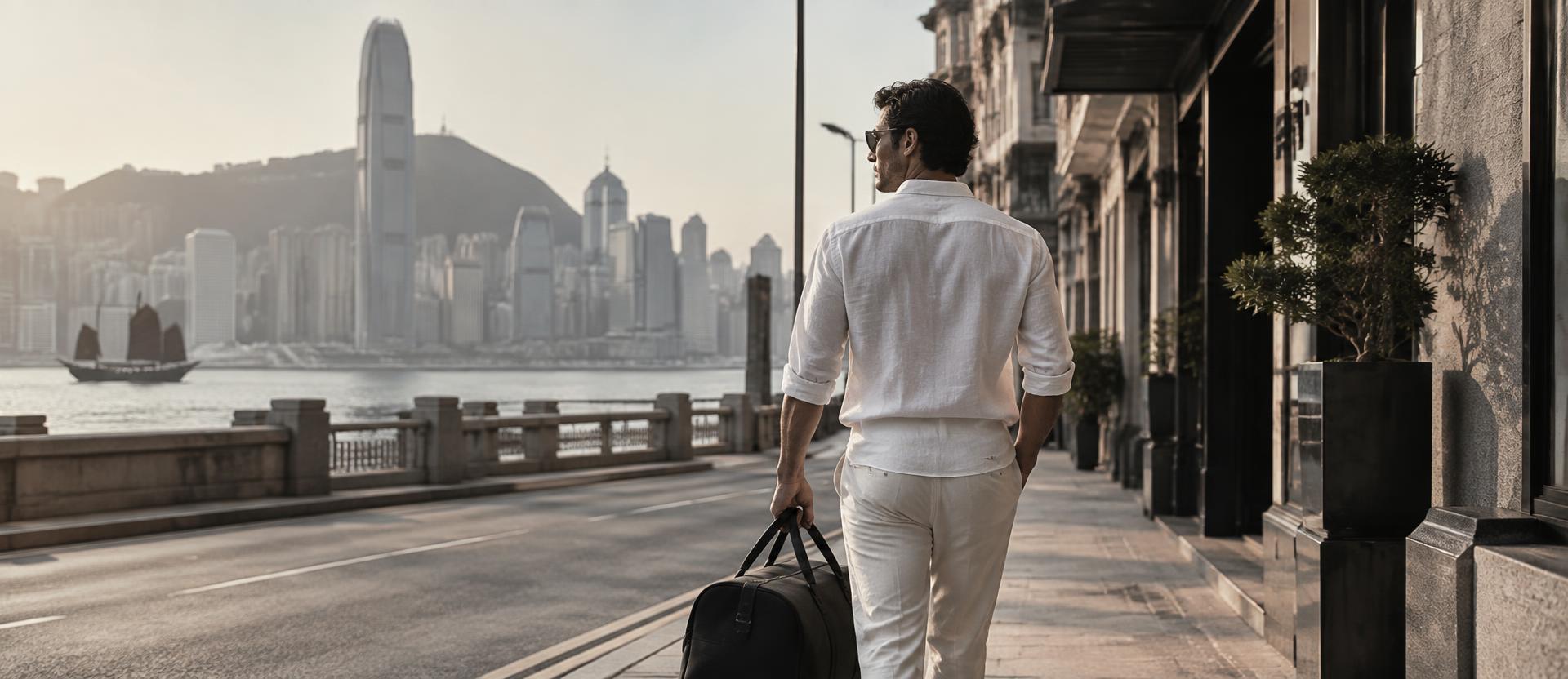
One light layer
This may feel unnecessary when you first step outside.
It will make more sense when you walk into a shopping centre, restaurant, hotel or airport.
Hong Kong air conditioning can create a significant temperature difference between indoors and outdoors.
A lightweight overshirt is usually more practical than a jacket.
It can be folded easily.
Worn open over a T-shirt.
Used on the flight.
Added during the evening.
Then removed again outside.
A layer does not need to be substantial to be useful.
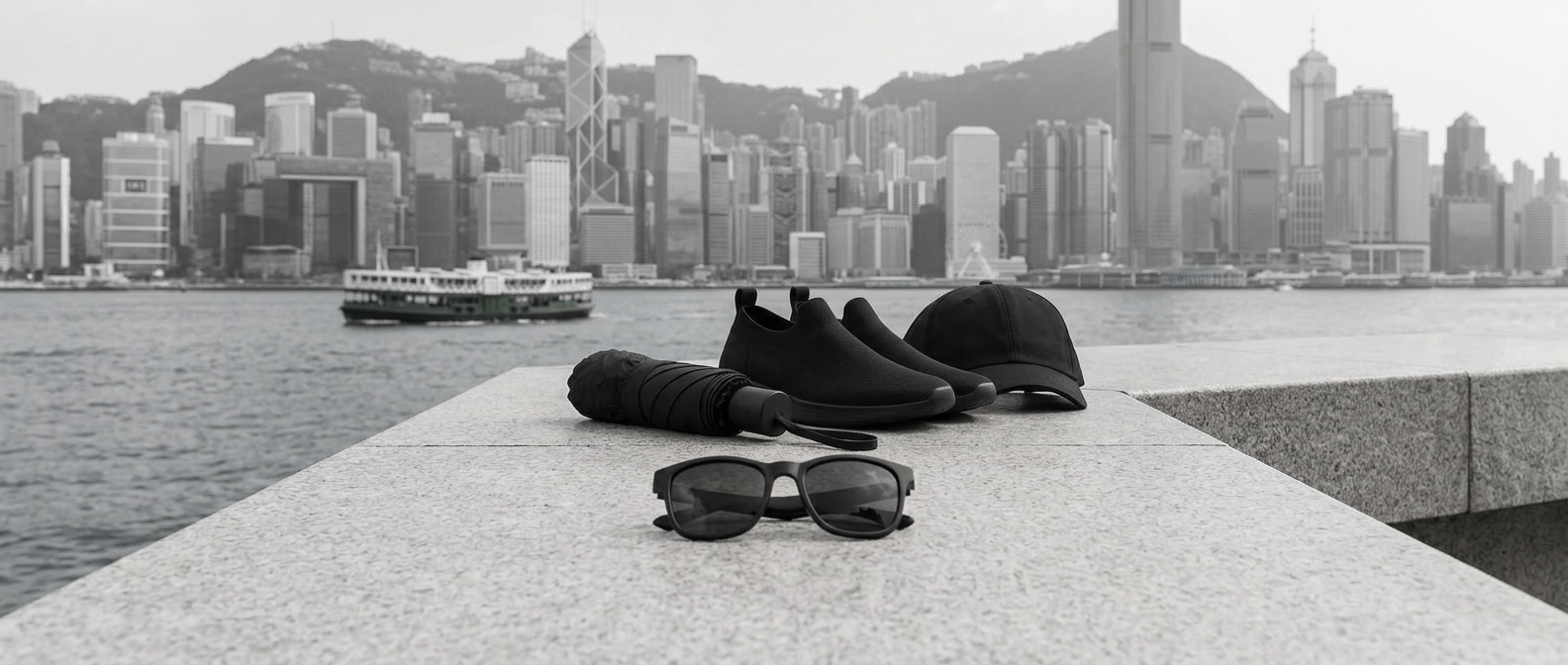
Pack shoes for walking
Hong Kong rewards walking.
Markets.
Side streets.
Neighbourhoods.
Harbourfronts.
MTR connections.
Steep roads.
You may travel efficiently around the city and still end the day having covered a considerable distance on foot.
Comfortable footwear therefore matters.
A simple trainer or lightweight slip-on can cover most situations.
Choose something you already know you can walk in.
A holiday is not the ideal time to discover that a new pair of shoes becomes uncomfortable after twenty minutes.
Do you need a second pair of shoes?
Possibly.
But they should serve a genuinely different purpose.
A more relaxed summer option can make sense.
Sandals.
Flip-flops.
A lightweight loafer.
Something easy for short walks, the hotel or a very casual day.
There is little reason to bring multiple pairs of similar trainers.
Shoes take up too much space to travel without a purpose.
Bring an umbrella
This is one of the easiest things to underestimate.
Hong Kong can receive substantial rain, particularly during the warmer months.
A compact umbrella takes up very little room and is often more useful than carrying a waterproof jacket in humid weather.
You can keep it in your bag and forget about it until you need it.
That is usually the best kind of travel equipment.
Sunglasses
Simple.
Useful.
Easy to pack.
Hong Kong's mixture of bright skies, glass buildings and open harbour can make sunglasses worthwhile even when the day does not feel particularly sunny.
Choose a pair you are comfortable wearing regularly.
Travel is rarely the moment for accessories that need protecting every five minutes.
A cap
A lightweight cap can also be useful, especially during long periods outside.
It provides some shade without adding much to your luggage.
Like the rest of the packing list, keep it simple enough to work with everything else you are bringing.
If it only works with one outfit, it is probably not the right travel piece.
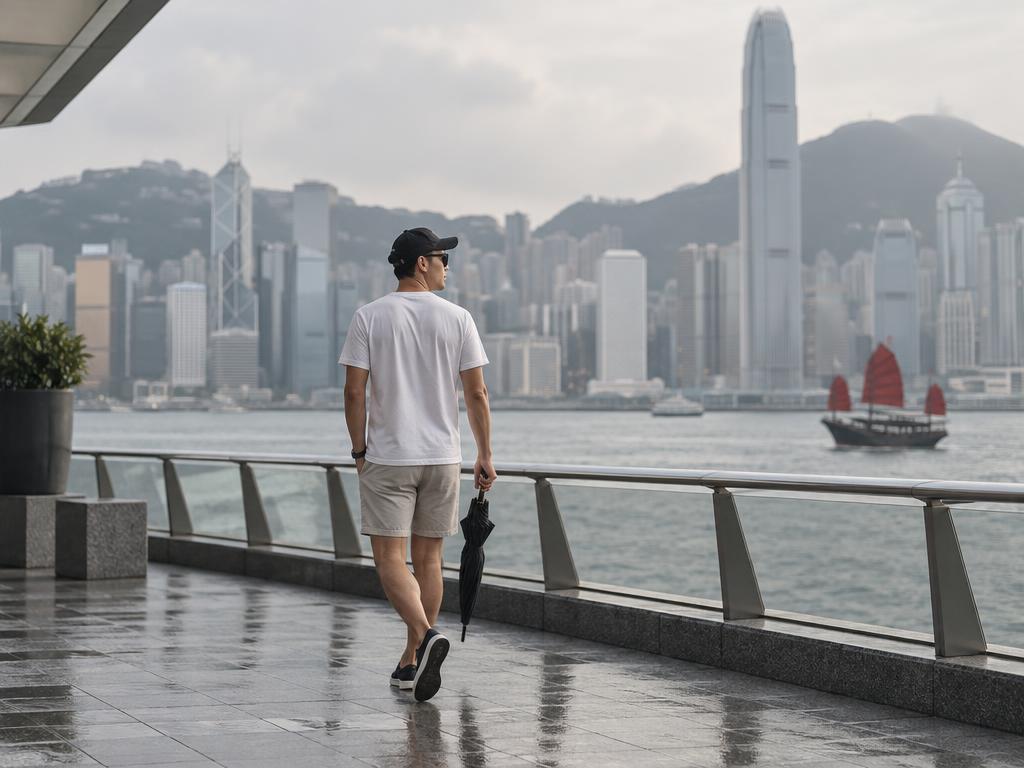
What not to pack
Overpacking often comes from preparing for unlikely scenarios.
Several jackets.
Heavy jeans in midsummer.
Multiple formal shoes.
Large numbers of individual outfits.
Clothing that only works with one other piece.
Anything you already suspect you will not wear.
If you are debating whether something will be useful, place it to one side.
Pack everything else first.
You may discover you never needed it.
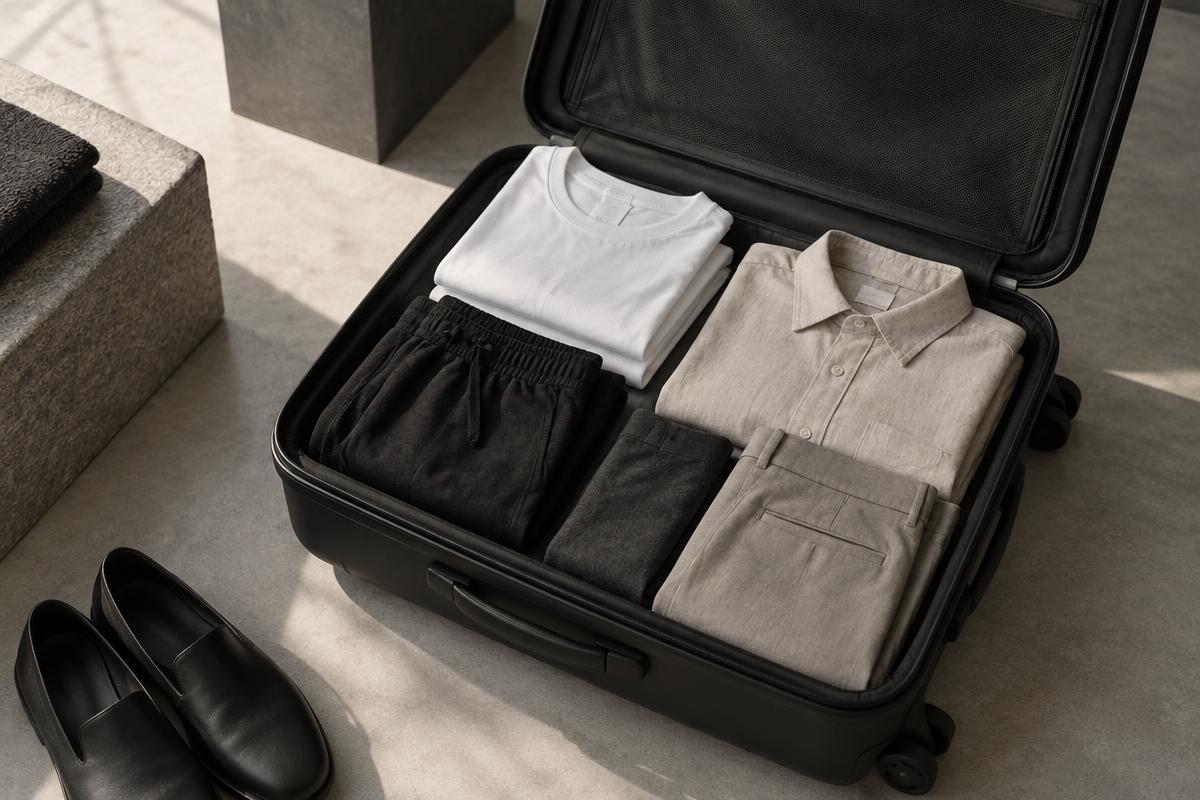
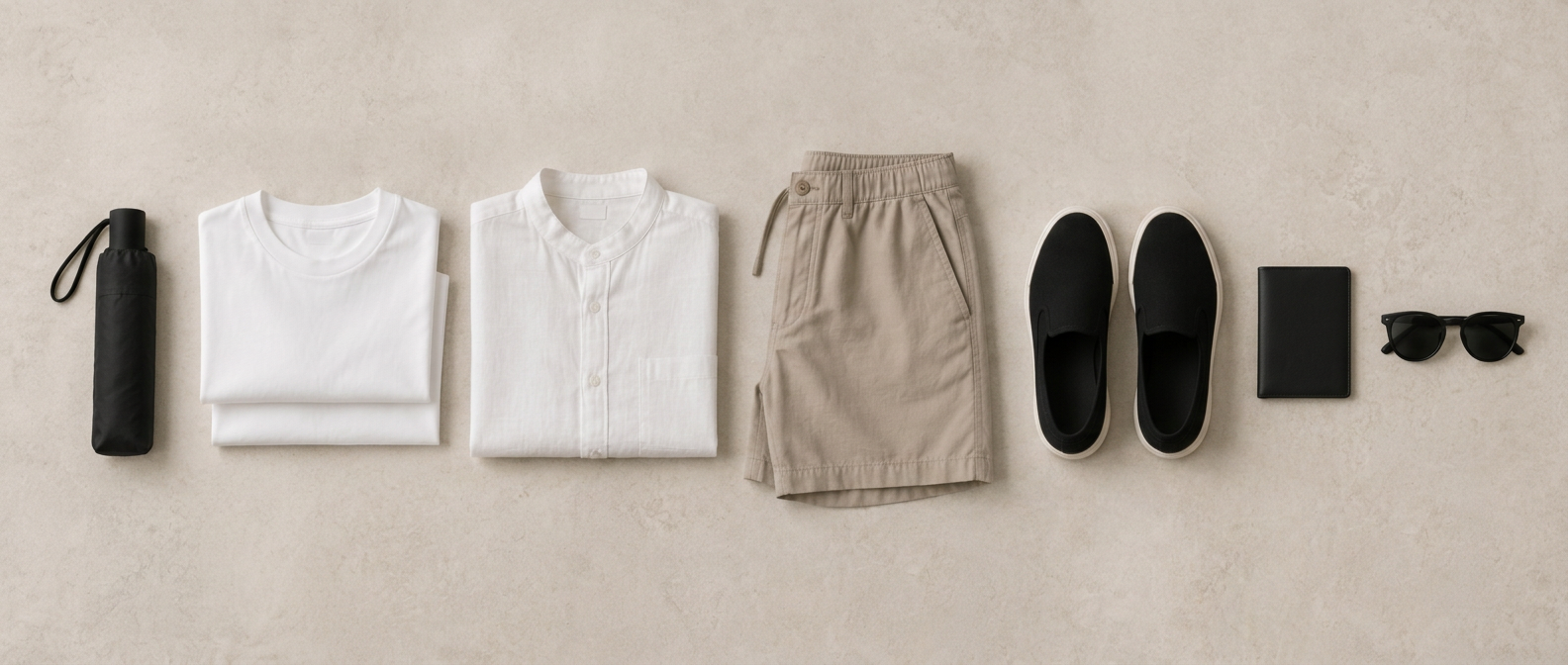
A simple 4-day Hong Kong packing list
For a short summer trip, something like this can be enough:
4 lightweight T-shirts
2 breathable shirts
1 pair of shorts
1 pair of lightweight trousers
1 light overshirt
1 pair of comfortable walking shoes
1 casual footwear option
Sunglasses
A cap
A compact umbrella
Plus underwear, socks and the usual personal essentials.
That gives you far more combinations than the size of the list suggests.
A simple 7-day Hong Kong packing list
For a week, you still do not need to double everything.
Add another T-shirt.
Perhaps another pair of shorts.
Possibly a second pair of trousers if your plans require them.
Laundry can also make a small wardrobe stretch considerably further.
The important point is that the core stays the same.
You are not building seven outfits.
You are building a small system of pieces that work together.
Leave room in the suitcase
There is another advantage to packing lightly.
Space.
Space to move through the airport without carrying unnecessary weight.
Space for something you find while travelling.
Space to bring something home.
And perhaps most importantly, less mental space spent thinking about clothes.
Hong Kong already provides enough decisions.
Where to eat.
Which street to follow.
Whether to take the tram or MTR.
Which side of the harbour to spend the evening on.
Your wardrobe does not need to become another problem.
Pack for the day you might actually have
The best travel clothing adapts.
You leave the hotel in a T-shirt and shorts.
Walk through the heat.
Take the MTR.
Stop somewhere for lunch.
A storm arrives.
Later, you change into trousers.
Add a shirt.
Head across the harbour.
The individual pieces are simple.
What matters is how easily they move through the day.
That is the principle behind a useful Hong Kong packing list.
Pack breathable fabrics.
Choose compatible colours.
Bring comfortable shoes.
Prepare for rain.
Keep one light layer nearby.
Then stop adding things.
The best-packed suitcase is rarely the fullest one.
Carry less. See more.
More experience. Less excess.
You might also like
Guide — June 2026
What to Wear in Hong Kong in Summer
Guide — August 2026