
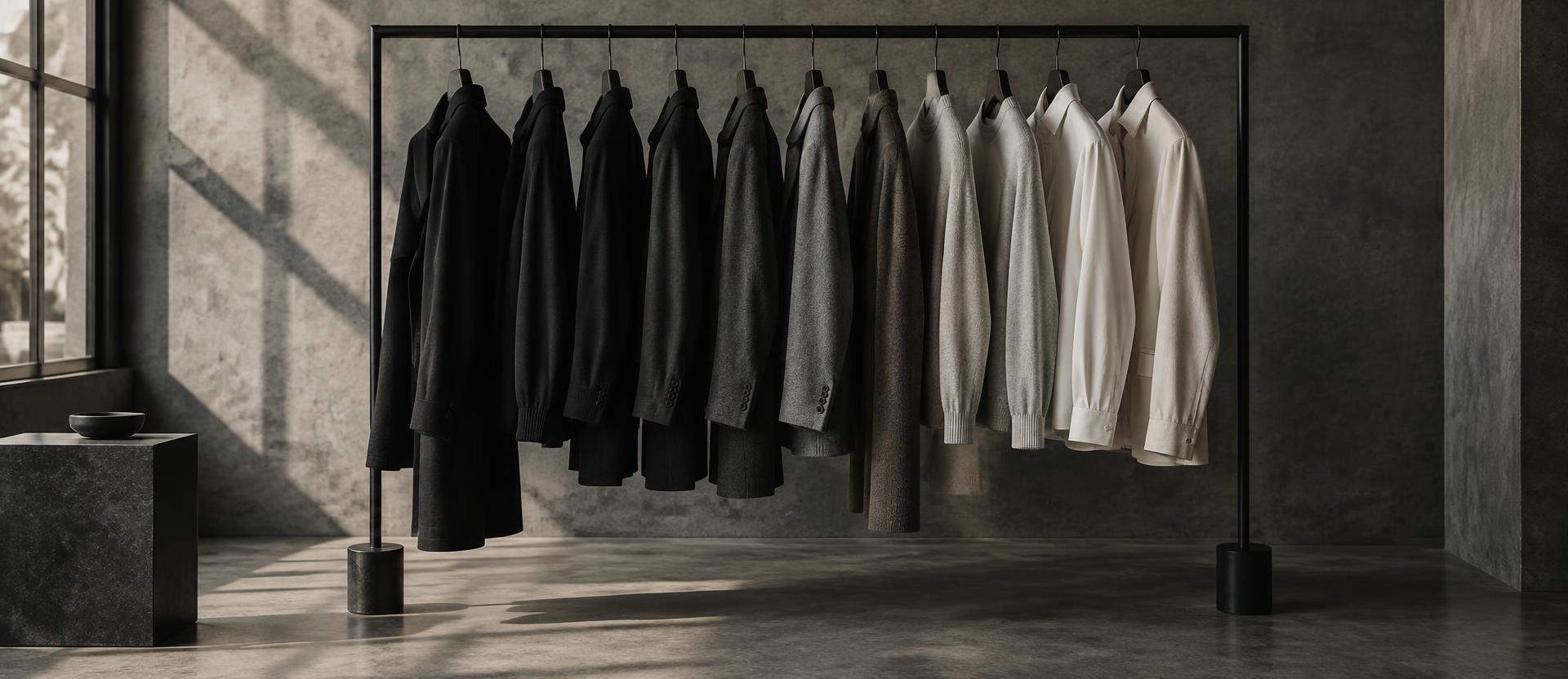
Monochrome dressing sounds restrictive.
One colour.
A narrow palette.
Very little variation.
But that is usually only true when colour is doing all the work.
Once you begin paying attention to texture, proportion, fabric and shape, a monochrome wardrobe becomes much more flexible than it first appears.
The aim is not to wear the same outfit every day.
It is to remove unnecessary colour decisions and let everything else become more visible.
Monochrome does not mean identical
A monochrome wardrobe does not require every garment to be exactly the same shade.
Black can sit beside charcoal.
Stone beside cream.
Navy beside washed blue.
Grey beside graphite.
Small tonal differences create depth without breaking the overall feeling.
In fact, perfectly matching every piece can sometimes make an outfit look flatter.
Variation is useful.
It just needs to remain controlled.
Start with one core colour
The easiest place to begin is with the colour you already wear most.
For many men, that may be black.
For others, navy.
Grey.
Stone.
Olive.
The right starting point is not necessarily the colour that looks best in a photograph.
It is the colour you already reach for.
That matters because a wardrobe only works if you actually wear it.
Once the core colour is established, everything else can develop around it.
Add neighbouring tones
A monochrome wardrobe becomes more useful when it includes shades that sit close together.
A black wardrobe might include:
Black.
Washed black.
Charcoal.
Graphite.
Dark grey.
A lighter neutral can then be used occasionally for contrast.
The same principle works with other palettes.
The point is not perfect consistency.
It is visual harmony.
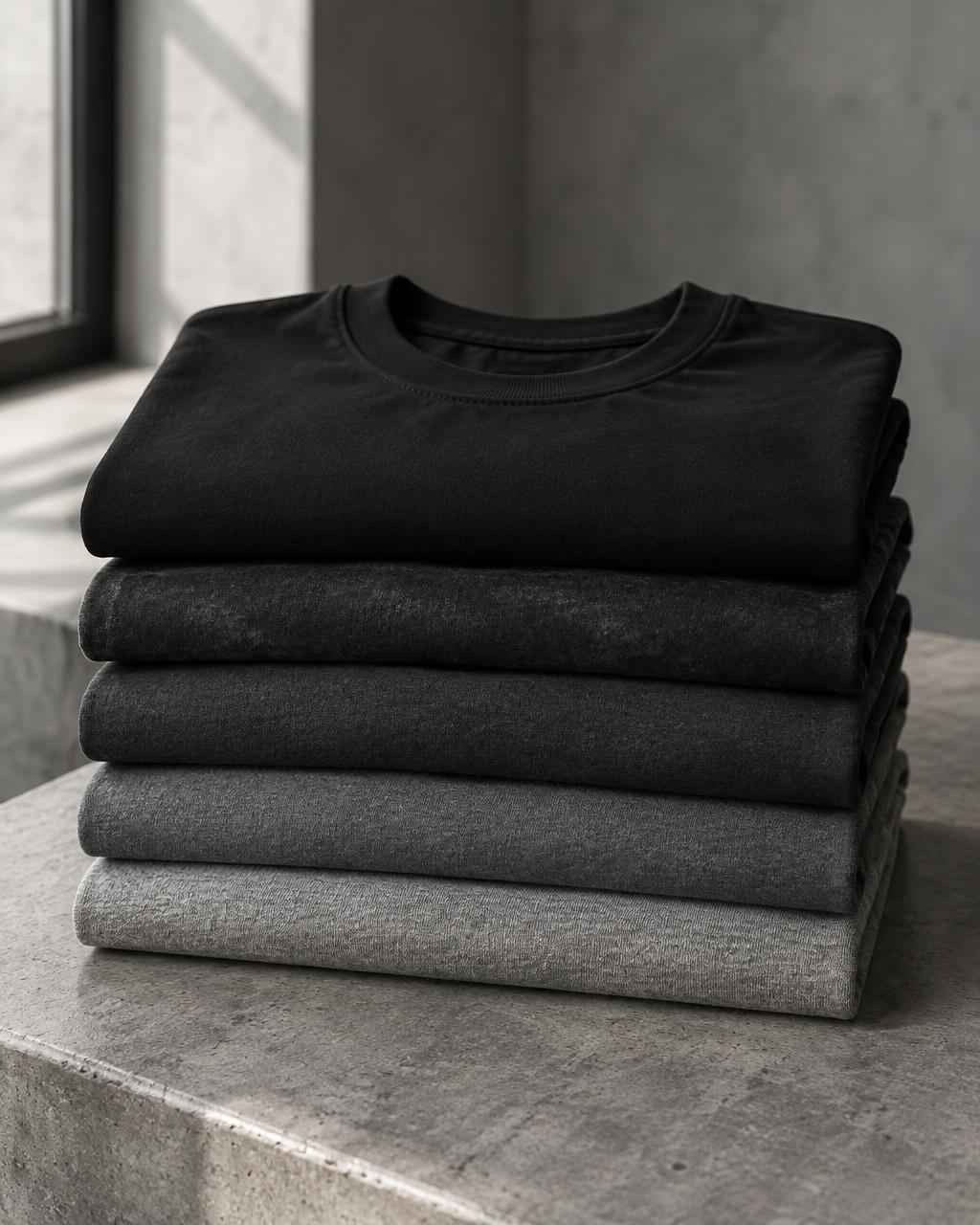
Let texture create the difference
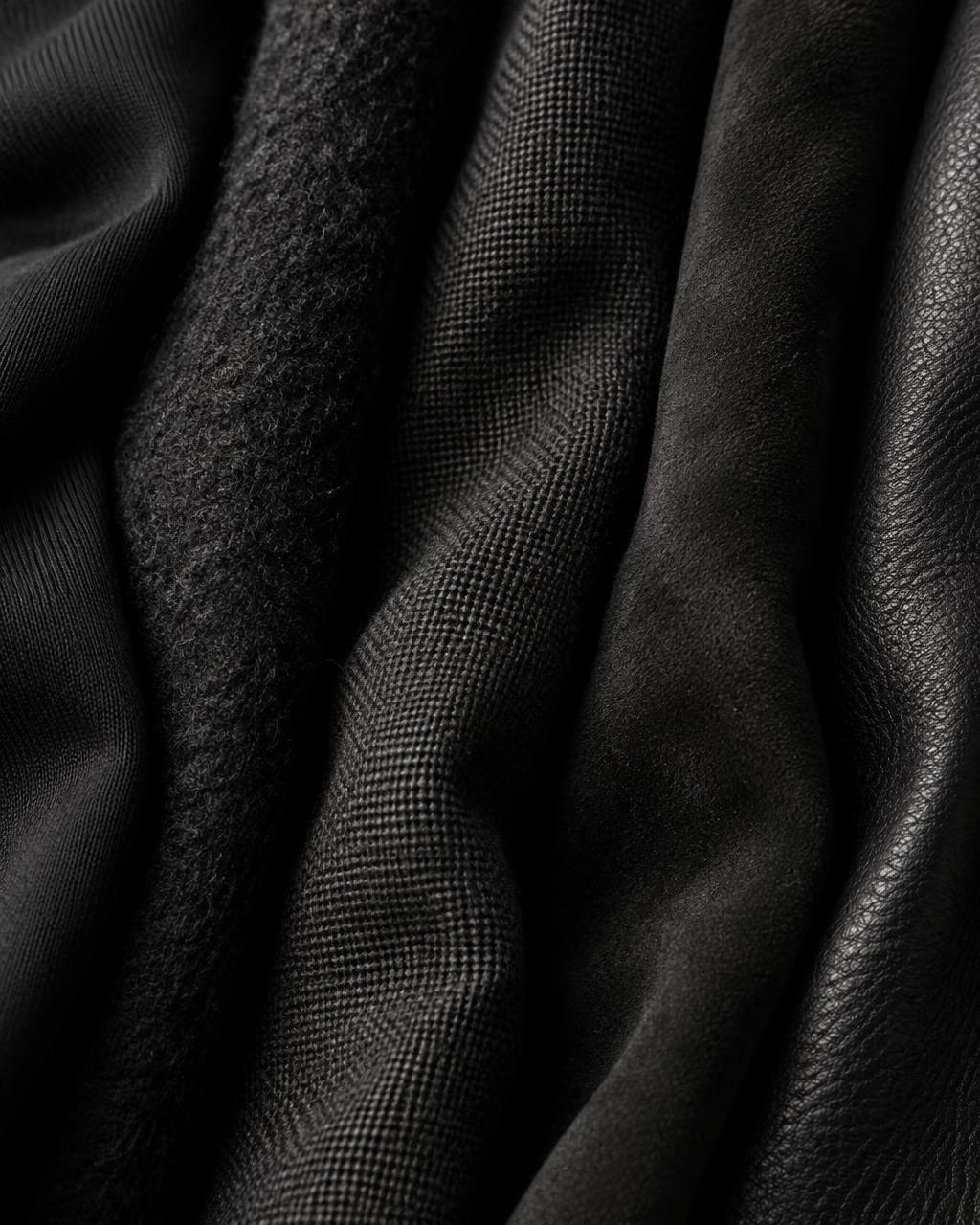
When colour becomes quieter, texture becomes louder.
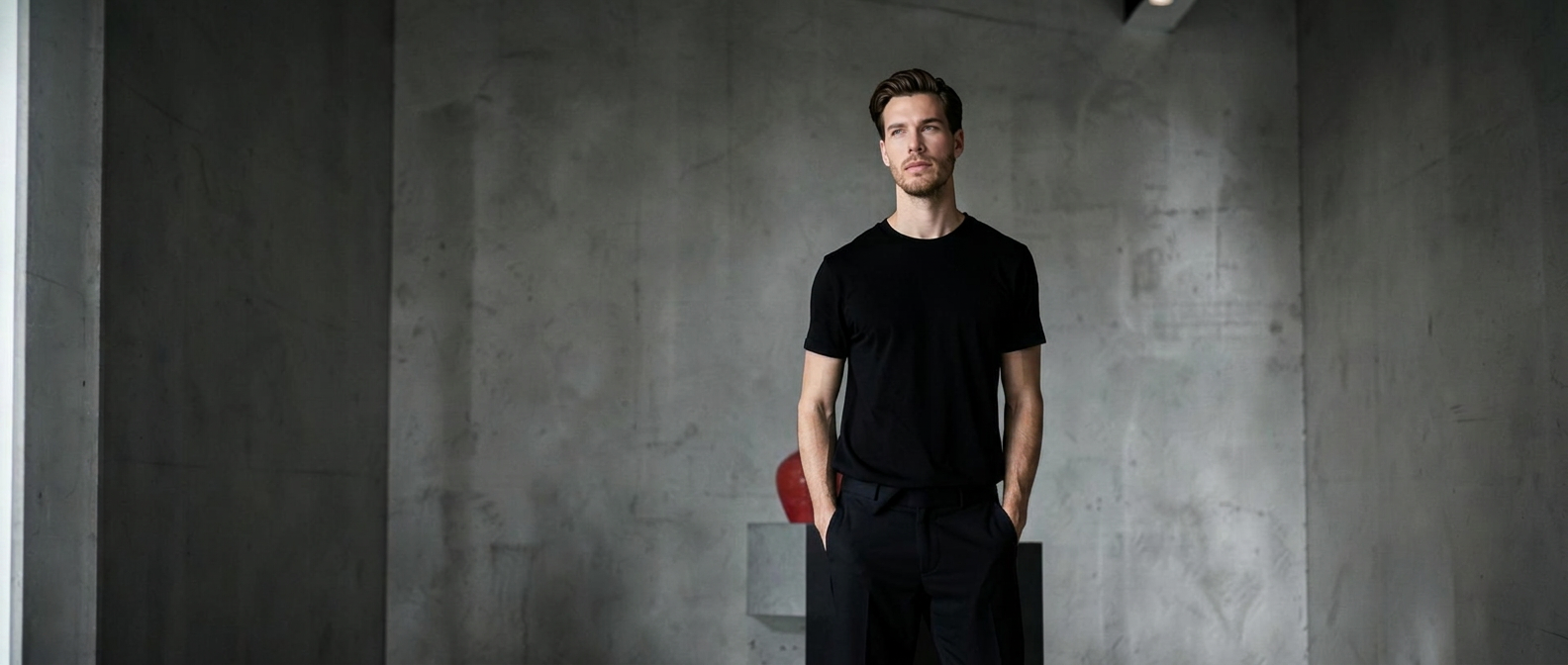
A black cotton T-shirt does not look the same as a black linen shirt.
A wool trouser does not feel like denim.
Suede behaves differently from leather.
Canvas behaves differently from jersey.
That difference becomes important.
Texture stops a monochrome wardrobe from becoming flat.
It gives the eye something to notice without adding visual noise.
Change the silhouette
If every outfit uses the same proportions, repetition becomes much more obvious.
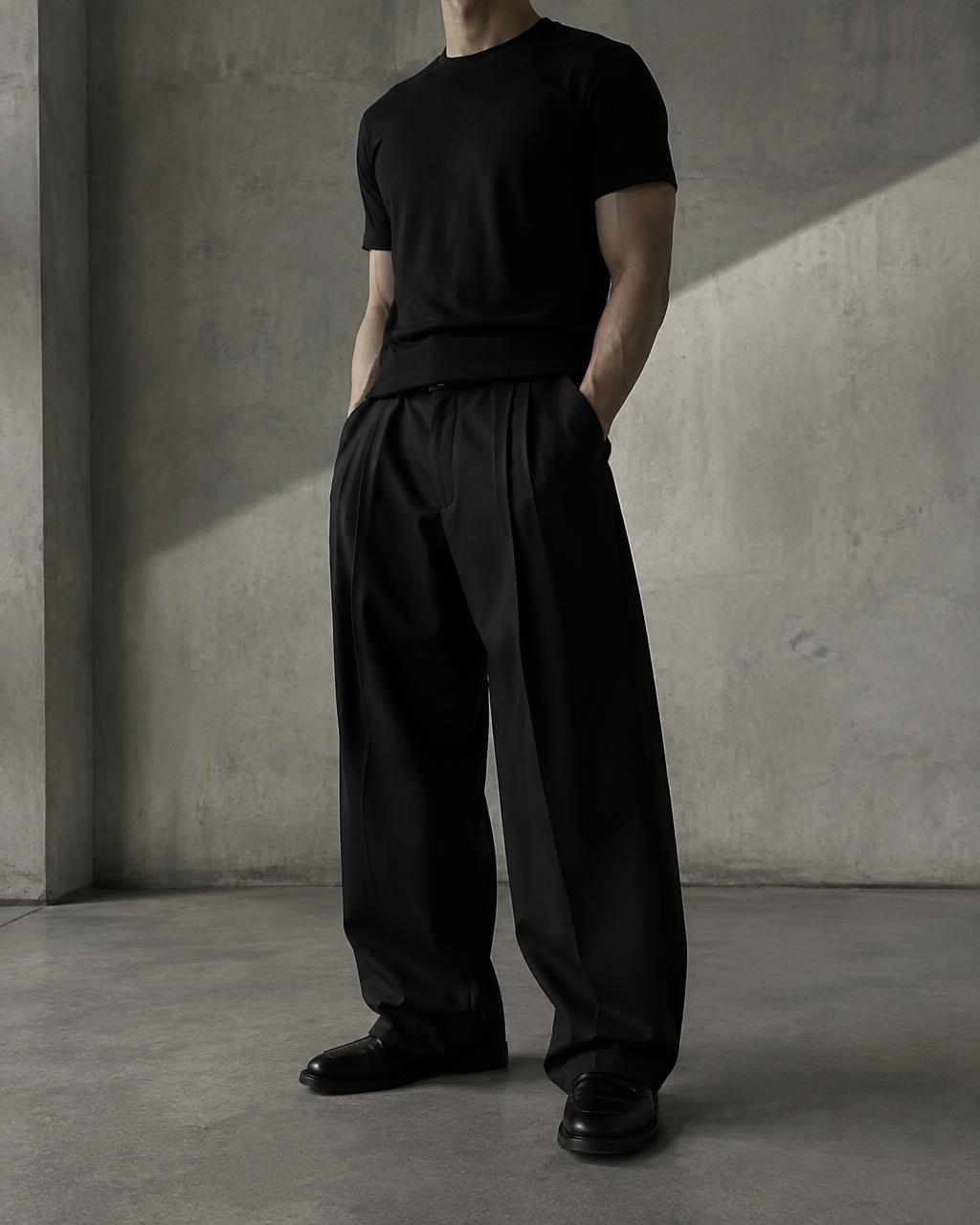
A fitted T-shirt with straight trousers creates one shape.
A relaxed shirt with wider trousers creates another.
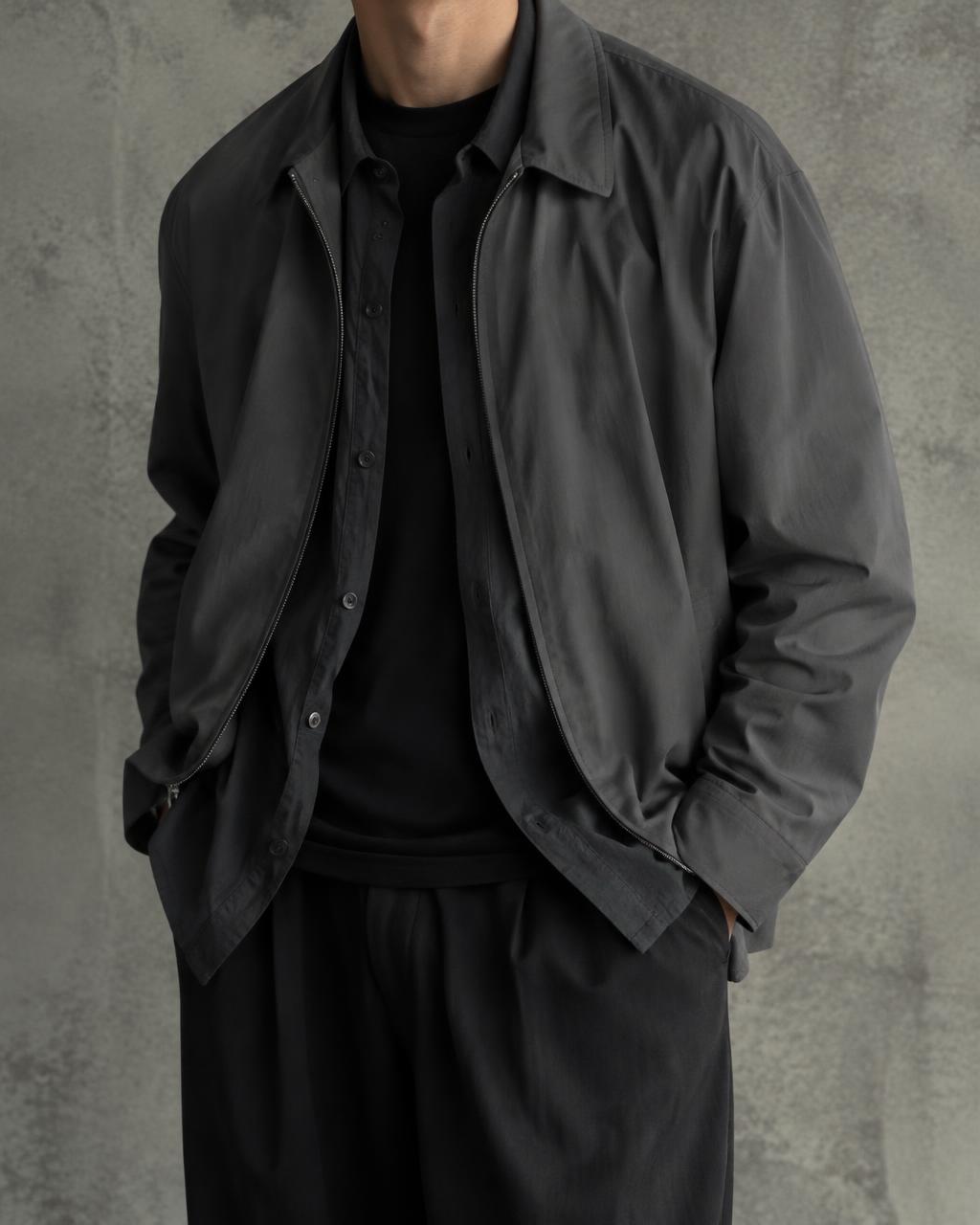
An overshirt over a slimmer base layer changes the balance again.
Colour can stay almost identical while the silhouette changes completely.
This is one of the easiest ways to create variety without adding more.
Use layering carefully
Monochrome dressing works particularly well with layers.
Because the colours are related, several garments can sit together without the outfit becoming chaotic.
A T-shirt.
Overshirt.
Lightweight jacket.
Similar shades.
Different lengths.
Different fabrics.
That is often enough.
The layers create depth.
The palette keeps everything connected.
Avoid making everything oversized
Monochrome clothing already has a strong visual presence.
If every piece is oversized as well, the outfit can quickly lose structure.
Volume works best when balanced.
A relaxed shirt may work better with straighter trousers.
Wider trousers may benefit from a cleaner top.
A large coat can sit over simpler pieces.
You do not need every garment to make the same statement.
Use one lighter piece
A monochrome wardrobe does not need to stay dark from head to toe.
One lighter piece can create separation.
Black trousers with a grey T-shirt.
Charcoal trousers with a white shirt.
A cream knit beneath a darker coat.
That single interruption can make the rest of the outfit feel more intentional.
Contrast works best when it is limited.
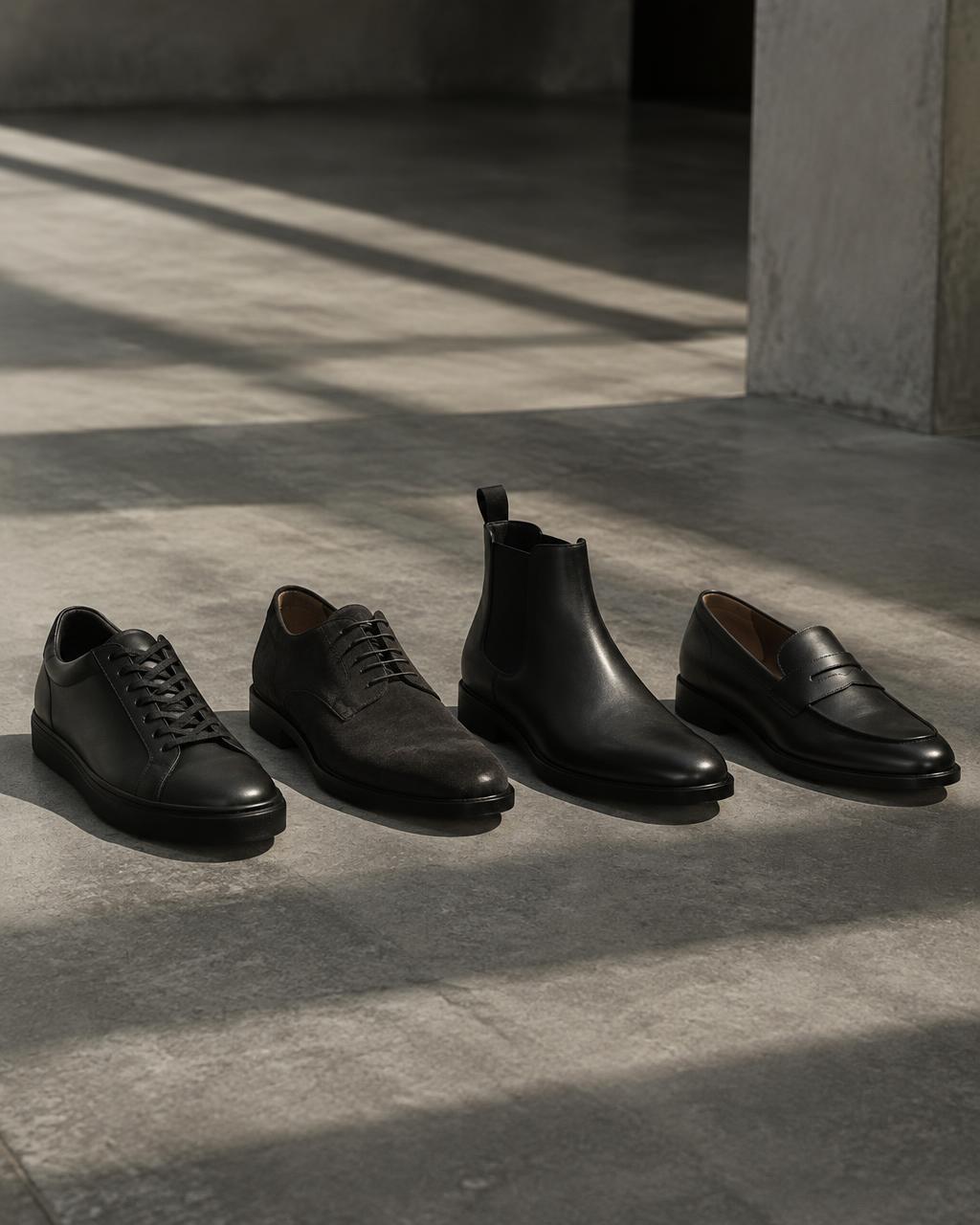
Think about footwear as part of the palette
Shoes are often where monochrome outfits accidentally fall apart.
A clean black trainer.
Dark suede shoe.
Minimal boot.
Simple loafer.
All can work.
What matters is how much visual weight they add.
Heavy footwear can anchor an outfit.
Lighter footwear can keep it softer.
The colour may stay the same.
The mood changes.
Accessories should stay quiet
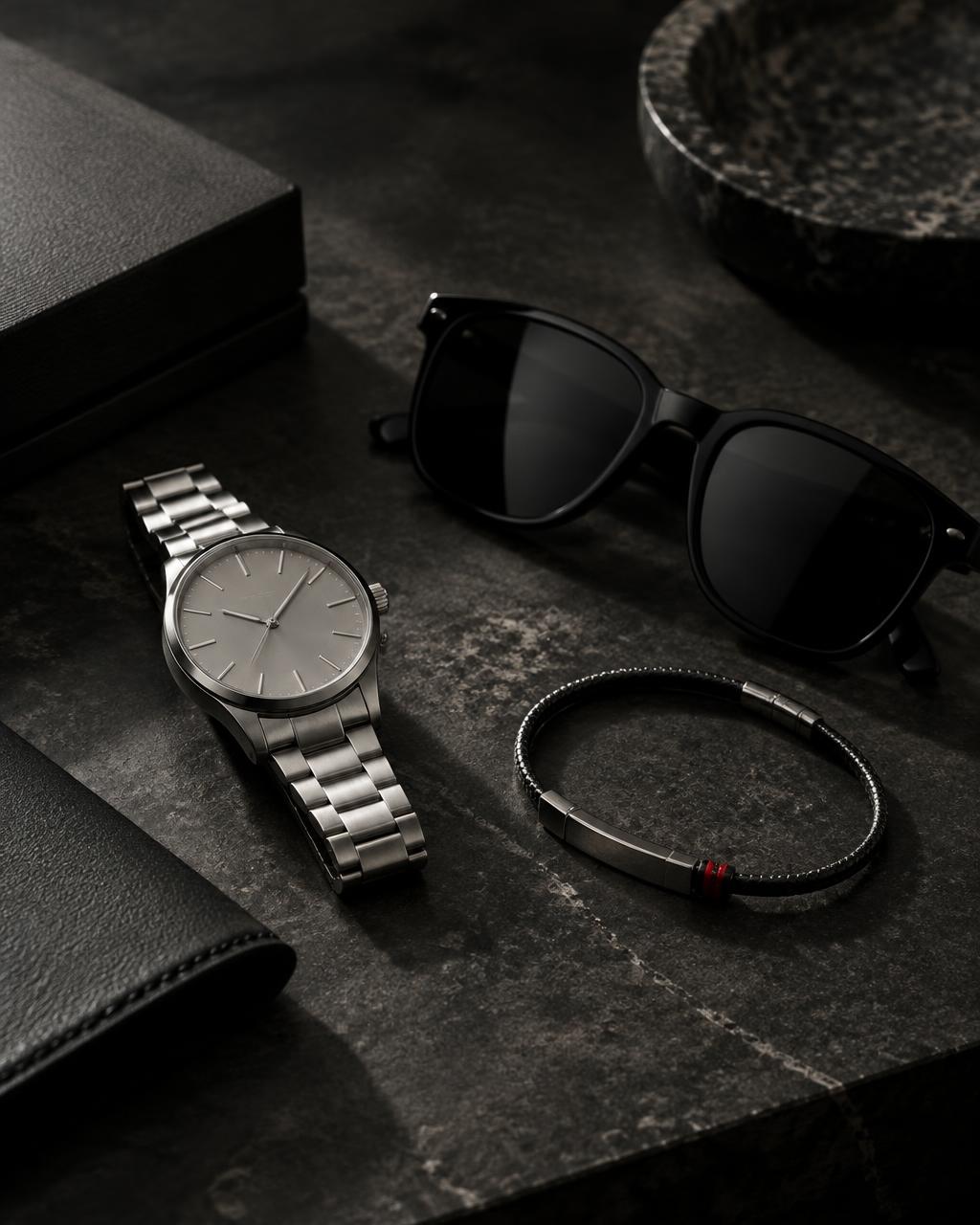
A monochrome outfit does not need many accessories.
A watch.
Sunglasses.
A bracelet.
Perhaps one small piece of jewellery.
That is often enough.
Because the palette is restrained, small details become more visible.
That makes over-accessorising unnecessary.
One detail can carry more weight than five.
Use repetition intentionally
A good wardrobe will repeat itself.
That is not a problem.
The same trousers may appear in several outfits.
The same T-shirt may be worn beneath different layers.
The same shoes may work almost every day.
Repetition becomes useful when the pieces are flexible.
You are not trying to hide the fact that you own favourites.
You are building around them.
Monochrome works well for travel
Travel rewards simplicity.
A narrow palette makes packing easier because nearly everything combines.
One pair of trousers can work with several shirts — the same thinking behind the men’s autumn capsule wardrobe.
One jacket can work over every T-shirt.
Shoes do not need their own outfit.
That means fewer pieces.
Less planning.
Less time deciding what to wear.
More room for everything else.
Keep one point of contrast
A small interruption can stop the wardrobe feeling overly controlled.
A red detail.
A silver watch.
A white sock.
A different texture.
A washed finish.
It does not need to dominate.
In fact, it usually works better when it does not.
A restrained wardrobe gives small details more meaning.
Avoid buying the same thing repeatedly
A monochrome wardrobe can make duplication easy.
Another black T-shirt.
Another black overshirt.
Another pair of black trousers.
Eventually, the wardrobe becomes large without becoming more useful.
Before buying something new, ask what it adds.
A different texture?
A different silhouette?
A different weight?
A different function?
If the answer is nothing, you may already own it.
Build slowly
A good monochrome wardrobe rarely needs to be created all at once.
Start with what already works.
Then notice the gaps.
Perhaps you need a lighter layer.
A smarter trouser.
A better-fitting T-shirt.
A piece with more texture.
Build around those needs.
Not around the idea of finishing the wardrobe.
There is no finish line.
The advantage of less colour
When colour becomes quieter, everything else has to become more deliberate.
Fit matters more.
Fabric matters more.
Construction matters more.
Proportion matters more.
That can make simple clothing feel more interesting — the heart of minimalist men’s style: wearing less, better.
Not because more has been added.
Because there is less distraction.
Monochrome is not about restriction
It is about focus.
A smaller palette can make a wardrobe easier to wear without making it less expressive.
You still have texture.
Shape.
Layering.
Fabric.
Movement.
Detail.
The colour simply becomes the background.
And sometimes the quieter the background, the more clearly everything else can be seen.
Less colour. More intention.
More experience. Less excess.
You might also like
Style — October 2026
How to Wear Black Without Looking Boring
Wardrobe — September 2026