
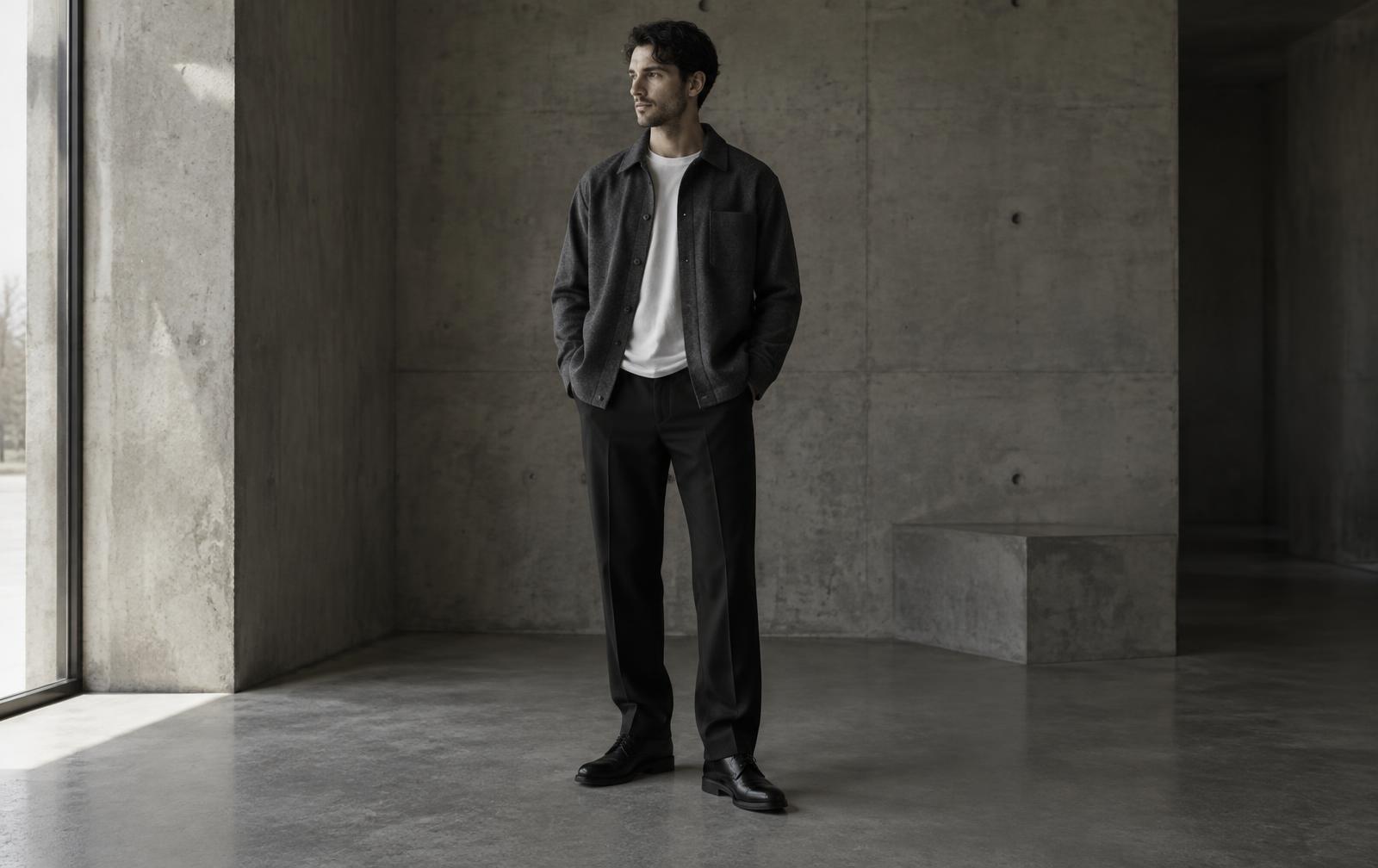
Some clothes try to do too much.
The overshirt works because it does just enough.
Heavier than a shirt.
Lighter than a jacket.
Structured enough to change an outfit.
Simple enough to disappear into one.
It sits in the space between categories.
That is exactly what makes it useful.
What is an overshirt?
An overshirt is essentially a shirt designed to be worn as a layer.
It usually has more weight than a standard shirt.
More room through the body.
A slightly stronger collar.
Sometimes larger pockets.
Sometimes heavier buttons.
But it stops short of becoming outerwear in the traditional sense.
It can work over a T-shirt.
Under a coat.
On its own.
Open.
Buttoned.
That flexibility is the reason it keeps returning.
It solves the in-between weather problem
Not every day needs a jacket.
Not every day is warm enough for just a T-shirt either.
The overshirt sits exactly between those two conditions.
That makes it particularly useful in autumn and spring.
Morning can be cool.
Afternoon can be mild.
Evening can drop again.
A heavy jacket often feels excessive.
A normal shirt may not be enough.
An overshirt adapts.
That is the point.
One layer, several uses
A good overshirt can perform several roles without looking like it is trying to.
Over a T-shirt, it becomes light outerwear.
Under a coat, it becomes a middle layer.
Buttoned up, it can replace a casual shirt.
Worn open, it creates depth without adding much weight.
That versatility makes it valuable in a smaller wardrobe.
One piece can cover several situations.
You need fewer alternatives.
Fit matters more than people think
An overshirt should not fit like a normal shirt.
It needs room underneath.
That does not mean oversized.
It simply means enough space through the chest, shoulders and arms to sit comfortably over another layer.
If it pulls when worn over a T-shirt, it is too small.
If the shoulders collapse and the body feels shapeless, it may be too large.
The fit should feel deliberate.
Relaxed.
Not loose for the sake of it.
The shoulders should still make sense
Because an overshirt carries more weight than a shirt, the shoulder line becomes more visible.
A slightly dropped shoulder can work well.
So can a cleaner, more structured shape.
The important thing is balance.
The overshirt should feel like a layer.
Not like a shirt that happens to be one size too big.
There is a difference.
Fabric changes everything
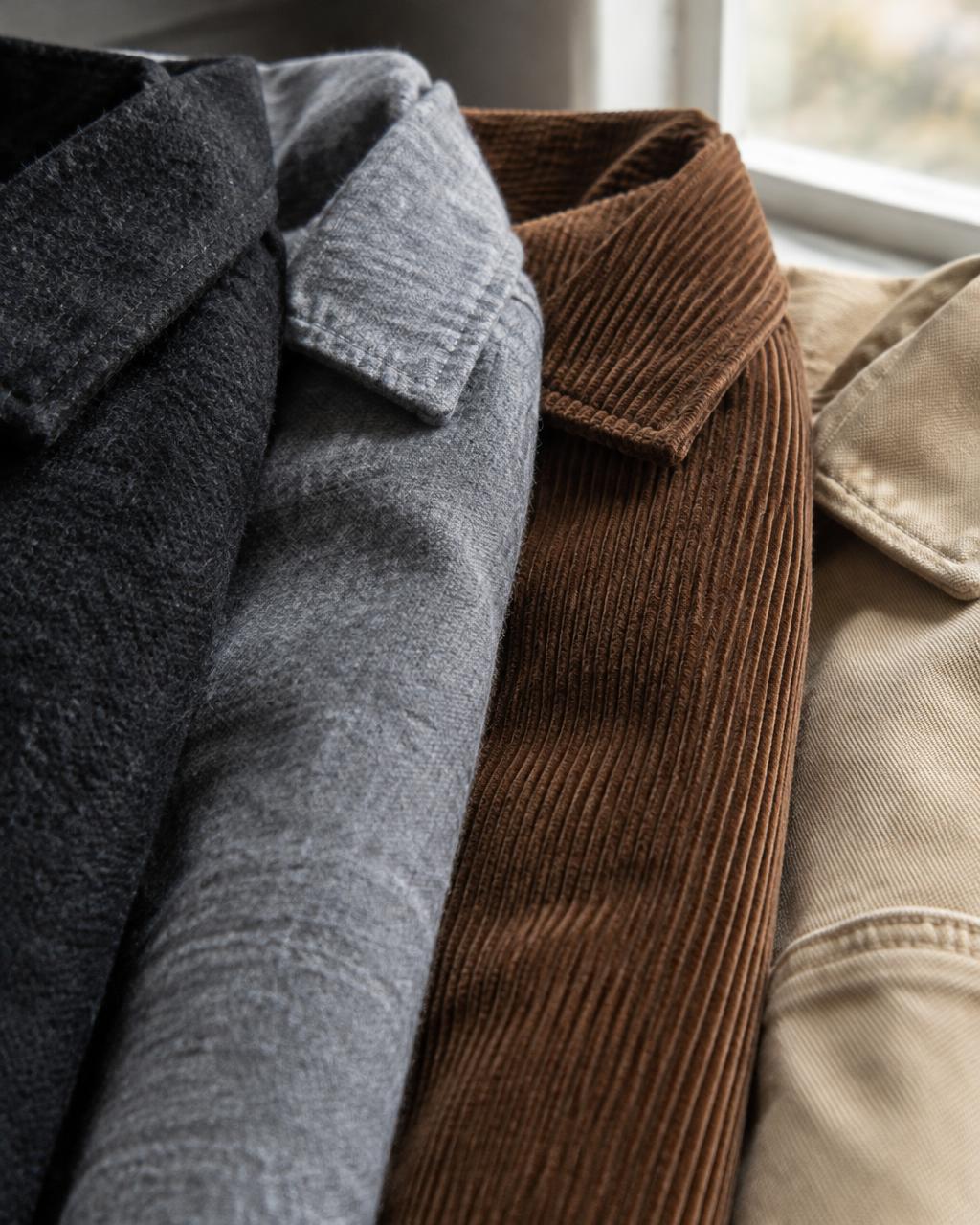
The same basic shape can feel completely different depending on material.
Brushed cotton feels soft and casual.
Wool gives more warmth and structure.
Corduroy introduces texture.
Canvas feels more practical.
Denim adds weight and familiarity.
Lightweight cotton keeps things transitional.
The best fabric depends on what role you want the overshirt to play.
Warmer layer.
Everyday jacket substitute.
Travel piece.
Something smarter.
The form stays simple.
The fabric changes the purpose.
Why wool works well
Wool gives the overshirt more structure without making it feel formal.
A lighter wool version can work particularly well in colder weather.
It adds warmth without needing much bulk.
It also creates texture.
That matters in simple wardrobes.
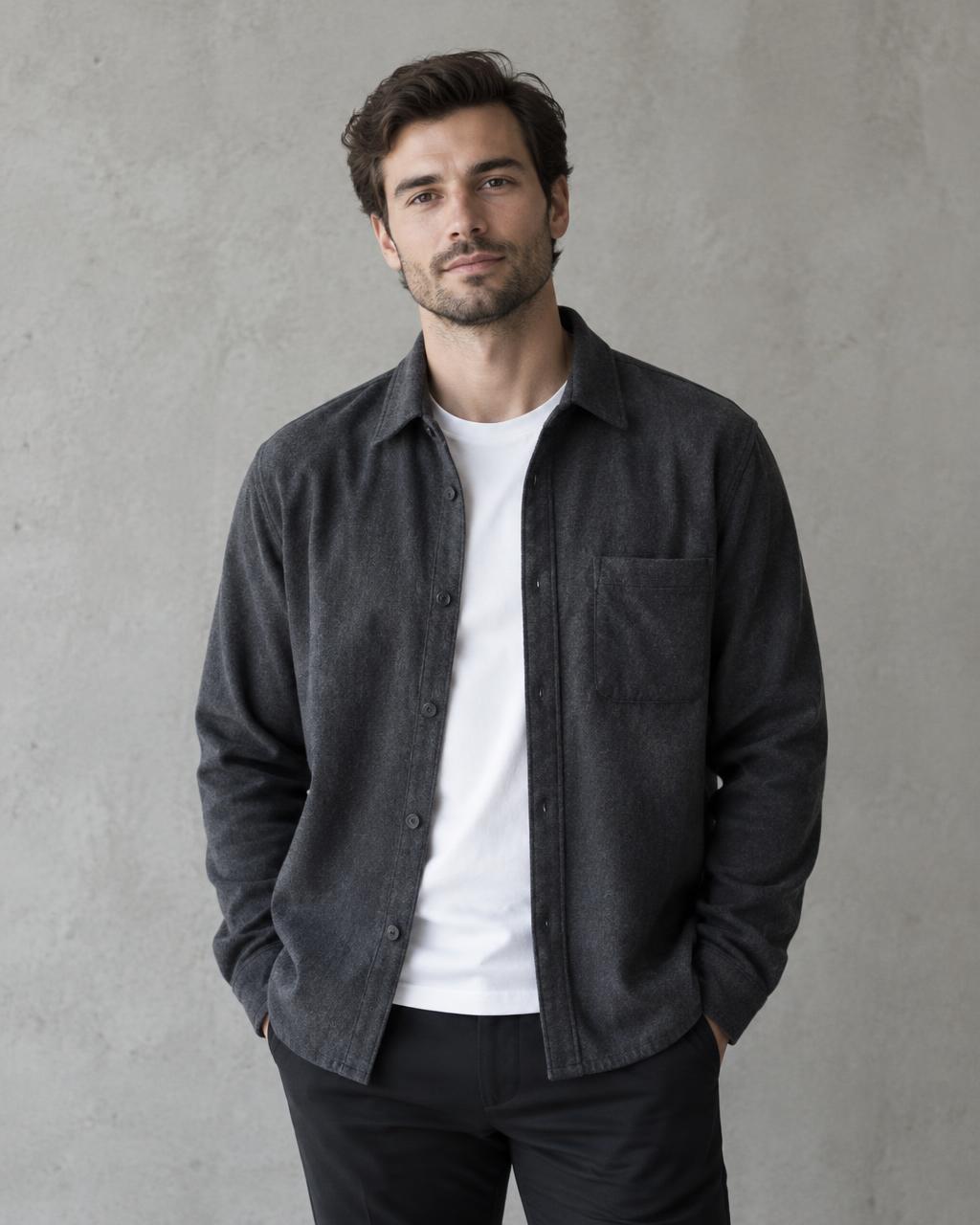
A black wool overshirt can feel much richer than a flat black layer.
The colour stays quiet.
The surface does the work.
Why cotton is easier
Cotton overshirts are usually more relaxed.
They are easier to wear across seasons.
Less warm.
Less formal.
More forgiving.
A midweight cotton overshirt can work over a T-shirt in autumn, under a coat in winter, and alone again in spring.
That kind of range makes it especially useful.
If one overshirt has to do everything, cotton is often the safest place to start.
Keep the colour simple
An overshirt works best when it connects easily with the rest of the wardrobe.
Black.
Navy.
Olive.
Stone.
Grey.
Brown.
Muted tones make layering simpler.
A neutral overshirt can sit over several T-shirts and work with multiple pairs of trousers.
That makes it more useful.
And usefulness matters more than novelty.
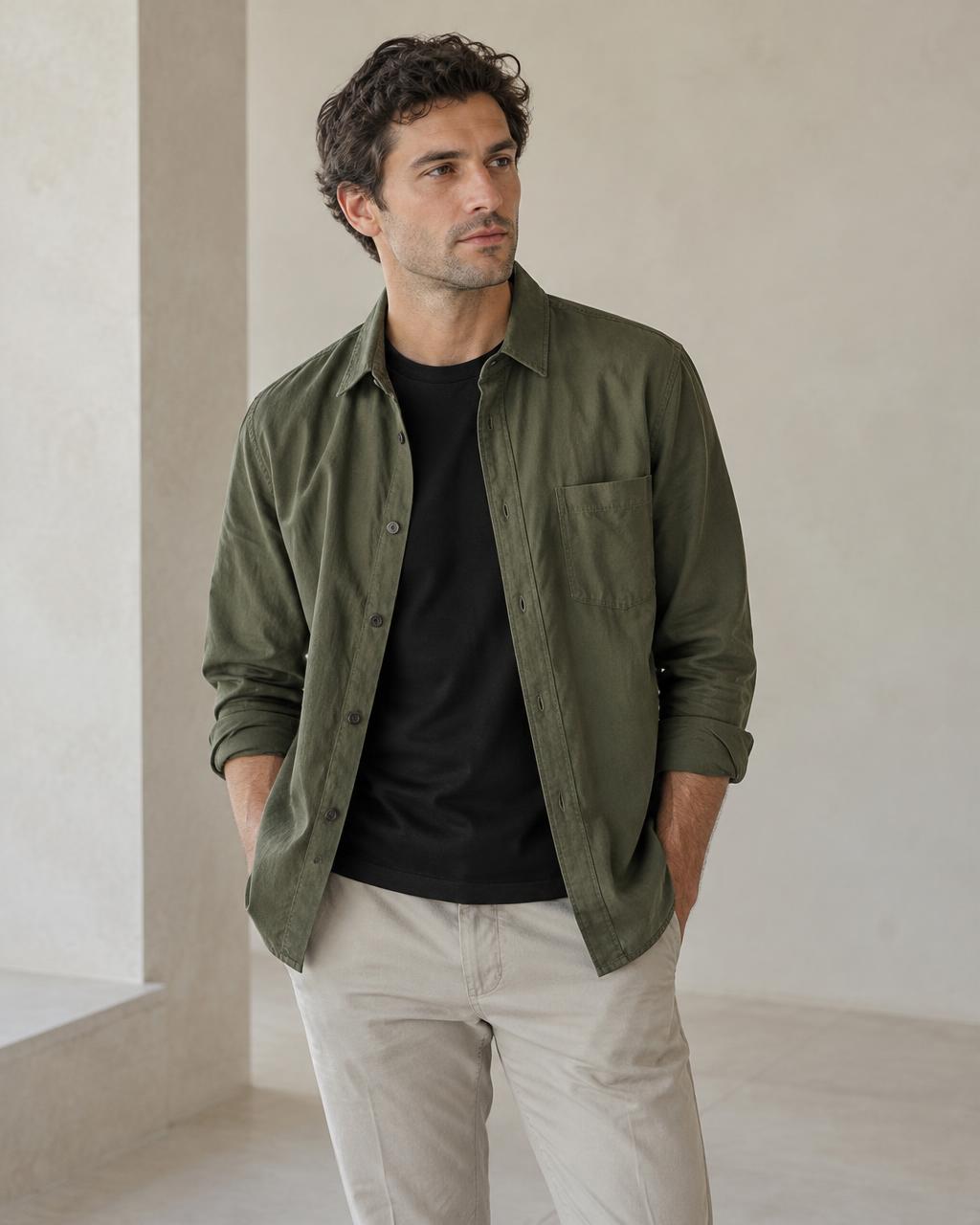
Olive is particularly strong
Olive works almost like a neutral.
It pairs naturally with black.
White.
Stone.
Grey.
Brown.
Navy.
That makes an olive overshirt easy to repeat without the outfit feeling identical.
It adds some colour.
But not enough to become difficult.
For autumn, that balance works particularly well.
Black stays simple
A black overshirt is harder to get wrong.
It works with almost everything.
It can be worn casually.
It can feel slightly sharper when buttoned.
It can disappear beneath a darker coat.
It can create contrast over a white or grey T-shirt.
The risk is flatness.
That is where texture matters.
Washed cotton.
Wool.
Corduroy.
A simple black overshirt becomes more interesting when the material has something to say.
Stone softens the wardrobe
Stone and lighter neutrals can make an overshirt feel less heavy.
That can be useful when most of the wardrobe is dark.
A stone overshirt over a black T-shirt.
Grey trousers.
Simple footwear.
The contrast is clear without becoming loud.
Lighter tones also work well during transitional weather.
They keep the outfit from feeling too winter-focused too early.
Details should stay useful
Overshirts often come with visible pockets.
That can work well.
But too many details can quickly make the garment feel more technical than necessary.
Large chest pockets.
Extra zips.
Tabs.
Contrast stitching.
Decorative fastenings.
None of these are wrong.
They simply need a reason.
For a more minimal wardrobe, restraint usually gives the overshirt more longevity.
One or two pockets.
Clean fastenings.
Good fabric.
Enough.
Wear it open
The easiest way to wear an overshirt is open over a T-shirt.
It creates vertical lines.
Adds depth.
Breaks up a simple outfit.
And gives you flexibility.
If the temperature changes, the layer can come off easily.
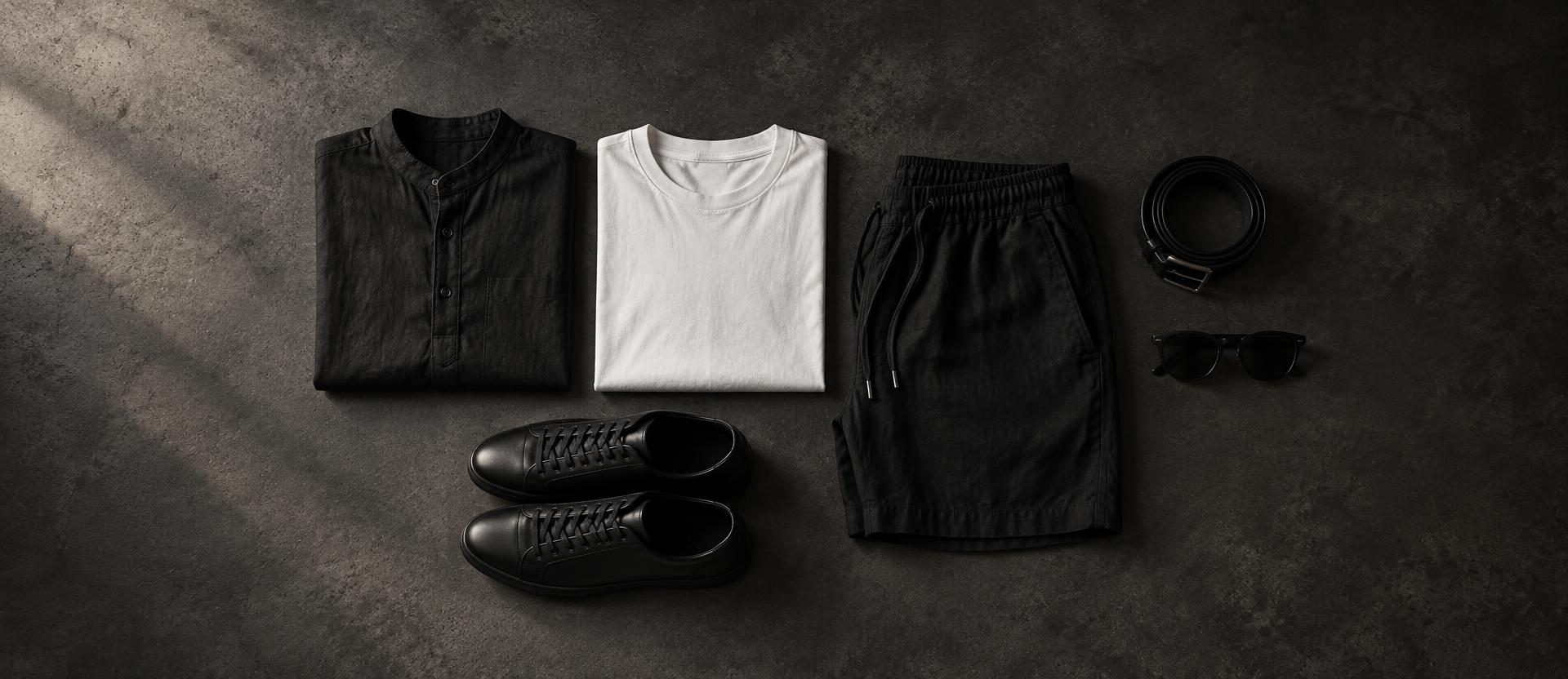
A white T-shirt under a black overshirt.
Black T-shirt under olive.
Grey under navy.
Simple combinations.
They work because the layers are doing different jobs.
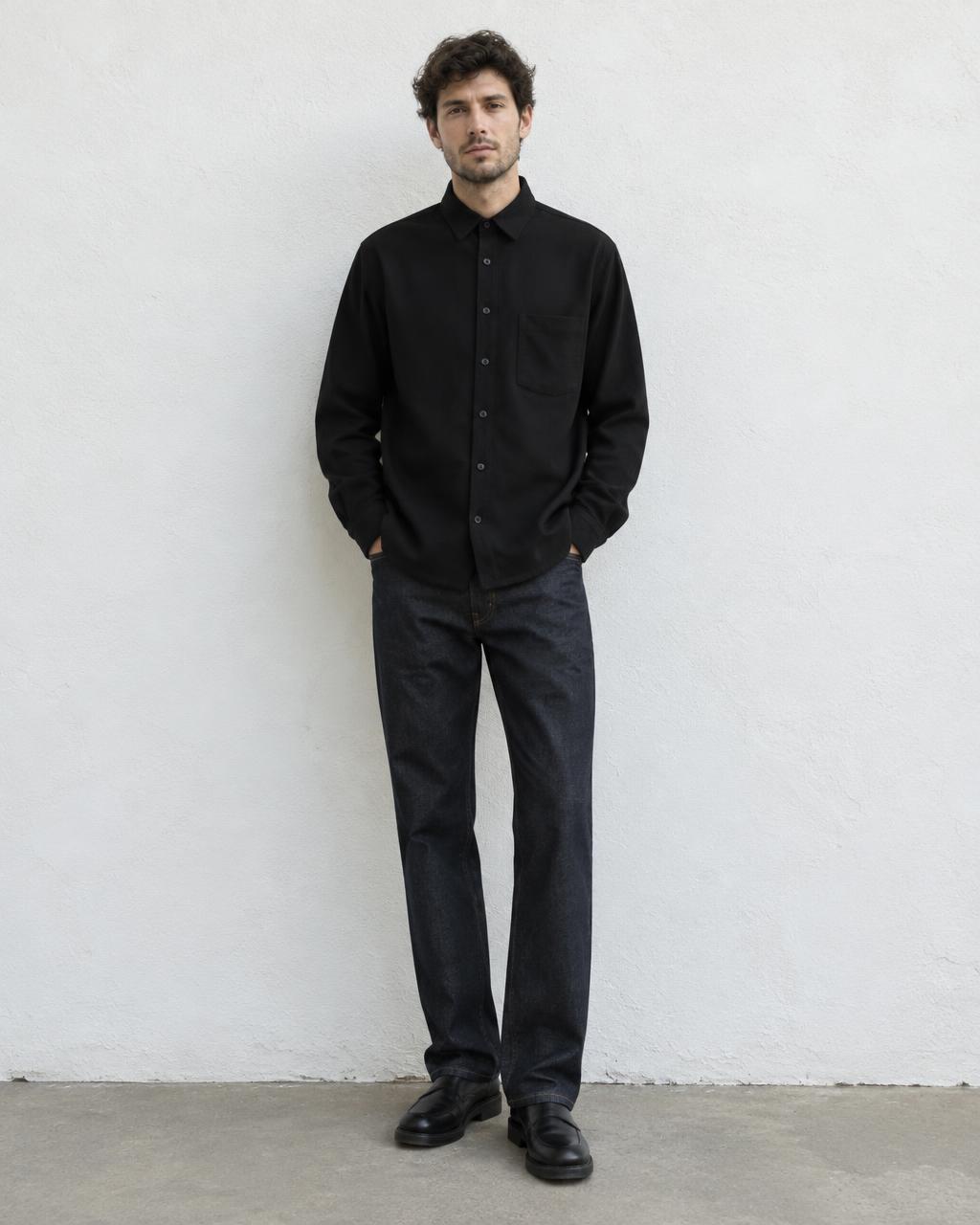
Wear it buttoned
Buttoning the overshirt changes the mood.
It becomes cleaner.
More structured.
Closer to a shirt.
This works especially well with straight trousers or darker denim.
The key is avoiding too much bulk underneath.
A lightweight T-shirt is usually enough.
The silhouette should still feel clean once the front closes.
Under a coat
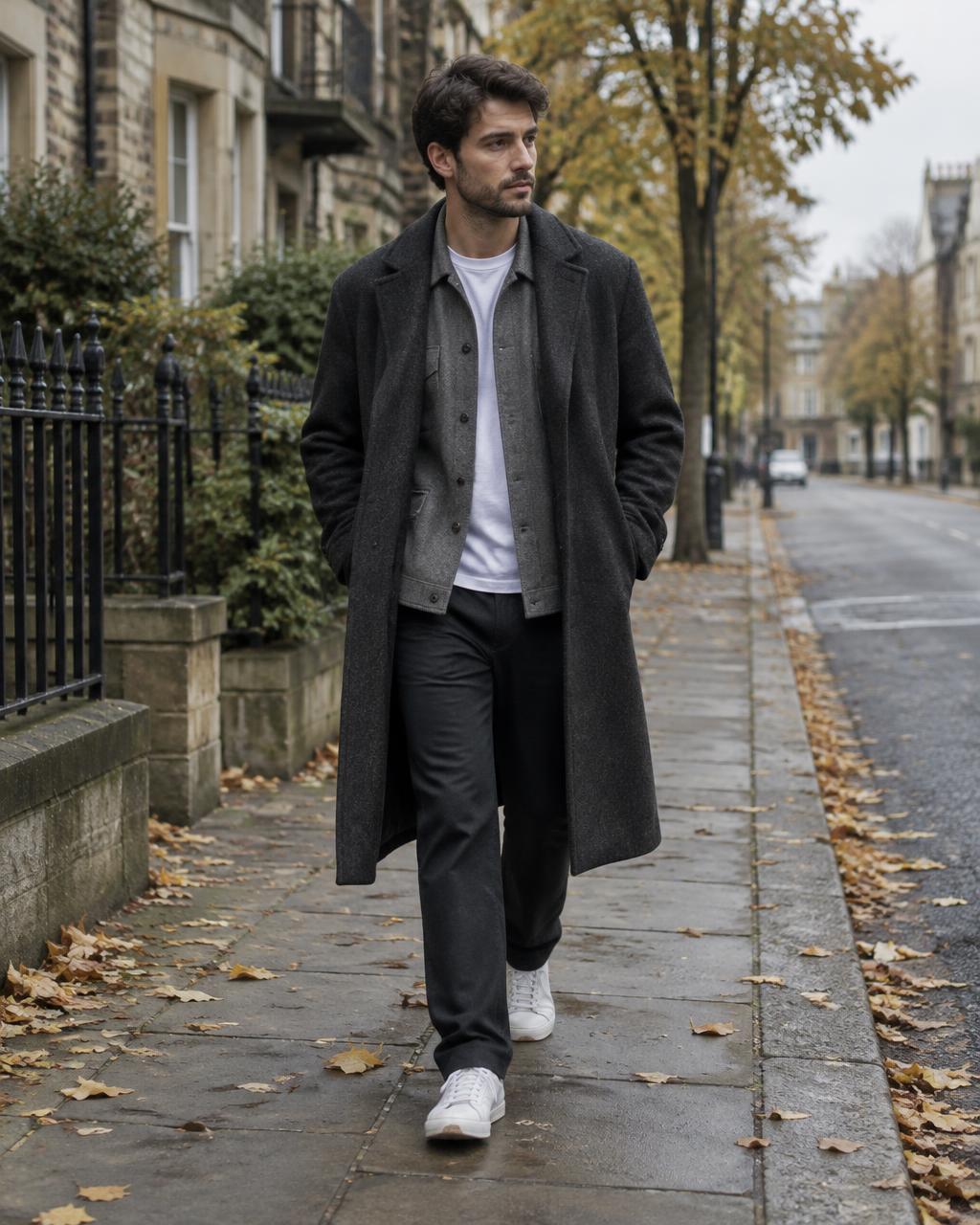
This is where the overshirt becomes particularly useful in colder weather.
T-shirt.
Overshirt.
Coat.
Three layers.
Each has a purpose.
The overshirt provides warmth.
The coat handles the weather.
The T-shirt keeps the base simple.
If you move indoors, the coat comes off.
The outfit still works.
That is good layering.
Nothing collapses when one piece is removed.
With trousers
Overshirts work naturally with straight or relaxed trousers.
That balance feels modern without becoming exaggerated.
If the overshirt has volume, the trousers should have enough weight to support it.
Very slim trousers can sometimes make the upper half feel too heavy.
Again, proportion matters.
The outfit should feel connected.
Not split into two different ideas.
With denim
Denim works easily because both pieces share the same casual language.
Black overshirt with blue denim.
Olive with black denim.
Stone with dark denim.
Denim overshirt with trousers.
The combination is familiar.
That is not a weakness.
Familiar pieces are often the easiest to repeat.
With shorts
A lighter overshirt can also work with shorts.
This is particularly useful in warm climates or transitional seasons.
T-shirt.
Shorts.
Overshirt.
You get an extra layer without making the outfit feel too heavy.
The fabric matters here.
Light cotton works.
Heavy wool probably does not.
The garment has to match the climate.
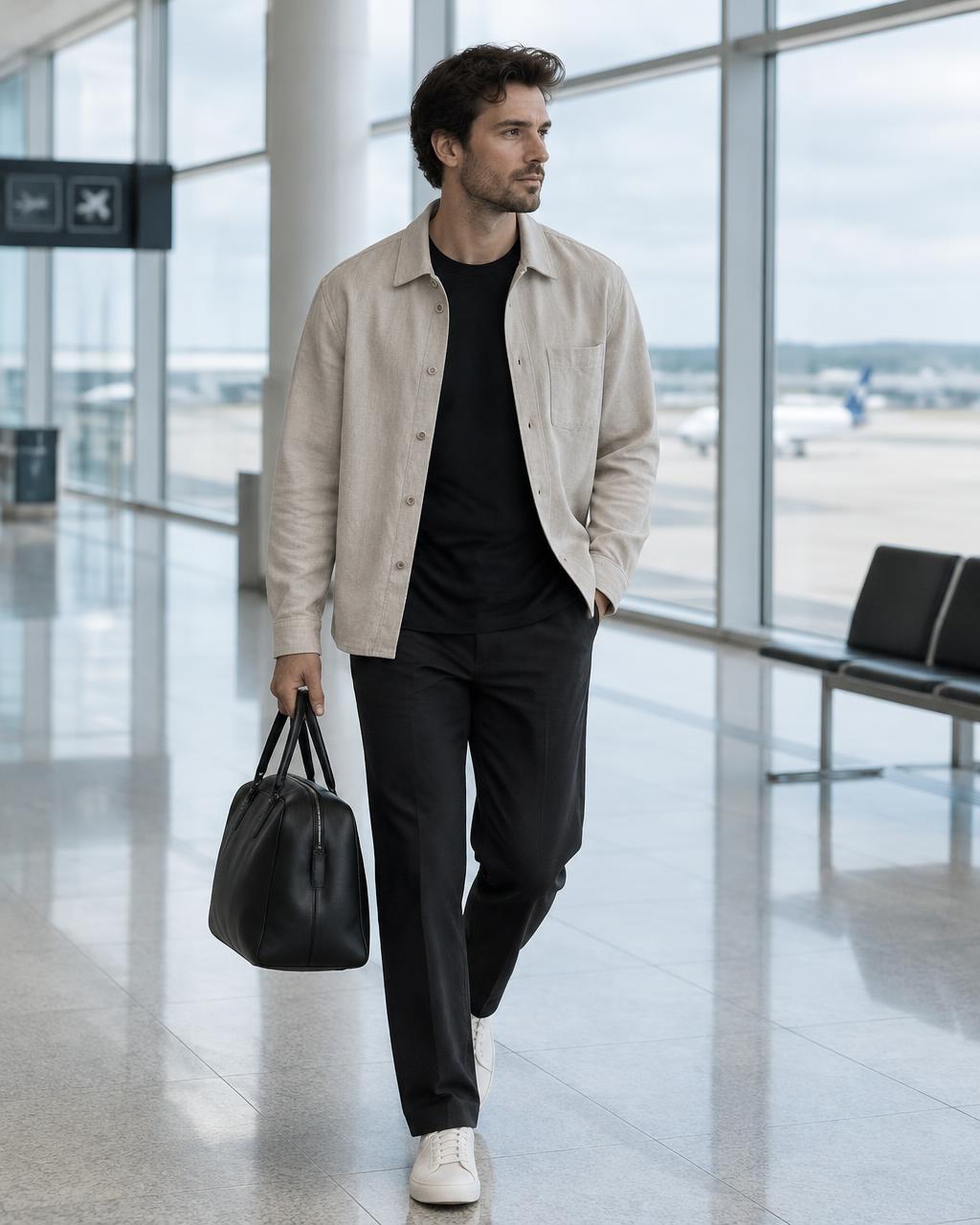
It travels well
An overshirt is also useful when travelling.
Airports.
Flights.
Cool evenings.
Air conditioning.
Changing weather.
It gives you something between a shirt and a jacket without taking up the same space as heavier outerwear.
It can also be worn during the journey instead of being packed.
That matters when you are trying to travel light.
It makes a small wardrobe work harder
This is probably the strongest argument for owning one.
A T-shirt becomes more useful with an overshirt.
A pair of trousers becomes more flexible.
A lighter jacket can be worn deeper into the season.
A coat gains another layer underneath.
One piece increases the number of combinations around it.
That is more valuable than buying something that only works alone.
The best overshirt becomes routine
You know a layer works when you stop thinking about it.
You reach for it in the morning.
Throw it over a T-shirt.
Take it when the weather is uncertain.
Wear it again a few days later.
It becomes familiar.
That repetition is a sign of usefulness.
The best clothes often become the least dramatic ones.
They simply keep working.
One layer can be enough
A wardrobe does not need endless options.
Sometimes one well-chosen layer solves several problems at once.
Warmth.
Structure.
Texture.
Flexibility.
Travel.
Transition.
That is what makes the overshirt so useful.
It does not need to dominate the outfit.
It just needs to earn its place.
One layer. More possibilities.
More experience. Less excess.
You might also like
Wardrobe — October 2026
How to Layer Clothes Without Looking Bulky
Wardrobe — September 2026