
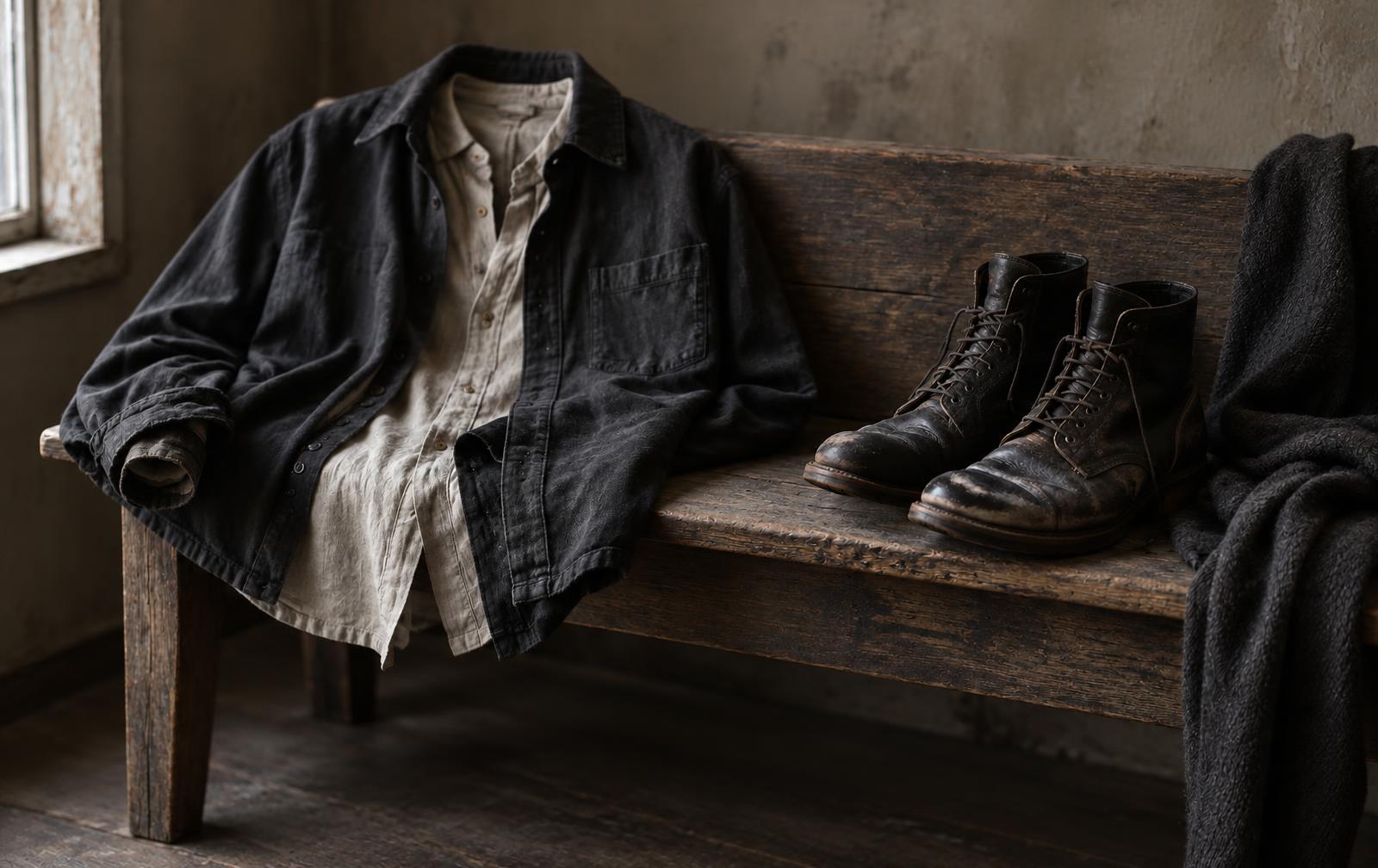
New clothes have a particular appeal.
Clean fabric.
Sharp edges.
Perfect colour.
No marks.
No creases.
No history.
But some of the best clothes become more interesting after that stage has passed.
Cotton softens.
Linen relaxes.
Leather darkens.
Denim fades.
Wool settles.
The garment changes.
And, if it was made well, those changes do not necessarily make it worse.
Sometimes they make it better.
New is not always the goal
We are often encouraged to judge clothing by how close it remains to the day it was bought.
No fading.
No marks.
No signs of use.
But clothing is not designed to sit untouched.
It moves.
Gets washed.
Travels.
Creases.
Gets caught in rain.
Spends hours against the body.
A garment that is actually used will change.
That should not automatically be treated as failure.
The better question is whether it changes well.
Good materials respond to wear
Different materials age differently.
That is part of their character.
Cotton often becomes softer.
Linen becomes less rigid.
Leather develops patina.
Denim reveals where it bends and moves.
Wool can lose some of its initial stiffness and begin to sit more naturally.
The garment gradually becomes less generic.
The wear starts reflecting the person using it.
That is difficult to reproduce artificially.
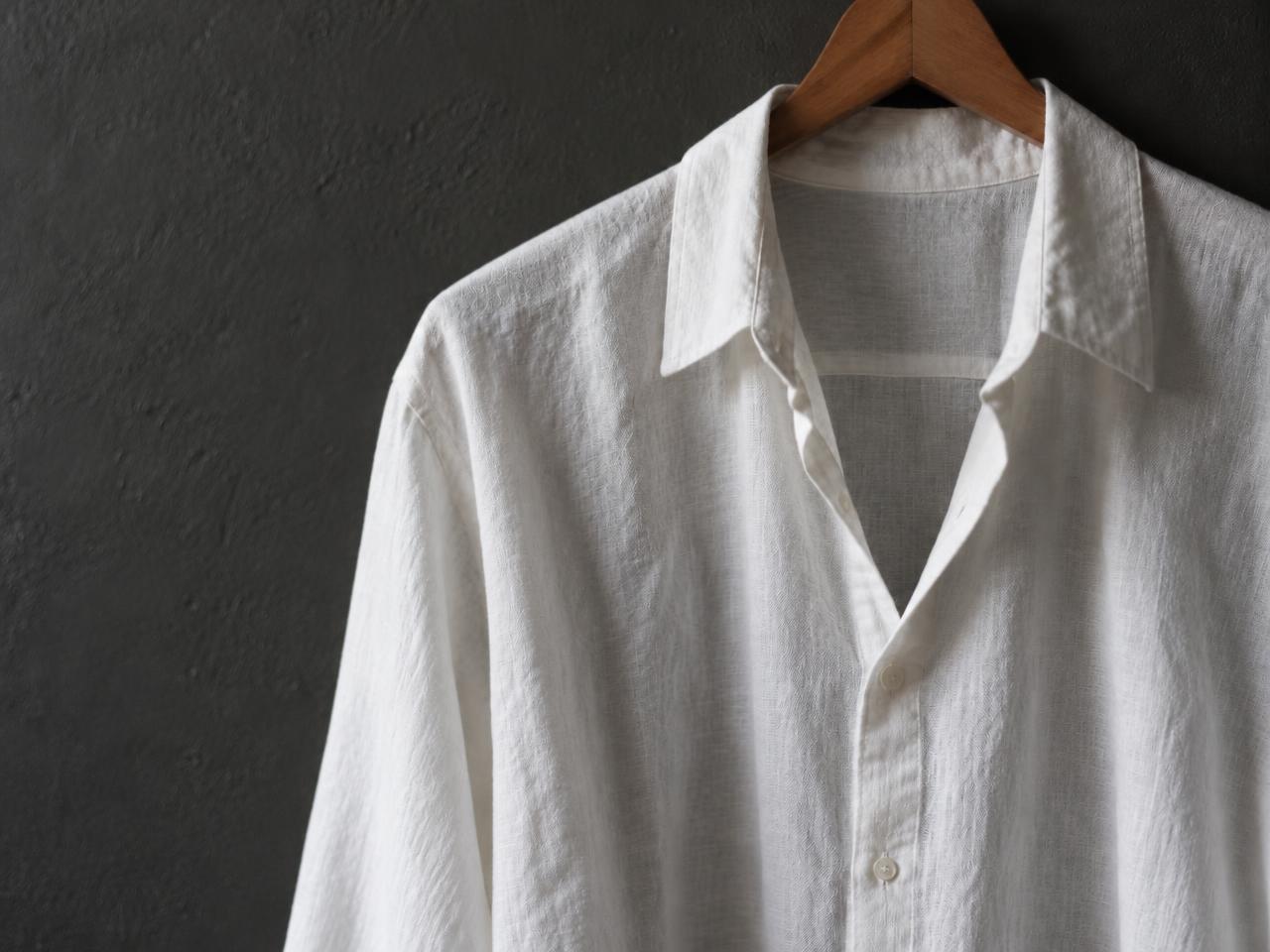
Linen becomes easier
New linen can sometimes feel crisp.
Almost too controlled.
Then it begins to loosen.
It creases.
Softens.
Moves more naturally.
The fabric becomes less concerned with staying perfect.
That is one of linen's strengths.
It does not need to remain untouched to look good.
In many cases, the relaxed surface is exactly what gives it character.
You stop worrying about every crease.
The garment becomes easier to wear.
Cotton softens through repetition
A good cotton T-shirt often changes quietly.
The fabric loses some of its initial stiffness.
The surface becomes softer.
The shape settles.
It begins to feel familiar.
That familiarity matters.
The T-shirt may no longer look exactly as it did when it was bought.
But it may feel considerably better.
This is one reason frequently worn clothes often become favourites.
Comfort develops through use.
Black does not need to stay perfectly black
Black clothing fades.
That can be frustrating when you want a perfectly uniform colour.
But fading can also create something more interesting.
Washed black.
Soft charcoal.
Slight variation around seams.
A surface that no longer feels completely flat.
The change can give a simple garment more depth.
Not every black item needs to remain jet black forever.
Sometimes the softer version is the better one.
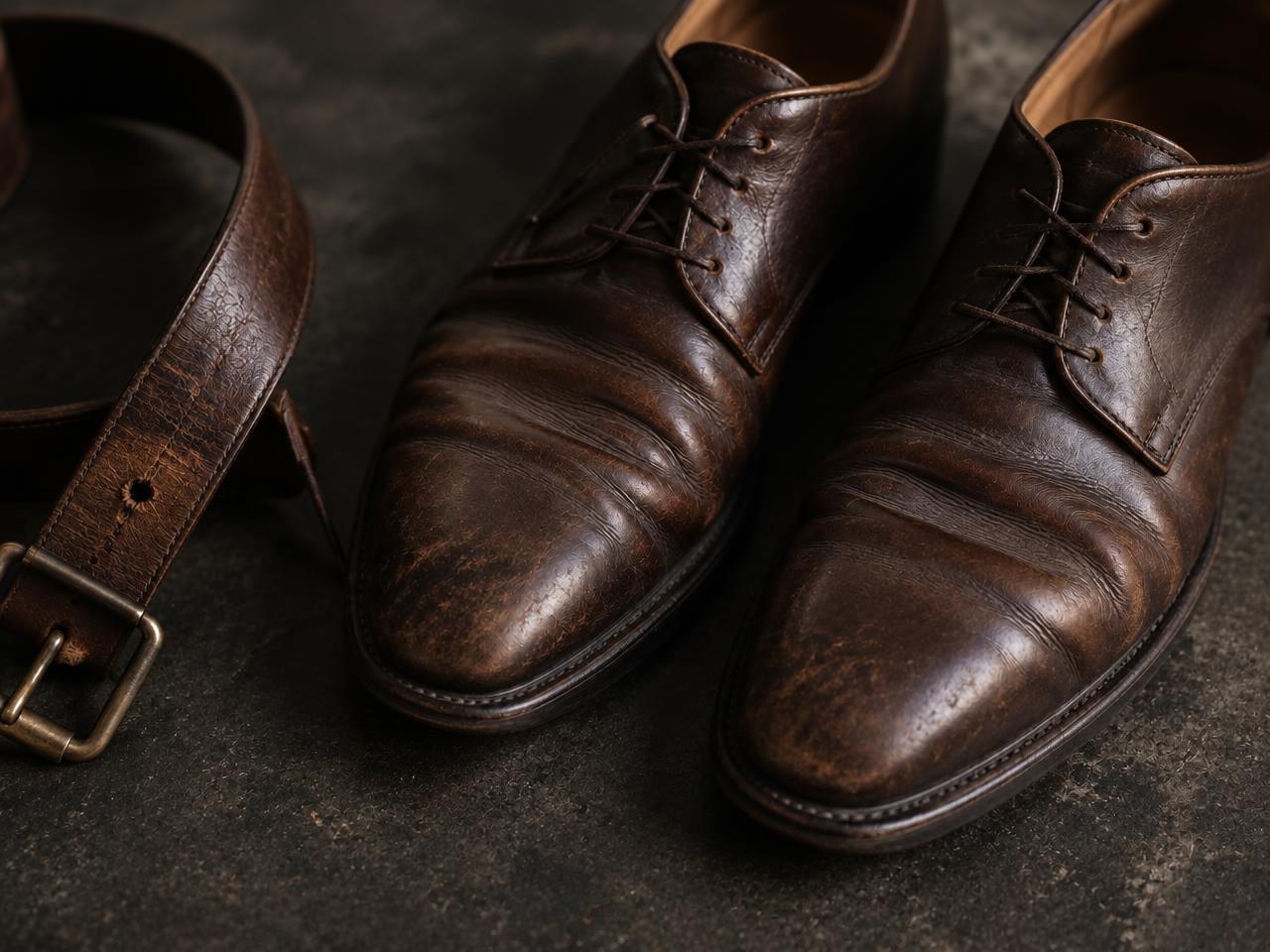
Leather tells you where it has been
Leather is perhaps the clearest example of a material that develops through use.
Shoes crease where the foot bends.
A bag darkens where it is handled.
A belt changes around the holes that are used most.
The surface records movement.
Good leather does not remain perfect.
It develops a patina.
That patina is difficult to fake convincingly because real wear is irregular.
It belongs to one person.
That is part of the appeal.
Denim was designed to change
Denim almost expects wear.
The colour fades where movement happens.
At the knees.
Around pockets.
Along seams.
Behind the legs.
Two identical pairs of jeans can eventually look completely different depending on how they were worn.
That transformation turns a mass-produced object into something more individual.
The fabric keeps a record.
That idea extends beyond denim.
Clothing becomes more personal when it has been lived in.
Wear and damage are different
There is an important distinction.
Not every sign of ageing is desirable.
A broken zip is not patina.
A torn seam is not character.
A stretched neckline is not something to celebrate.
Good ageing comes from material and construction responding naturally to use.
Damage comes when something stops performing its job.
The goal is not to romanticise clothing falling apart.
It is to recognise the difference between wear that adds character and failure that needs fixing.
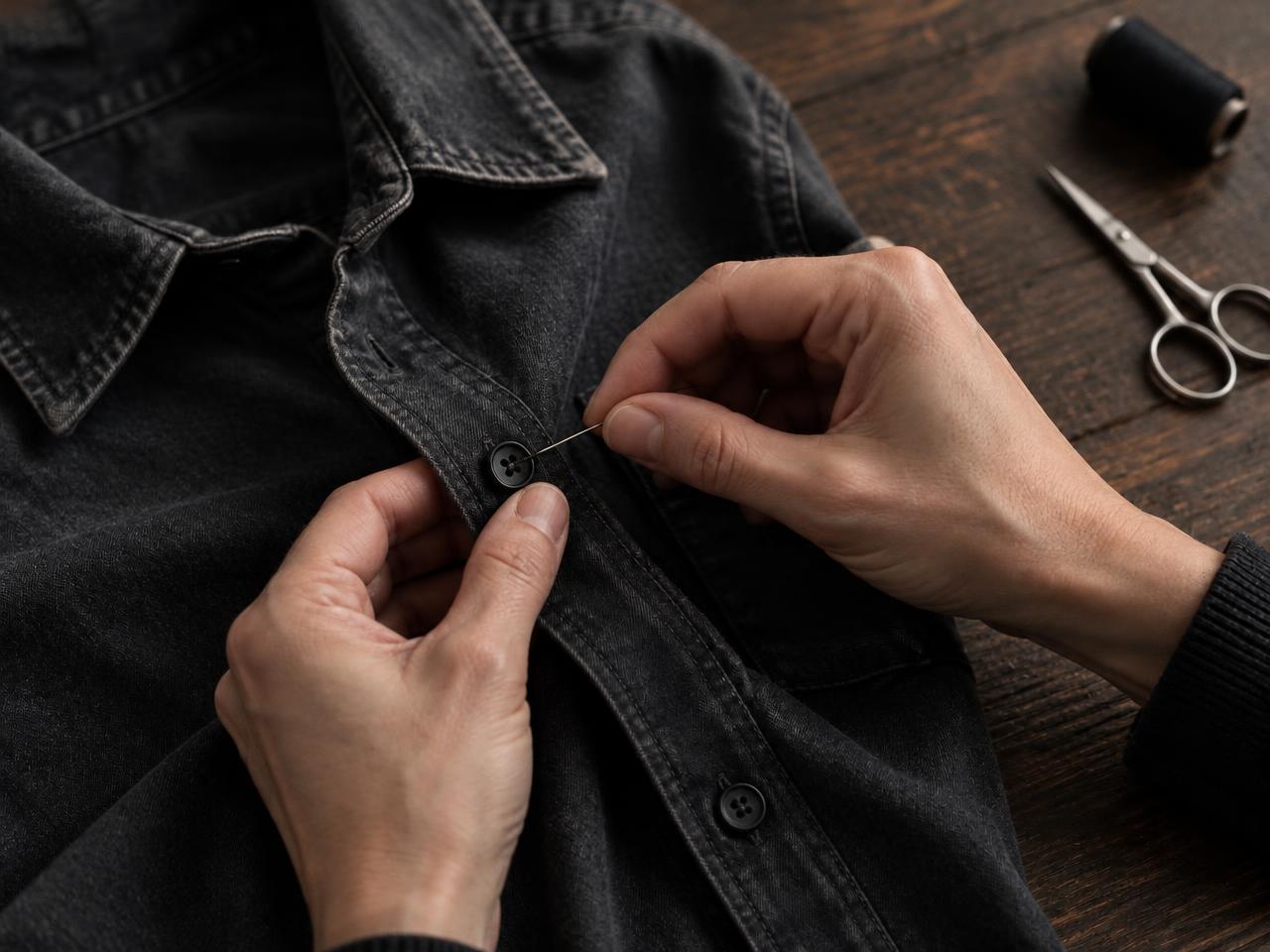
Repair changes the relationship
A small repair can sometimes make a garment more valuable.
Not financially.
Personally.
A button replaced.
A seam repaired.
A small tear fixed.
Shoes resoled.
The garment continues.
There is something satisfying about keeping a useful piece in rotation rather than immediately replacing it.
Repair also changes the way you see clothing.
It stops being temporary.
You begin thinking in years rather than seasons.
Care should preserve, not freeze
Taking care of clothes matters.
But care should not mean trying to stop them from ever changing.
Wash them properly.
Avoid unnecessary heat.
Store them well.
Let shoes dry.
Brush wool.
Repair problems early.
The aim is to help clothing age slowly and well.
Not keep it permanently looking unused.
A garment should still be allowed to become yours.
The best pieces reveal themselves over time
It is easy to be impressed by something in a shop.
Lighting helps.
Presentation helps.
Everything is new.
The more useful test comes later.
Do you still reach for it after six months?
Does it still fit well after repeated washing?
Is the fabric becoming better or worse?
Does it work with the rest of the wardrobe?
Does it feel easier to wear?
Good clothing often becomes more convincing with time.
You begin to understand why it works.
Familiarity has value
There is comfort in clothes you know well.
You know how the shirt sits.
You know where the trousers fall.
You know which shoes work.
You know how the jacket feels when walking.
There are fewer surprises.
That familiarity can be more valuable than novelty.
The garment becomes part of a routine.
You stop evaluating it every time you put it on.
You simply wear it.
Clothes collect memory
A garment can become connected to a place.
A trip.
A period of life.
A particular winter.
A city.
A person.
That connection develops because the garment was there repeatedly.
Clothing cannot collect much meaning if it is constantly being replaced.
Use gives it context.
A shirt worn across several journeys becomes more than fabric.
The value changes.
Not because the object itself became rarer.
Because your relationship with it did.
Quality becomes clearer with age
Some clothes look impressive when new and deteriorate quickly.
Others begin quietly and reveal their quality over time.
The stitching holds.
The fabric remains stable.
The shape stays balanced.
The surface develops character without collapsing.
That is a better test of quality than how something feels during the first five minutes of ownership.
Longevity is not always visible on day one.
Often, it has to be earned.
Buy things you want to see ageing
This is a useful way to think before buying.
Can you imagine wearing the piece when it is no longer perfect?
When the cotton has softened?
When the black has faded slightly?
When the leather has developed marks?
When the linen has been washed dozens of times?
If the answer is yes, the garment probably has a better chance of staying with you.
If its entire appeal depends on remaining completely untouched, the relationship may be shorter.
Perfection can make clothing less personal
Something brand new can sometimes feel almost anonymous.
Nobody has shaped it yet.
It looks exactly like every other version.
Wear changes that.
A sleeve begins folding in a particular place.
Shoes develop your stride.
Fabric sits differently around your body.
The garment slowly becomes less perfect.
And more specific.
That can be a worthwhile exchange.
Keep clothes long enough to know them
Constantly replacing things makes it difficult to discover what ageing looks like.
You never reach the softer cotton.
The relaxed linen.
The worn leather.
The familiar fit.
Those qualities only appear when clothing stays around.
That does not mean keeping everything forever.
It means giving good pieces enough time to prove themselves.
Some will not.
Some will become favourites.
That process is worth allowing.
Better with age
Good clothes do not need to look new forever.
They need to keep working.
Keep fitting.
Keep feeling useful.
And, ideally, gain something through the process.
Softness.
Texture.
Character.
Memory.
Familiarity.
The strongest clothes are not always the ones protected most carefully.
They are often the ones worn most often.
The ones that travelled.
Changed.
Softened.
And stayed.
Wear leaves a trace. Let it.
More experience. Less excess.
You might also like
Culture — October 2026
What Makes Clothing Timeless?
Material — November 2026