
The Design Code / Objects & Function / 01
The Anatomy of a Chair
What the curve of a backrest, the depth of a seat and the angle of a leg mean for the person sitting down.
Halfway through dinner, you push your plate aside and settle back to listen. Until then, the backrest has barely touched you. Now you can feel exactly where it meets your back.
A chair has to accommodate both parts of the evening, and the distance between the front edge of the seat and that curved piece of wood has a surprising say in how easily you move between them.
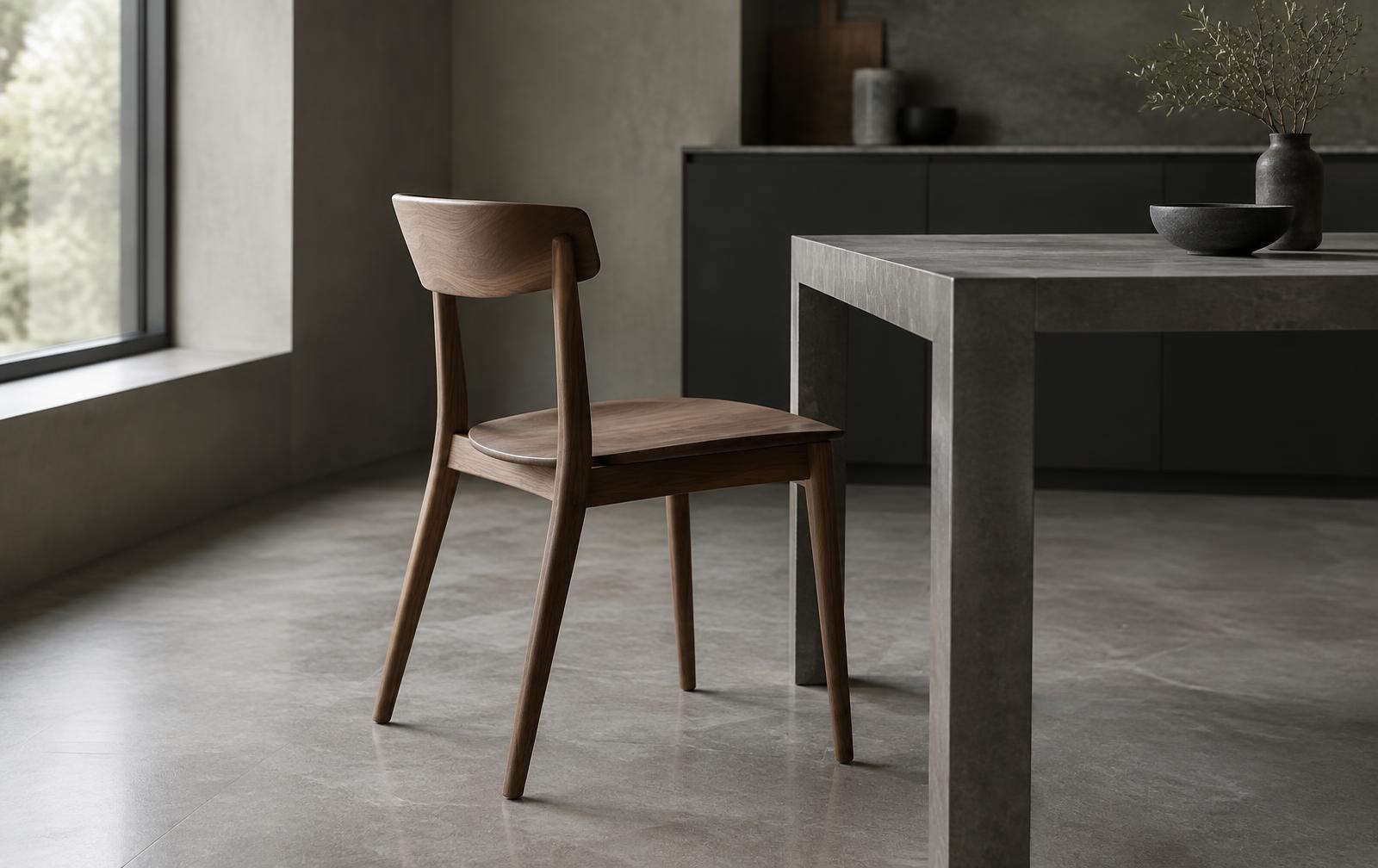
I
The curve of the backrest
Seen from the front, a wooden backrest can look like a straight band joining two uprights. Look down from above and its curve becomes clear. The middle sits further back than the ends, leaving room for the shape of your back. Run your hand along the top edge and you can feel another, smaller curve where the maker has rounded the wood. One curve changes how the chair fits you. The other is the detail you feel each time you pull it out.
One curve changes how the chair fits you. The other is the detail you feel each time you pull it out.
II
The depth of the seat
Sit with your feet on the floor and slide back until you meet the backrest. Notice where the front edge comes beneath your thighs. If it reaches the backs of your knees, you may find yourself shifting forwards again. On a shallower seat, you can settle against the backrest and still draw a foot underneath you. A few centimetres here can explain why two people at the same table have quite different opinions of the same chair.
A few centimetres here can explain why two people at the same table have quite different opinions of the same chair.
III
Where the legs meet the floor
Look at the chair from the side and follow a rear leg down from the seat. A slight outward angle places its foot further back, widening the chair’s base in that direction. It also determines how much room the chair takes up behind you. In a narrow kitchen, you learn that dimension every time you squeeze past someone at breakfast.
The next time you stack two dining chairs side by side, line up their front feet. From there, even small differences are easy to see. One backrest sits a little further back. One seat ends a little sooner. You may finally spot why you always choose the same one.
You may finally spot why you always choose the same one.
Quiet. Minimal. Timeless.
← Back to Objects & Function