
The Design Code / Materials & Texture
Understanding Linen
Fibre, weave and natural variation. What gives linen its distinctive surface and feel.
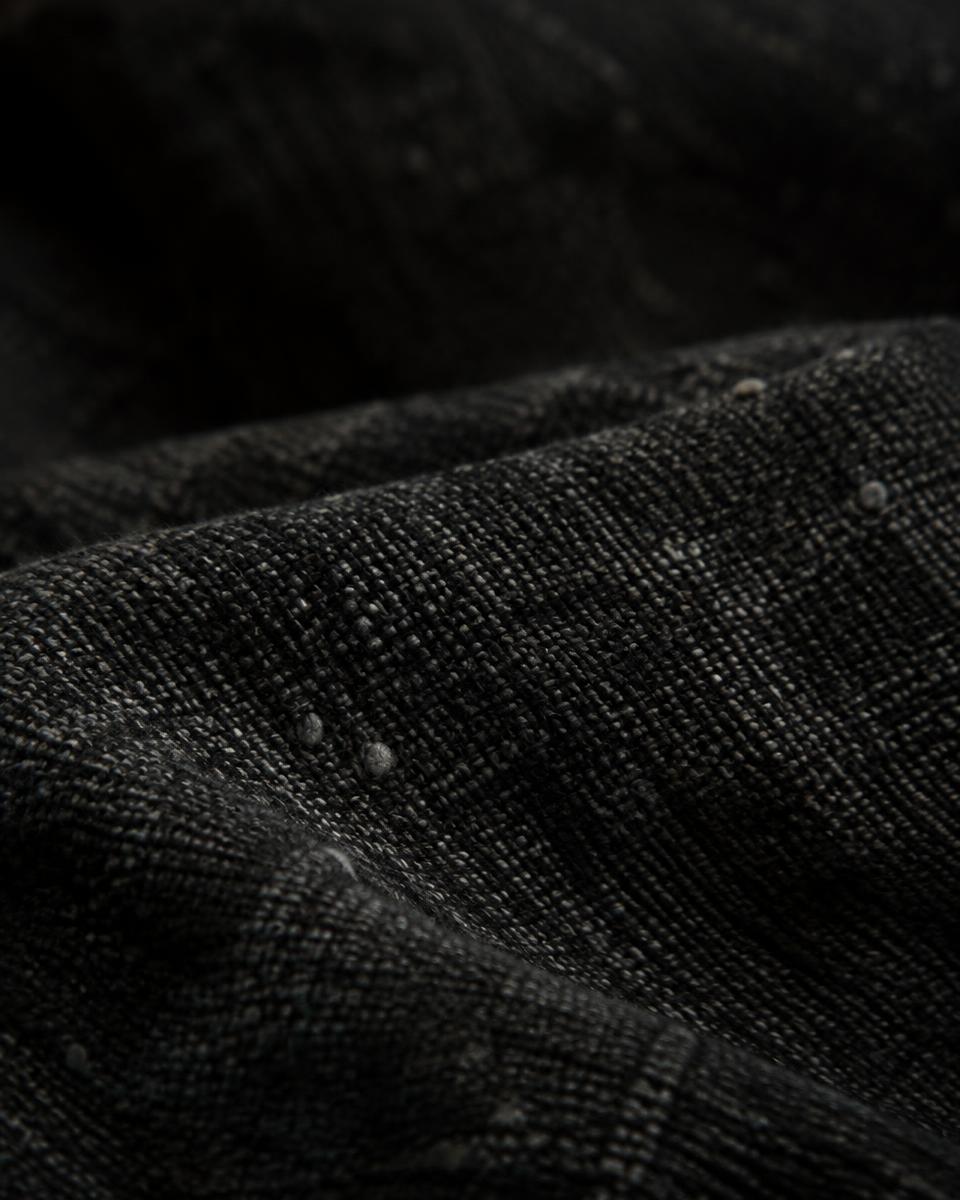
A linen shirt catches the light through its weave. Small variations in the yarn interrupt the surface, while folds create shadows that shift with movement.
That texture is part of linen’s appeal. It gives a simple garment visible character, even within a single colour.
But linen can take many forms. A fine shirting fabric, a substantial curtain and a crisp tablecloth may share the same fibre while behaving quite differently. Understanding the material means looking at its construction as well as its name.
I
From flax to fabric
Linen is made from fibres obtained from the stems of the flax plant. These fibres are separated and prepared before being spun into yarn and made into fabric.
Several stages influence the finished result. The selection and preparation of the fibre, the thickness of the yarn and the way it is woven all contribute to the surface.
The label “linen” identifies the fibre. It does not, by itself, tell us whether a fabric will feel fine, coarse, soft or structured.
II
The surface reveals the yarn
Linen fabrics often display slight variations in yarn thickness. Small thicker sections, commonly called slubs, can create an irregular pattern across the weave.
These variations catch light differently, giving an otherwise plain surface depth. They may be noticeable in a coarse fabric and much subtler in a fine one.
Visible irregularity alone is not a measure of quality. A smoother linen can be carefully made, just as a textured fabric can be intentionally expressive.
Look at how the surface works as a whole: whether its character suits the garment, how it feels and how consistently it has been constructed.
III
Weave changes the experience
The arrangement of the yarns helps determine how a fabric behaves.
A more open weave leaves visible spaces between threads. A tighter construction creates a denser surface. Yarn thickness and weave work together, so two linen fabrics of similar weight can still have different textures and levels of coverage.
Hold a fabric towards the light to examine its structure, then look at it against the body or over another layer. Those views reveal different aspects of the same material.
For clothing, consider how the weave supports the intended use. An airy overshirt and a pair of trousers have different demands.
IV
Weight and finish shape the silhouette
Lightweight linen may gather into small folds, while a heavier fabric can create broader, more substantial shapes.
Weight is only part of the picture. A crisp finish may help fabric stand away from the body. A softened finish may allow it to fall more closely.
This makes the relationship between fabric and cut particularly important. A wide sleeve in structured linen can hold a distinct volume. The same pattern in softer fabric may produce a gentler outline.
Judge the fabric in motion as well as laid flat. Lift it, let it fall and notice how the folds form.
V
Why linen creases
Linen has relatively little elasticity, so it does not readily spring back after bending or compression. Creases develop where the fabric folds during sitting, reaching and everyday movement.
Their appearance varies with the fabric’s weight, construction and finish. Fine linen may develop many small wrinkles, while a more substantial fabric can form broader folds.
These changes become part of the worn surface. A freshly pressed shirt and the same shirt after several hours will have different characters.
Choose linen with that behaviour in mind. A relaxed design can accommodate visible creasing as part of its expression.
VI
Comfort belongs to the whole garment
Linen is commonly used for warm-weather clothing, but the fibre name alone cannot describe how comfortable a piece will feel.
Weave, weight, lining and fit all matter. An open fabric allows a different degree of airflow from a dense one. A loose sleeve creates more room around the arm than a close-fitting sleeve.
Consider the complete construction: how much fabric surrounds the body, where air can move and whether additional layers change the experience.
The most useful assessment comes from wearing the garment in the conditions it is intended for.
VII
Blends create different possibilities
Linen is also combined with other fibres.
A blend changes the composition of the yarn or fabric and may alter softness, drape, stretch or the way creases appear. The result depends on the accompanying fibre, its proportion and the construction.
Check the composition label rather than relying on appearance. A fabric with a linen-like texture may contain little linen or none at all.
A blend can be a considered choice when its qualities suit the purpose. Assess what the finished fabric does and how it feels against the skin.
VIII
Colour brings out the texture
Linen’s surface gives colour a particular expression.
In pale shades, small shadows reveal the weave and folds. In black or charcoal, highlights can bring individual threads into view. Sand and muted grey can make the variations feel especially subtle.
The same fabric may look relatively even from a distance and become more detailed up close.
This makes linen useful within a restrained palette. Its surface provides variation without requiring a printed pattern or strong colour contrast.
IX
Care starts with the label
Follow the care instructions for the finished garment. Dye, trims, linings, blends and treatments can affect what is suitable.
Where washing is permitted, avoid overcrowding the machine and use the recommended programme. If ironing is allowed, working while the fabric is slightly damp can help smooth creases; use the temperature specified for the garment.
Decide how much pressing suits the piece. A collar or front opening may benefit from a clearer finish, while softer folds through the body can remain part of the look.
X
A closer look
Place two linen fabrics beside a window.
Compare the thickness of their yarns, the openness of the weave and the way each catches light. Lift a corner and let it fall. Notice whether it holds an angular fold or settles into a softer curve.
Then view both from a few steps away. The texture that dominates at close range may become a quiet variation across the larger silhouette.
This shift between detail and whole is central to understanding the material.
Through the EUVRΛN lens
Linen offers a useful reference for EUVRΛN’s interest in texture, relaxed form and everyday movement.
Its visible weave shows how a restrained surface can still hold detail. Its folds demonstrate the relationship between fabric and the body.
Quiet. Minimal. Timeless.
← Back to Materials & Texture