
The Design Code / Materials & Texture
Natural Materials
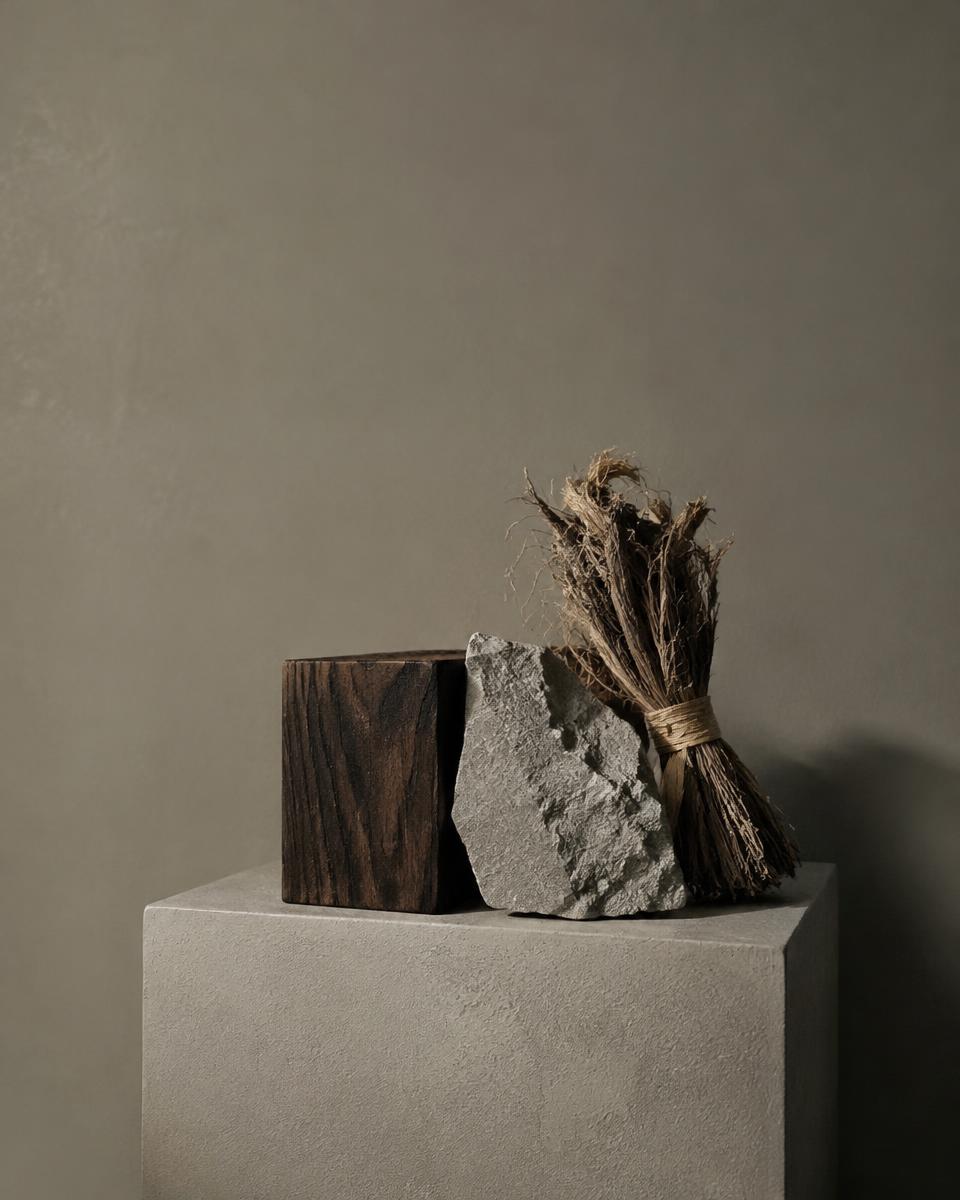
Wood, stone and plant fibres. Distinctive surfaces shaped by origin, preparation and use.
The grain of timber. The veins in stone. The fine variations in a woven fabric. Natural materials bring patterns and irregularities that can remain visible through the making process.
Their character comes from both their origin and the work that follows. Cutting, spinning, weaving, sanding and finishing all influence what we eventually see and touch.
Understanding these materials means considering their individual qualities and how they serve the finished design.
I
Origin is the beginning
The term “natural” describes where a material comes from, but tells us relatively little about its finished form.
Wood becomes boards, veneers or components. Stone is cut and given a particular surface finish. Plant fibres are prepared and spun before becoming fabric.
Each stage changes the material’s appearance and behaviour. A raw surface and a highly finished one may share an origin while offering very different experiences.
Look beyond the category to the specific material, its construction and the treatment it has received.
II
Variation gives surfaces character
Natural materials often contain differences within a single piece.
Timber grain changes direction. Stone contains shifts in colour and pattern. Yarns can introduce subtle variations across a fabric.
These details influence how a surface looks at different distances. A tabletop may appear relatively uniform from across a room, then reveal a complex grain up close.
Variation can be part of a material’s appeal, but it needs to suit the application. A visually interesting feature may still require assessment for strength, stability or comfort.
III
Wood combines grain and structure
Wood offers a wide range of colours, grain patterns and surface qualities.
The species, the way the timber is cut and its finish all affect the result. A sanded surface may feel smooth while retaining a visible grain. Brushing can make that grain more pronounced.
In furniture and interiors, the direction of the grain can reinforce the length of a form or draw attention to a particular panel. How adjacent pieces are arranged also changes the overall pattern.
Look at edges and connections as well as broad surfaces. They reveal how the material has been assembled and how its character continues through the object.
IV
Stone changes with its finish
Stone can appear rough, softly textured or highly reflective.
A polished surface may make colour and veining more prominent. A honed finish generally produces a smoother, less glossy appearance. Rougher treatments introduce more pronounced surface variation and shadow.
Different stones also have different properties. Suitability for a floor, countertop or decorative object depends on the particular material and the conditions it will encounter.
The visual impression is one part of the choice. Weight, maintenance and response to everyday use matter too.
V
Plant fibres offer many expressions
Cotton, linen and hemp begin with plant fibres, yet their finished fabrics can take many forms.
Yarn thickness, weave or knit, fabric weight and finishing all influence how a textile looks and behaves. The same fibre can contribute to a light, flexible layer or a more substantial, structured surface.
This range makes specific descriptions useful. “Natural fabric” is a broad category; composition, construction and weight tell us more about the piece in front of us.
Handle the fabric where possible. Its movement and feel can reveal qualities that a photograph cannot.
VI
Finishing shapes the experience
A finish can alter colour, texture, sheen and the way a surface responds to use.
Timber may be oiled, painted or lacquered. Stone may receive a treatment suited to its intended setting. Fabric may be washed, brushed, dyed or treated to change its handle.
These processes become part of the material’s identity. A pale wood beneath an opaque coating offers a different experience from the same wood with its grain visible.
Ask what the finish contributes, how it should be maintained and whether it suits the object’s purpose.
VII
Materials respond to their surroundings
Light, moisture, temperature and handling can change how materials look and behave over time.
The response varies considerably between materials and finishes. Timber can change dimension as its moisture content changes. Textiles can fade or alter in feel through use and laundering. Some stone surfaces are more vulnerable to staining or chemical damage than others.
Those differences make context important. A material suited to a sheltered interior may need a different treatment or design for a more exposed setting.
Choose with the intended conditions in mind, then follow care guidance specific to the finished piece.
VIII
Natural origin does not guarantee performance
A material’s usefulness depends on how well its qualities match the task.
Durability, softness, weight and ease of care vary within natural materials. They also depend on construction. A strong fibre cannot compensate for every weakness in a poorly assembled garment.
Blends, coatings and combinations can serve practical purposes when chosen carefully. What matters is understanding what the complete material does.
Assess the finished design through use: whether it feels comfortable, holds its intended form and can be maintained over time.
IX
Environmental claims need detail
Natural origin alone does not establish a product’s environmental impact.
Cultivation or extraction, processing, dyeing, finishing, transport and use all contribute to the wider picture. The amount of material required and the useful life of the finished object matter as well.
Specific information is more useful than a broad description. Look for clear composition, documented sourcing and an explanation of what any certification actually covers.
A considered choice begins with evidence about the particular product.
X
Combining materials creates contrast
Natural materials can work together through shared tones and different surfaces.
Pale timber beside cream fabric creates a gentle colour relationship, while the grain and weave provide variation. Dark stone beside soft cotton brings a stronger contrast in surface and feel.
The proportions determine how the combination reads. One material might occupy most of the composition, with another used for a smaller detail.
Give each enough space to remain visible. The meeting between materials can be as interesting as either surface alone.
XI
A closer look
Choose a wooden object, a piece of stone or ceramic, and a plant-fibre textile.
Examine each from a distance and then close up. Notice which features come from the underlying material and which appear to result from processing or finishing. Ceramic, for example, begins with mineral materials but gains its finished character through shaping, firing and sometimes glazing.
Compare the edges with the main surfaces. Look for grain, weave, tooling marks or coatings.
This helps distinguish origin from construction and understand how both contribute to the finished object.
Through the EUVRΛN lens
Natural materials offer a useful way to explore texture, variation and the relationship between appearance and everyday use.
For EUVRΛN, that exploration supports an attention to fabric, form and small details. A restrained palette allows the surface to remain visible, while a clear silhouette gives it a defined role.
The material deserves to be understood on its own terms: what it contains, how it has been made and how it works in the finished piece.
Quiet. Minimal. Timeless.
← Back to Materials & Texture