The Design Code / Materials & Texture
The Beauty of Wear
Softening, fading and patina. How surfaces change through use, and where care makes a difference.
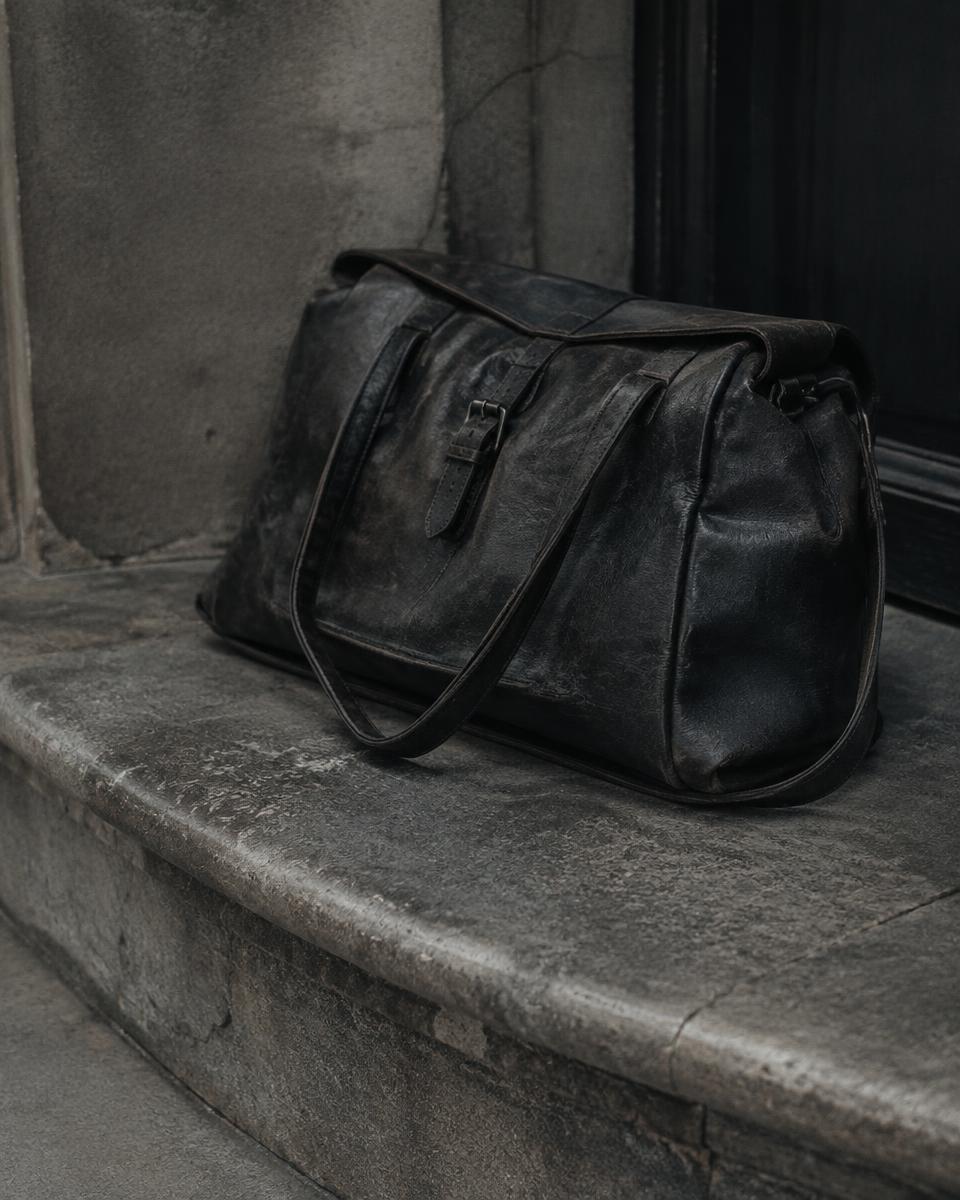
The softened cuff of a favourite shirt. A polished patch on a wooden handrail. The creases around the handle of a leather bag. Use leaves visible traces on the things around us.
Some changes make an object more familiar and appealing. Others signal that it needs attention. Learning to recognise the difference helps us appreciate materials over time while keeping them useful.
The first impression is only one stage in a longer relationship.
I
Surfaces record repeated contact
Wear often develops where an object meets the body or its surroundings.
A cuff brushes against a desk. A bag rests against a hip. A chair is handled in the same places each day. These repeated encounters gradually affect the surface.
The changes are rarely uniform. Areas of frequent contact may become smoother, lighter or more creased, while less exposed sections retain more of their original appearance.
Those differences create a record of use. They show how an object has become part of someone’s routine.
II
Patina takes different forms
Patina describes a surface character that develops over time. Depending on the material, it may involve changes in colour, sheen or texture.
Timber can acquire tonal variation and smoother areas through handling. Some leather develops a deeper or more varied appearance. Certain metals change colour as their surfaces react with the environment.
These processes differ between materials and finishes. A coating may change the way a surface ages or conceal the material beneath it.
The word itself does not guarantee a desirable result. Look at what has changed and whether the object remains sound and fit for use.
III
Fabric develops its own history
Clothing changes through movement, friction, washing and exposure to light.
A fabric may become softer or lose some of its initial crispness. Repeated folds can become more noticeable. Colour may shift unevenly across areas that receive different levels of exposure.
Construction influences where these changes appear. Seams, hems, cuffs and pocket edges create points where fabric bends or rubs repeatedly.
A garment’s worn appearance therefore reflects both its material and the way it has been made and used.
IV
Fading changes the palette
Colour can become less intense over time, changing the relationship between pieces.
A deep black may move towards charcoal. A darker seam allowance may become visible beside a lighter surface. Areas sheltered beneath a collar or inside a fold can retain a different tone from exposed sections.
These variations may add depth to a familiar garment. They can also disrupt a closely matched outfit.
Look at the piece as it is now. A change in colour may suggest a new combination with other tones or textures already in the wardrobe.
V
Familiarity adds another kind of value
Some of our most valued objects carry ordinary signs of use.
A shirt may be associated with a particular journey. A bag may have accompanied years of daily travel. A table may hold memories of people gathering around it.
That connection changes how we perceive the surface. A small mark can become part of an object’s identity because we understand where it came from.
This value is personal. It cannot be measured simply by age, price or condition, and it does not require every sign of wear to be preserved.
VI
Character and damage need different responses
A surface can show its age while remaining useful. It can also deteriorate in ways that require repair.
A softened fabric is different from one that has become thin enough to tear. A superficial scuff is different from a split at a load-bearing connection. Loose stitching may be a small issue now but allow a seam to open further.
Inspect the places that do the most work: handles, fastenings, pocket corners, elbows and hems.
Appreciating wear includes recognising when intervention will help preserve the object.
VII
Construction influences how things age
The way a piece is assembled affects its life in use.
Seam placement, reinforcement and finishing influence where stress gathers. A replaceable button or accessible seam can make a repair more straightforward. A lining may protect some areas while introducing its own maintenance needs.
These details are worth considering before wear develops. Turn a garment inside out, examine its connections and notice whether vulnerable points have been thoughtfully resolved.
Longevity belongs to the complete design, including the parts that are usually hidden.
VIII
Care supports continued use
Care works best when it responds to the particular material and finish.
Follow the instructions supplied with the garment or object. Treat new marks appropriately, use suitable cleaning methods and allow items to dry fully before storage.
More treatment is not always helpful. An unsuitable cleaner, excessive heat or repeated aggressive scrubbing can introduce damage of its own.
Pay attention to changes after care as well as after use. The aim is to maintain the qualities that allow the piece to keep serving its purpose.
IX
Repair can become part of the design
A repair may restore a discreet finish or introduce a visible new detail.
Matching thread can help a repaired seam blend into the garment. A contrasting patch can make the intervention apparent. Either approach can be considered and appropriate.
The method should suit the fabric, the location and the strain the area will experience. A decorative stitch alone may not provide the support a damaged section needs.
For a piece that matters to you, skilled repair can offer a way to retain its familiar shape and history while making it usable again.
X
Think beyond the first appearance
When choosing something new, consider how you might feel about it after regular use.
Will slight fading suit the colour? Can the surface be cleaned in a way that fits your routine? Are important components repairable? Does the design still appeal without a pristine finish?
These questions help connect appearance with everyday ownership.
An object does not need to age dramatically to remain interesting. Sometimes its value lies in keeping a useful form while gradually becoming more familiar.
XI
A closer look
Choose a garment or object you have used for several years.
Compare an exposed area with one that has been protected. Notice differences in colour, texture, softness and sheen. Look closely at the points of repeated contact.
Identify which changes you appreciate and which need attention. A loose button, worn edge or opening seam may suggest a small repair that keeps the piece in use.
The exercise turns a general impression of age into an understanding of the material’s condition.
Through the EUVRΛN lens
“More experience. Less excess.” offers a useful way to think about the things we keep.
A restrained design leaves room for the material’s changing character. Softened fabric, familiar folds and subtle tonal shifts can become part of how a piece is experienced.
That appreciation goes alongside care, repair and an honest assessment of condition. The aim is a lasting relationship with the object, supported by the attention it needs.
Quiet. Minimal. Timeless.
← Back to Materials & Texture