The Design Code / Form & Space
Understanding Proportion
Scale, length, width and their relationships. How small adjustments change the character of a whole design.
A collar that feels too large for a shirt. A picture that seems lost on a wall. A chair whose slender legs make a substantial seat appear lighter. We often notice proportion before we can explain it.
Proportion describes how dimensions relate: one part to another, and each part to the whole. It influences the way clothing sits on the body, how furniture occupies a room and how information is arranged on a page.
Understanding it begins with looking at relationships rather than isolated measurements.
I
Size needs a reference
An object can feel large in one setting and small in another.
A wide table may fit comfortably in a generous room but dominate a compact space. A bold heading may suit a poster while overwhelming a small label.
Scale describes size in relation to a reference, such as the body or the surrounding space. Proportion concerns the relationships between dimensions and parts: the height of the table compared with its width, or the heading compared with the text beneath it.
The two work together. An object can keep the same proportions as it increases in size, yet its relationship with its surroundings changes.
II
Length and width shape the impression
Changing one dimension can alter the character of an entire form.
A rectangle becomes more elongated as its length increases relative to its width. A shirt can appear broader when its body is shortened, even if the chest measurement stays the same. A tall, narrow window creates a different impression from a low, wide opening.
These changes affect direction and emphasis. An elongated form draws attention along its longer axis. A more compact form gathers its dimensions closer together.
When something feels too broad or too narrow, consider both dimensions. Adjusting the length may achieve more than changing the width.
III
Details belong to the whole
Small elements have their own proportions, but they also need to relate to the larger design.
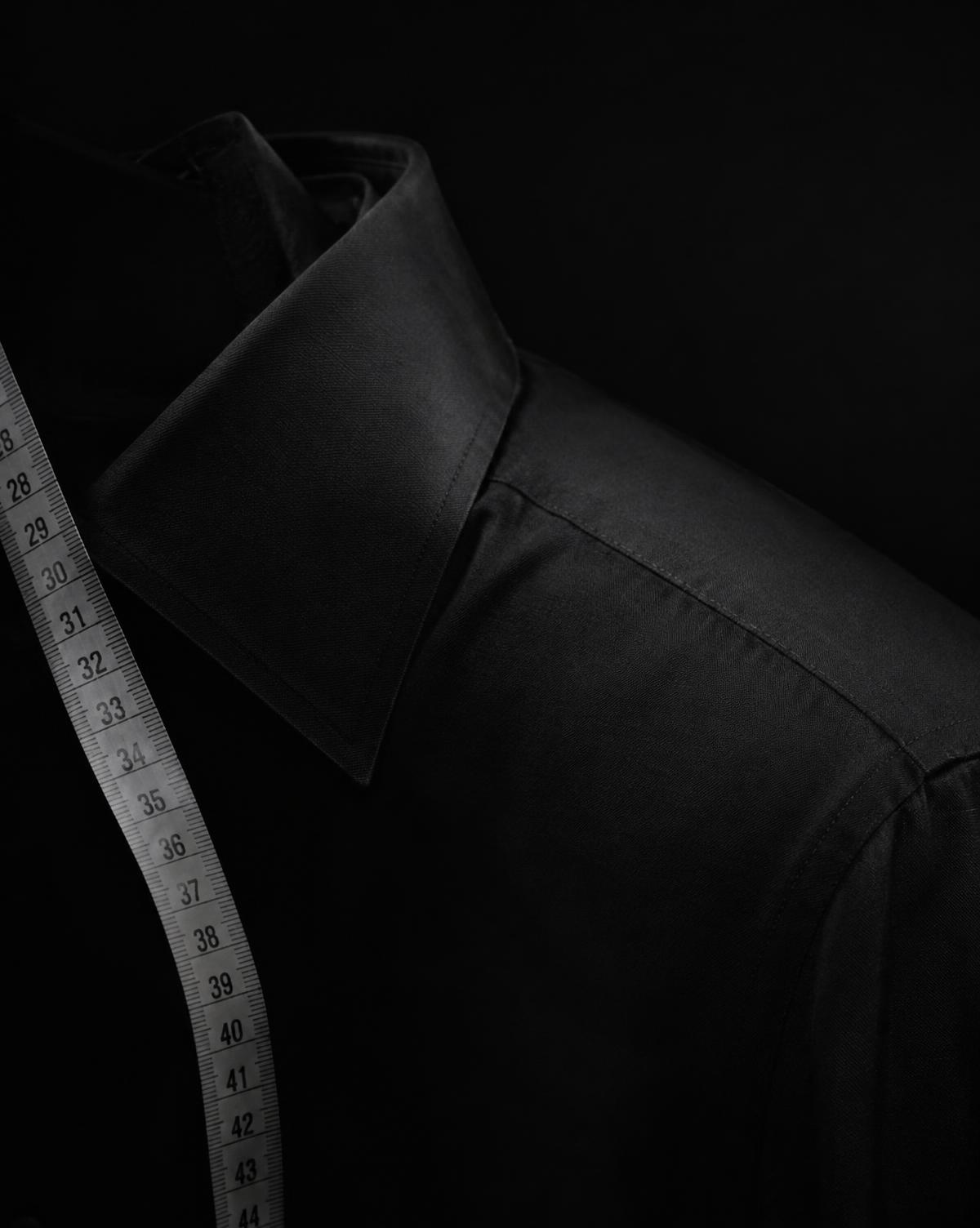
A pocket has a width and depth. Its appearance also depends on the size of the garment, its distance from the seams and its position on the body. A collar must work with the neckline, shoulders and front opening.
The same applies to objects and buildings. A handle belongs to a door. A frame belongs to a window. Their dimensions can reinforce the whole or become deliberate points of contrast.
Looking at a detail in isolation only tells part of the story. Step back to see what it contributes to the complete form.
IV
The body provides a practical reference
In clothing and everyday objects, proportion has a physical role.
A sleeve needs to accommodate an arm through movement. A handle needs enough room for a hand. A seat’s height and depth affect how someone sits and rises.
People differ in height, build, reach and mobility, so one set of dimensions will not serve everyone equally well. A visually appealing arrangement still needs to work for its intended user.
For clothing, this means considering ease: the room between the garment and the body. How that room is distributed influences comfort and silhouette. Extra width through the chest creates a different result from extra volume in the sleeves.
V
Balance does not require equal parts
Equal divisions create one kind of order, but unequal proportions can be equally coherent.
A small image beside a larger area of text establishes a different balance from two equally sized columns. A short jacket with longer trousers divides an outfit differently from a long overshirt worn over shorts.
What matters is how the parts work together. One may lead while another supports it.
Colour and texture also affect this relationship. A small, strongly contrasting element can attract more attention than its dimensions suggest. Physical size and visual prominence are related, but they are not identical.
VI
Clothing works as a complete silhouette
The proportions of an outfit depend on how its pieces meet.
A shirt’s hem creates a visible division across the body. Raising or lowering that line changes the relationship between the upper and lower parts of the outfit. Sleeve length, trouser width and footwear add further points of reference.
A tuck, a rolled cuff or an open outer layer can change those relationships without altering the garments themselves.
There is no single silhouette that suits every person or intention. Look at where the main lines fall, how volumes combine and whether the result feels comfortable in movement.
VII
Material changes perceived proportion
Measurements alone cannot fully describe a finished form.
Two shirts with similar dimensions may look different if one uses a crisp fabric and the other a fluid one. The first may hold volume away from the body; the second may fall closer to it.
A thick tabletop can appear lighter when its underside is bevelled. A dark frame may seem more prominent than a pale frame of the same width.
Material, construction, colour and light all influence how we read dimensions. Assess proportion in the finished object whenever possible, with the conditions of use in mind.
VIII
Ratios offer starting points
Ratios describe relationships between measurements. A rectangle twice as wide as it is tall has a width-to-height ratio of two to one.
They can help establish consistency across related elements, such as image formats, panels or sections of a layout. Reusing a relationship can give separate parts a shared structure.
A ratio provides a useful framework, but it cannot decide whether a design is comfortable, readable or appropriate. Those qualities need to be assessed in context.
Begin with a relationship that serves the purpose, then adjust it through observation and use.
IX
Small changes can be enough
When a design feels unresolved, changing several things at once can make it difficult to understand what helped.
Start with one relationship. Shorten a hem, narrow a border or increase the space around a heading. Compare the result with the original before making another adjustment.
View it both close up and from a distance. A detail that looks balanced on its own may become too prominent within the whole.
This process turns proportion into something you can explore through clear, manageable decisions.
X
A closer look
Choose a shirt and lay it flat.
Compare the collar width with the shoulders, the sleeves with the body and any pocket with the panel beneath it. Notice the distances between those elements as well as their sizes.
Then put the shirt on. Observe how the fabric falls and how the relationships change when you sit, reach or bend.
Fold the hem slightly higher or roll a cuff once. A small adjustment may change the silhouette enough to reveal which proportions matter most to you.
Through the EUVRΛN lens
EUVRΛN’s three-bar symbol depends on a clear relationship between widths, thicknesses and spacing. Its identity comes from the arrangement of the parts as a whole.
In clothing, that thinking extends to relaxed silhouettes: the length of a shirt, the volume of a sleeve and the way shorts sit alongside the upper layer.
Subtle branding has a proportional role too. A small mark can remain recognisable while giving fabric and form the larger share of attention.
Quiet. Minimal. Timeless.
← Back to Form & Space