
The Design Code / Form & Space
Architectural Influences
Structure, volume and the human scale. Connections between the spaces we inhabit and the shapes we wear.
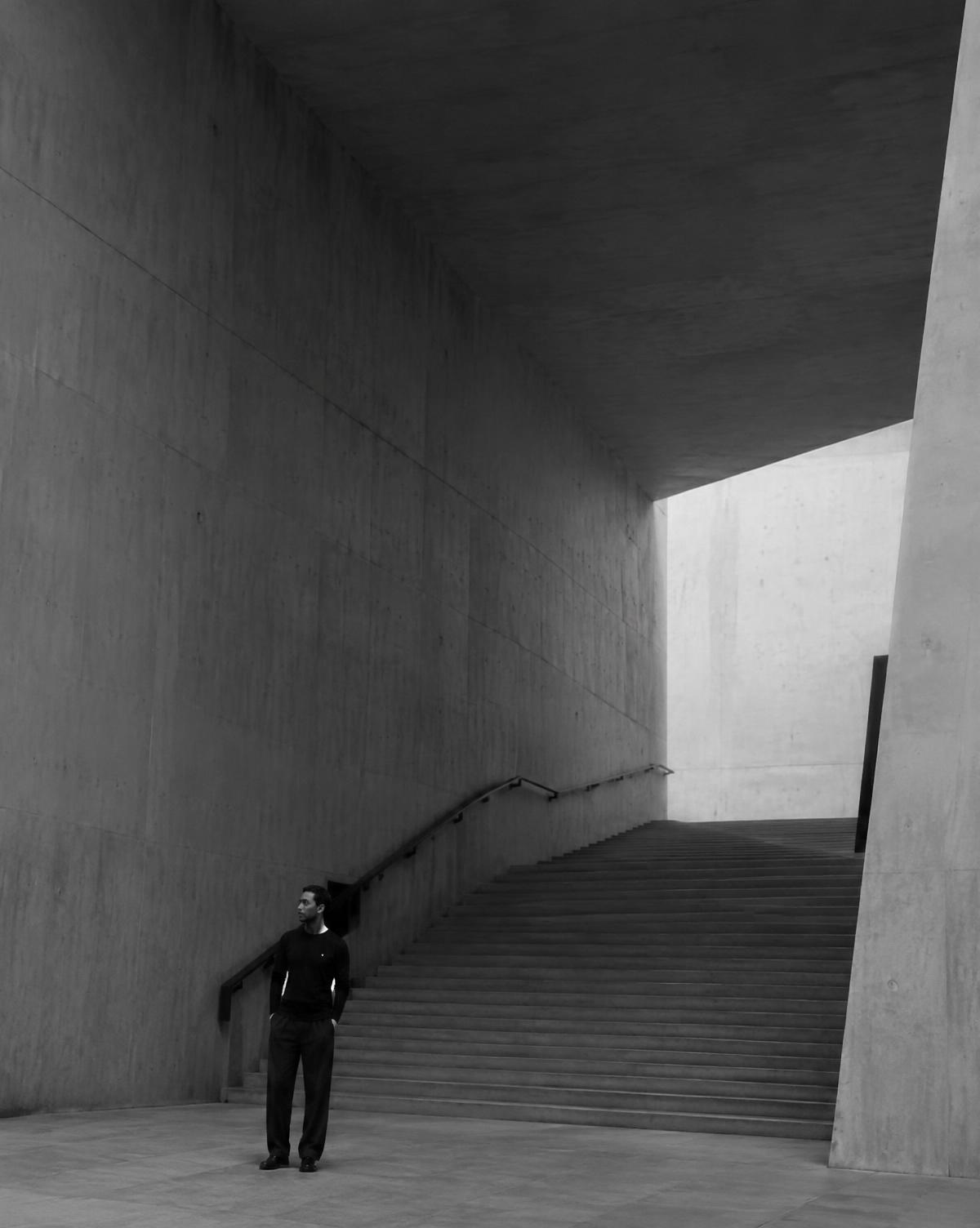
A recessed doorway. A broad roof supported by slender columns. Sunlight crossing a concrete wall. Architecture gives physical form to ideas about proportion, material and space.
Those same considerations appear in clothing and everyday objects. A garment surrounds the body, a chair supports it and a building accommodates its movement. Each works at a different scale, with its own practical demands.
Looking at architecture offers a way to notice how parts meet, how surfaces respond to light and how a larger form relates to the person using it.
I
Structure gives form its support
Buildings rely on structural systems to carry loads and maintain stability. Columns, beams, walls and connections help determine what shapes and openings are possible.
Sometimes that structure is clearly expressed. Elsewhere, it sits behind the visible surfaces. Either approach influences the finished design.
Clothing has its own methods of support. Seams, fabric weight, interlinings and construction help a collar stand, a shoulder hold its shape or a hem fall in a particular way.
The technical requirements are different, but both invite the same useful question: what allows this form to behave as it does?
II
Volume shapes the experience
Architecture is experienced through depth as well as outline.
A narrow passage opening into a broad room creates a change in spatial experience. A low ceiling and a tall entrance establish different relationships with the body. Recesses, projections and openings give a building depth beyond its outer silhouette.
Clothing also creates volume around a person. A sleeve can sit close to the arm or hold space around it. A shirt may fall straight from the shoulders or gather towards the waist.
In each case, the distribution of volume matters. Where space expands, narrows or changes direction influences both appearance and use.
III
The body provides a reference
A building may be monumental, but people experience it through everyday actions.
We reach for handles, climb steps, pass through doorways and sit beside windows. These encounters connect large forms with the dimensions and abilities of the people using them.
Human scale concerns that relationship. It asks how a space feels and functions from the position of its occupants.
The same attention belongs in clothing and objects. An opening needs to be accessible, an edge comfortable and a proportion useful in practice. Visual decisions become more meaningful when considered alongside movement and touch.
IV
Openings frame what we see
Windows, doorways and courtyards create relationships between enclosed and open areas.
Their dimensions determine what is revealed. A narrow opening may frame a small section of the surroundings. A broad window can connect an interior with a wider view.
Depth changes the effect too. A recessed window creates shadow around its edges, making the opening more pronounced.
Comparable framing appears at smaller scales. A neckline surrounds an area of skin. An open jacket reveals the layer beneath it. The boundary and the space within it work together.
V
Light reveals construction
Architecture makes the movement of light visible.
A projecting edge casts a shadow. A textured wall breaks sunlight into small variations. A deep reveal can remain dark while the surrounding surface becomes bright.
These changes help us understand depth and material. They also mean that a building’s appearance shifts throughout the day.
Fabric responds in similarly revealing ways. A fold becomes clear through its shadow; a raised seam catches light along its edge. Observing buildings can sharpen our attention to these quieter details in clothing.
VI
Materials carry across scales
Concrete, stone, timber, metal and glass each bring particular qualities to a building.
A surface may appear smooth from a distance and reveal grain, joints or irregularities up close. Its finish affects reflection, while its construction determines how it meets neighbouring materials.
These relationships provide useful references for a wider palette. The grey of weathered concrete, the warmth of timber or the contrast between matte stone and polished metal can suggest combinations of colour and texture.
A connection can begin with a surface or a meeting between materials, without borrowing the building’s overall shape.
VII
Repetition creates order
Repeated windows, columns and panels give many buildings a recognisable rhythm.
Spacing establishes the pace of that repetition. Close intervals can create a dense pattern, while broader gaps allow each element to remain more distinct.
Changes within the sequence become noticeable. An entrance may interrupt a row of windows. A wider opening may mark a shared space.
In clothing, buttons, pleats and stitching can create related rhythms. Their scale is smaller, but the relationship between repetition and variation remains useful.
VIII
Details explain how parts meet
Architecture rewards attention at its edges.
The junction between a wall and a floor, the alignment of two panels or the way a handrail turns a corner can reveal the care taken in resolving a design.
These connections need to work physically as well as visually. Materials may move differently, water may need a route away and surfaces may require maintenance.
In a garment, seams, bindings and closures perform their own practical tasks. Looking closely at architectural junctions encourages a similar interest in how clothing is assembled and finished.
IX
Place gives design its context
Buildings respond to particular surroundings.
Climate, terrain, available materials, local practices and patterns of daily life all influence architectural decisions. Shaded walkways, sheltered entrances and open courtyards serve different needs in different settings.
This context matters when drawing inspiration. A form that looks appealing in a photograph may have a practical or cultural purpose that is less immediately visible.
Understanding that purpose deepens the reference. It connects the appearance with the place and the people behind it.
X
Turning observation into design
Architectural inspiration can begin with one specific relationship.
It might be the proportion of a tall opening, the spacing between horizontal panels or the contrast of a dark frame against pale stone. Identifying that relationship makes it possible to explore it at another scale.
A sequence of lines might suggest the placement of seams. A restrained façade might inform a colour palette. A study of deep shadows might influence how a textured garment is photographed.
The resulting design still needs to suit its own material, purpose and user. The reference provides a starting point for those decisions.
XI
A closer look
Choose a building you pass regularly and observe it from three distances.
From across the street, notice its silhouette and main proportions. Move closer to study the openings, repeated elements and areas of shadow. At close range, examine a material junction or a detail you can comfortably see.
Identify one relationship that interests you. Describe it precisely: narrow beside wide, rough against smooth, a repeated line interrupted by an opening.
That observation is more useful than a general impression. It gives you something concrete to explore.
Through the EUVRΛN lens
EUVRΛN’s connection with cities offers a starting point for looking closely at the built environment: its geometry, textures, contrasts and everyday spaces.
Those observations can inform the way clothing is considered and presented. A clear silhouette, a restrained palette and attention to small connections all belong within that exploration.
The aim is to notice what makes a place distinctive and consider how those qualities might find expression at the scale of a garment or detail.
Quiet. Minimal. Timeless.
← Back to Form & Space