
The Design Code / Design Movements
Scandinavian Design
Practicality, craftsmanship and everyday comfort. Bringing usefulness and visual clarity together.
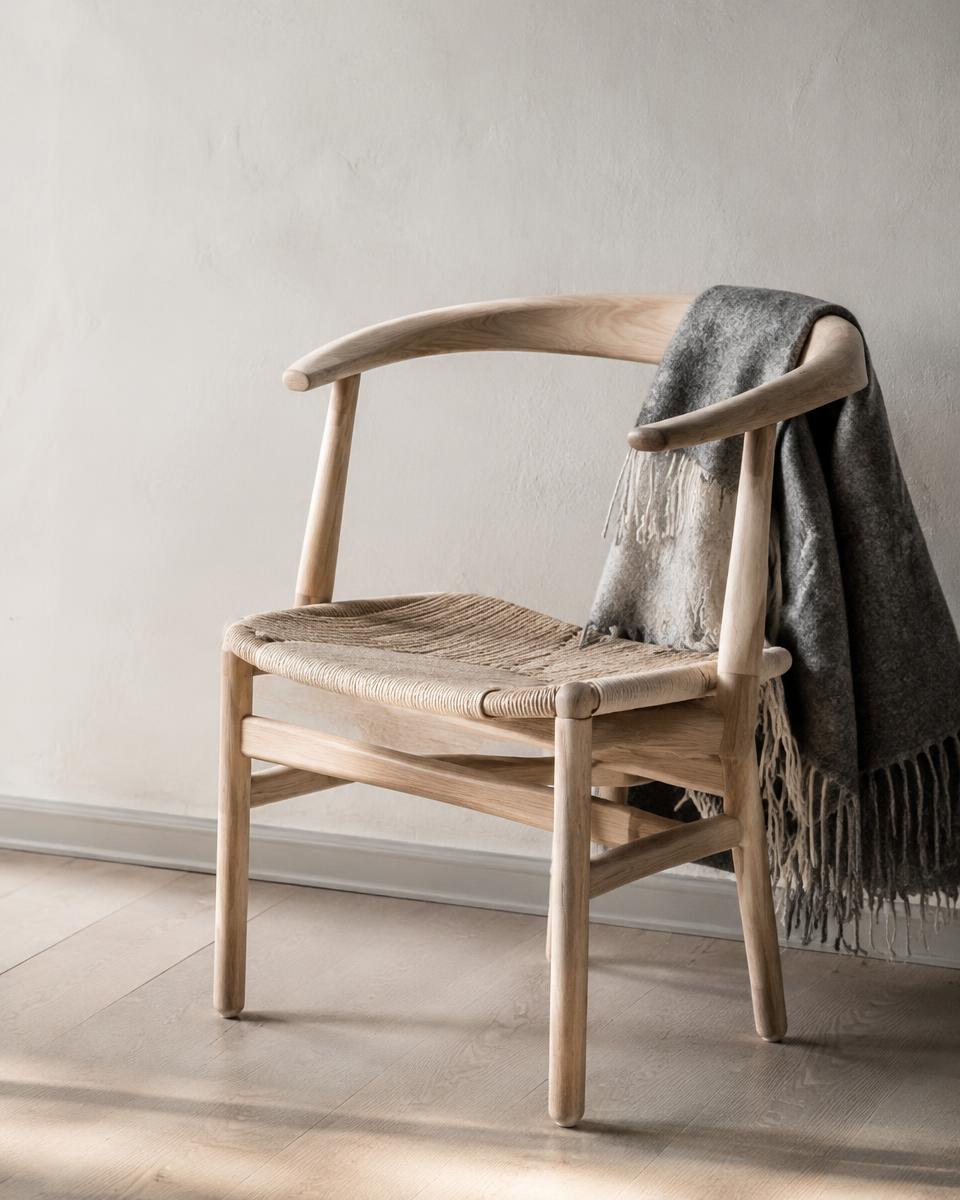
A chair with a gently shaped back. A lamp that directs light where it is needed. A woven textile that adds softness to a room. Scandinavian design is often encountered through objects made for ordinary activities.
Its appeal lies partly in the relationship between appearance and use: how something looks, how it feels and how comfortably it fits into daily life.
Behind that familiar impression is a varied history of designers, craftspeople, manufacturers and international exchange.
I
A shared name with different histories
Scandinavian design gained international recognition during the mid-twentieth century. The travelling exhibition Design in Scandinavia, shown across North America from 1954 to 1957, helped establish its reputation abroad. It brought together work from Denmark, Sweden, Norway and Finland.
The label therefore extends beyond Scandinavia’s narrower geographical meaning into the wider Nordic region.
It is useful as an introduction, but individual countries, makers and periods have distinct histories. Understanding a particular object means looking beyond the shared name.
II
Beauty and usefulness were connected
The international presentation of Scandinavian design emphasised a relationship between practical function and visual appeal. Furniture, glass and textiles became important expressions of that approach, alongside associations with democratic ideals and everyday living.
This offers a useful starting point for examining an object.
A chair’s outline matters, but so does the support it provides. A cup needs a comfortable rim and a manageable weight. A storage unit should accommodate the things people actually keep.
The experience develops through those qualities working together.
III
Familiar forms were studied closely
New designs often emerged through careful examination of existing objects.
Designmuseum Danmark describes generations of furniture designers measuring and studying historical chairs, including forms from other countries. Their work developed through adaptation and investigation as well as invention.
This gives a more detailed picture of simplicity. A clear form may be the result of many adjustments to dimensions, connections and support.
Look at how a backrest meets a frame or how a seat sits between its legs. Small decisions can explain much of the object’s character.
IV
Craft and production worked together
The history includes close relationships between designers and skilled makers, as well as the application of craft knowledge to factory production.
In Danish furniture, designers such as Hans J. Wegner, Børge Mogensen and Arne Jacobsen worked within a developing relationship between established making skills and modern manufacturing.
That relationship encourages attention to both the prototype and the repeatable result.
A pleasing shape needs a reliable method of construction. The way parts are joined and finished contributes to how the object feels and performs over time.
V
Materials contribute visible character
Timber is strongly associated with Scandinavian furniture, but the wider history includes metal, glass, ceramics and textiles.
Wood grain can give a restrained form variation. Glass introduces reflection and transparency. Woven surfaces add pattern, softness and tactile contrast. These materials offered different possibilities within the region’s post-war design culture.
When looking at a piece, consider why its material suits the task.
Notice how it bends, supports weight, catches light or feels against the body. The material is part of the function as well as the appearance.
VI
Comfort can be read through detail
Comfort becomes easier to understand when we examine the points of contact.
The edge of a seat, the curve beneath an armrest and the position of a handle all influence everyday use. These details may be subtle in a photograph but immediately apparent when the object is handled.
The same applies to clothing. A neckline, cuff or seam can affect how a simple garment feels throughout the day.
Assess the complete experience. An attractive outline is only one part of a useful design.
VII
Colour has a place in the story
Pale timber and neutral interiors represent one familiar expression of Scandinavian design. The history also includes vivid colour and experimental forms.
The work of Danish designers Verner Panton and Nanna Ditzel, for example, includes playful, brightly coloured designs that broaden the picture considerably.
Colour can establish a focal point, distinguish components or change the mood of a familiar form.
A restrained palette is a choice within this varied tradition. Its success depends on how it supports the particular design.
VIII
Simplicity allows relationships to stand out
A clear arrangement makes proportion and construction easier to notice.
Slender legs can give a substantial seat a lighter appearance. A curved back can soften the relationship between straight structural elements. Space beneath and around furniture helps define its silhouette.
These observations provide a practical way to study a room or object associated with Scandinavian design.
Follow the main lines, compare the dimensions and notice where one material meets another. The impression of ease often depends on those relationships being carefully resolved.
IX
Accessibility is an ambition to examine
Ideas about design for everyday life raise questions about who can actually use and obtain it.
Comfort, price, maintenance and suitability for different people all matter. A celebrated object may express useful principles without being affordable to everyone.
Consider the principle alongside the product. Clear function and thoughtful construction can be relevant at many price levels, while a recognised design name alone tells us little about whether something suits our needs.
The most useful assessment remains specific to the object and its intended user.
X
Longevity depends on the finished piece
An enduring appearance can encourage people to keep an object, but continued use also depends on its physical condition.
Connections need to remain sound. Surfaces need appropriate care. Upholstery, fittings or other components may eventually require attention.
When examining a piece, look for information about materials, construction and repair. These details provide a firmer basis for judging longevity than a broad style label.
A lasting relationship with an object is supported by both its appeal and its ability to remain useful.
XI
Connections with clothing
Scandinavian design offers useful questions for thinking about garments.
How does the fabric feel during ordinary movement? Are the proportions comfortable? Do pockets and fastenings work where they are placed? Does the finish support repeated use?
These questions can guide a restrained wardrobe without prescribing one silhouette or colour scheme.
The connection lies in taking everyday experience seriously, from the overall form to the smallest point of contact.
XII
A closer look
Choose a chair, lamp or household object that you use regularly.
Observe its outline first. Then examine the material, connections and places you touch. Use it as you normally would and identify one detail that makes the experience easier or more comfortable.
Consider whether that detail is immediately visible or only becomes apparent through use.
This helps connect the visual impression with the decisions that make the object work.
Through the EUVRΛN lens
Scandinavian design provides EUVRΛN with a reference for bringing visual restraint into conversation with comfort and practical use.
A relaxed silhouette needs to work with the body. A fabric needs to feel appropriate for the setting. A small detail should contribute to the piece as a whole.
Within The Design Code, the interest lies in that careful relationship between how something appears and how it becomes part of everyday life.
Quiet. Minimal. Timeless.
← Back to Design Movements