
The Design Code / Design Movements
Modernism
New forms for changing ways of life. Rethinking how design could serve the modern world.
A building arranged around the activities inside it. A chair shaped by a new manufacturing process. A printed page that uses abstraction to communicate. Modernism connected design with the possibilities and pressures of a changing world.
It encompasses many movements across art, architecture, design and literature, developing from the late nineteenth century through much of the twentieth. Its boundaries vary between disciplines, but experimentation and a willingness to question established conventions run throughout its history.
Understanding Modernism begins with those questions: what had changed, what people needed and how creative work might respond.
I
A changing world called for different approaches
The growth of cities, industry, technology and mass media transformed everyday life. Artists and designers explored new subjects, materials and methods in response.
Their concerns varied between places and periods. Some investigated new ways of seeing; others reconsidered the relationship between creative work and society.
A familiar object could become a starting point for experimentation. Its shape, construction and purpose were open to reconsideration rather than inherited without question.
II
Modernism contained many viewpoints
Modernism was a broad collection of ideas rather than a single consistent appearance.
In design and architecture, its ambitions became especially prominent between the World Wars. Many practitioners believed that new approaches to design could contribute to a better society, extending their concerns beyond individual objects to the conditions of everyday life.
This breadth matters when looking at its work. A geometric composition, a practical interior and an expressive abstract painting may belong to different strands of the larger history.
The useful starting point is the particular work, its maker and its circumstances.
III
Function became a basis for investigation
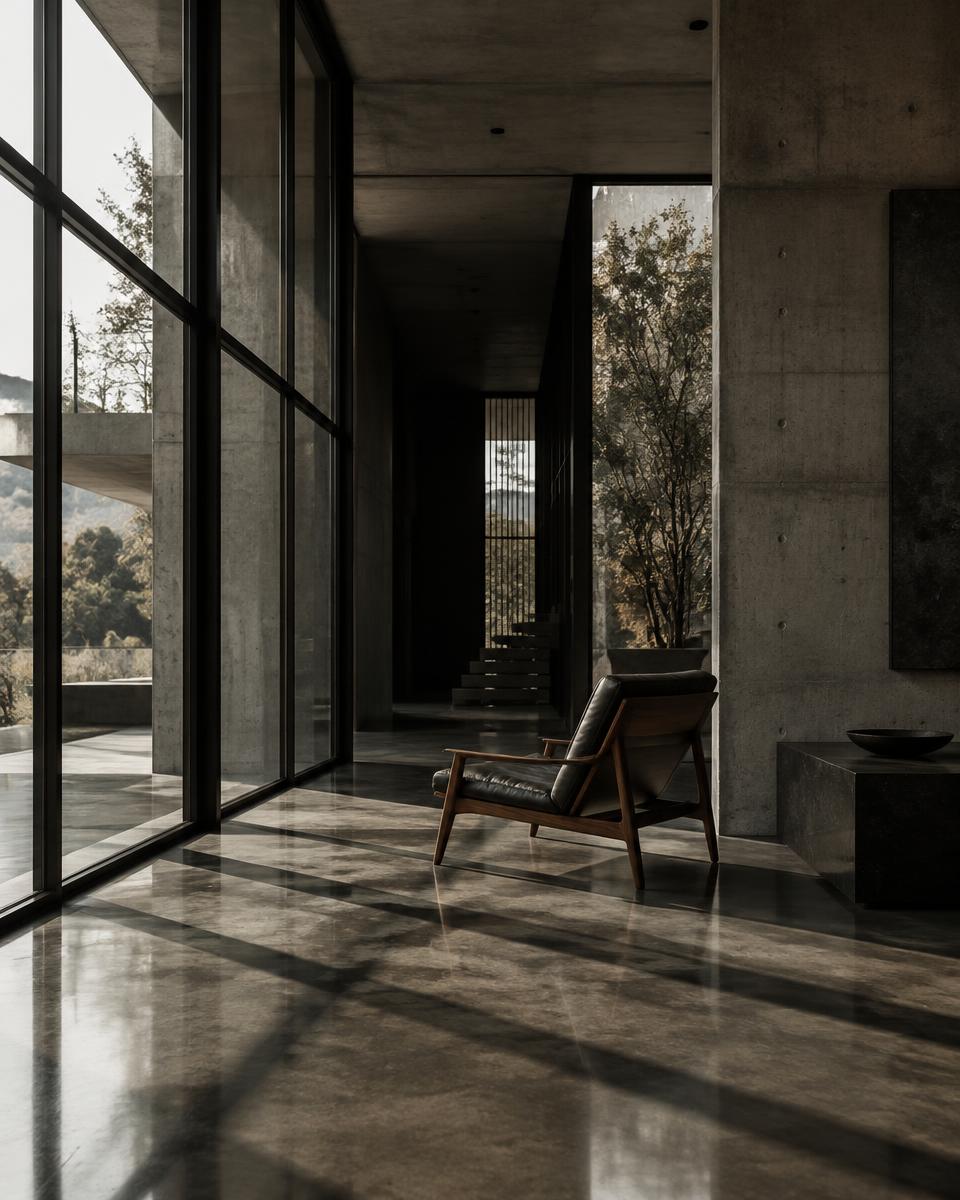
An analytical approach to the use of buildings was important within modernist architecture. Planning, materials and structural innovation helped determine the finished form.
That approach offers a practical way to examine design at any scale.
How does someone enter a room? Where do they reach for a handle? Which parts of a garment need to accommodate movement?
Beginning with those activities can reveal where an established arrangement works and where it deserves adjustment. Purpose provides evidence for design decisions.
IV
Materials opened new possibilities
Materials and manufacturing methods influence what can be made.
A structural frame can change the arrangement of walls and openings. A moulding process can produce a continuous curved component. A different textile construction can alter how a garment stretches or holds volume.
Modernist architecture placed particular emphasis on exploring materials and structural possibilities.
For a contemporary reader, the lesson is to consider material and form together. A new appearance becomes more meaningful when it follows from an understanding of how something is constructed.
V
Ornament was reconsidered
Many modernist designers questioned applied decoration and explored abstraction as an alternative. These choices formed part of a wider belief that design and technology could transform everyday life.
With less ornament, other relationships become more visible: the proportions of a surface, the alignment of parts and the character of a material.
A plain cabinet still has joints, edges and handles. A restrained shirt still has seams, a collar and a silhouette. Each requires a decision.
Removing decoration places greater responsibility on the elements that remain.
VI
Geometry could organise the whole
Geometric relationships offer ways to connect separate parts of a design.
A repeated dimension can bring consistency to panels. An alignment can connect a heading with an image. A grid can coordinate several openings without making them identical.
For someone studying modernist work, these relationships are useful things to look for. Trace the main lines, compare dimensions and notice where a regular arrangement changes.
The variation may reveal a different function or establish a focal point within the wider composition.
VII
Colour and curves belong in the picture
Modernism’s range extends beyond white walls and straight edges.
The V&A’s modernist collection includes Gerrit Rietveld’s Red Blue Chair and Alvar Aalto’s curved Savoy vase. Their different forms show how much variety can exist within the broader history.
Colour can clarify the relationship between parts. Curves can respond to a material, a manufacturing method or an intended experience.
Look at what those choices contribute rather than treating a limited palette or rectangular outline as a requirement.
VIII
Ambition needs to be assessed through use
A design can express a compelling idea and still need testing against everyday experience.
A room must accommodate its occupants. Furniture needs to support the body. A garment must remain comfortable as its wearer sits, reaches and walks.
The same questions help us evaluate historical designs and contemporary ones. Who was the intended user? Which needs were prioritised? What becomes apparent after repeated use?
Appreciating a design includes examining how well its ambitions work in practice.
IX
Modernism, Bauhaus and Minimalism
These terms describe related but different subjects.
Modernism is the broadest framework here, encompassing numerous movements and approaches. The Bauhaus was a particular school, active from 1919 to 1933, that helped develop modernist design education. Minimalism refers to a later artistic movement associated especially with the United States in the 1960s, as well as a broader contemporary design vocabulary.
Recognising the distinctions makes comparisons more useful. Shared geometry or restraint may connect works visually, while their intentions and historical settings remain different.
X
Connections with clothing
Modernist questions offer a way to think about clothing without assuming that every simple garment belongs to the movement.
Consider how a piece responds to everyday life. Does its construction support movement? Do the fastenings work comfortably? How do the fabric and cut establish its shape?
The relationship between appearance and purpose becomes clearer through those details.
A restrained garment can be examined with the same curiosity as a chair or interior: as a set of decisions about materials, the body and use.
XI
A closer look
Choose an everyday object and identify one feature you take for granted.
It might be the position of a handle, the shape of a pocket or the way a chair’s legs meet its seat. Ask what that feature allows you to do and how its material affects the result.
Imagine an alternative, then consider what would improve and what might become more difficult.
This exercise turns the idea of innovation into a specific question that can be explored.
Through the EUVRΛN lens
Modernism offers EUVRΛN a reference for considering how form, material and everyday purpose work together.
Within The Design Code, the connection lies in examining decisions: why a silhouette has a particular volume, how a fabric supports movement and what a small detail contributes.
A clear appearance gains substance when it is supported by thoughtful construction and comfortable use.
Quiet. Minimal. Timeless.
← Back to Design Movements