
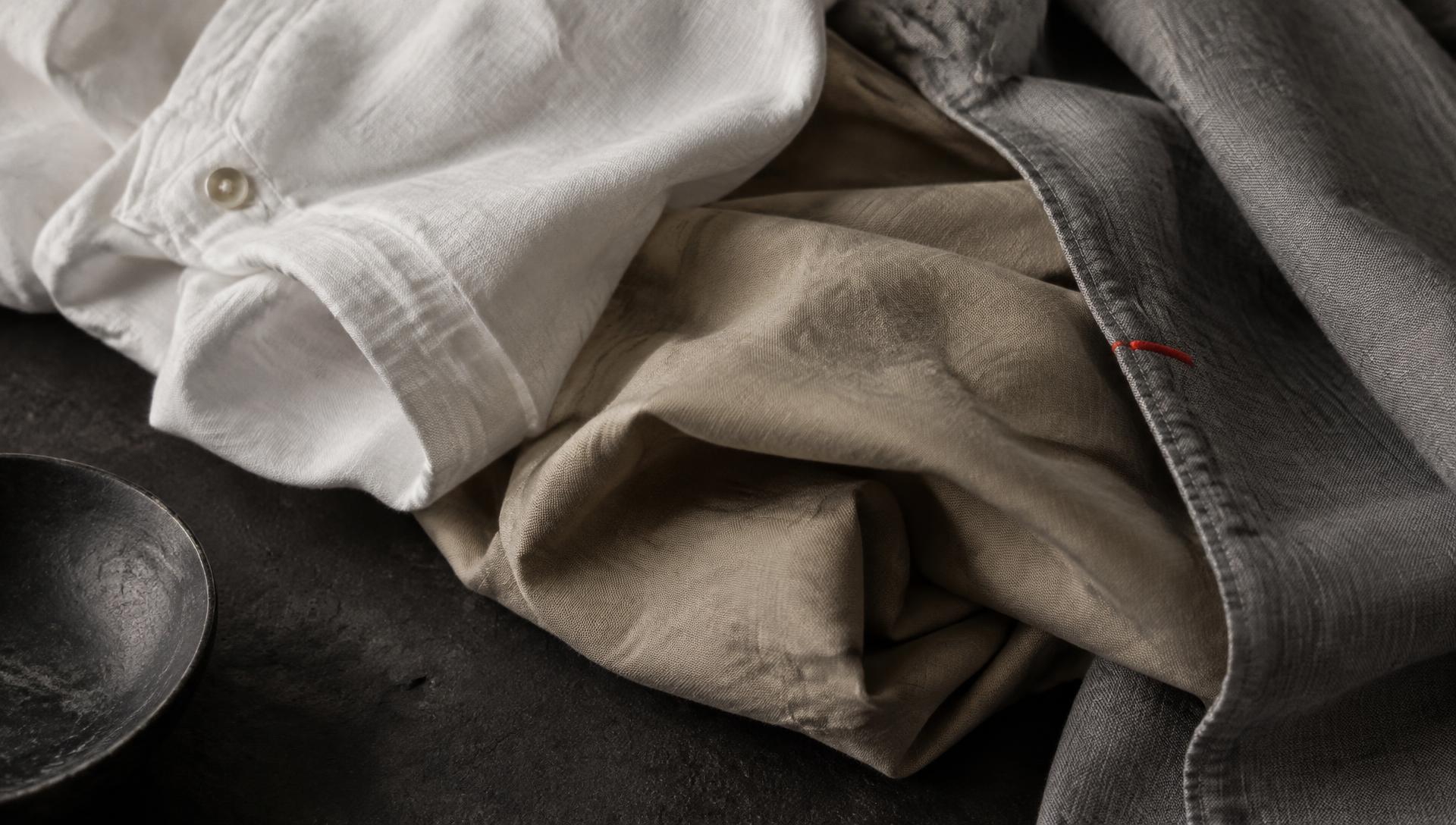
Dressing for heat is relatively simple.
Dressing for heat and humidity is harder.
When the air is already carrying moisture, clothing can quickly begin to feel heavier, warmer and less comfortable than expected. Fabrics that work perfectly well in a dry summer can become restrictive in a humid city.
That makes fabric choice one of the most important parts of dressing well in warmer climates.
The right material should feel light, allow air to move and remain comfortable through a long day.
It should also look good without demanding too much attention.
What makes a fabric good for hot weather?
There is no single perfect summer fabric.
Instead, there are a few qualities worth looking for.
Breathability allows heat to escape rather than becoming trapped close to the body.
Light weight reduces the amount of material sitting against the skin.
Moisture management becomes particularly important in humid conditions, where sweat evaporates more slowly.
And finally, the fabric needs to work in the real world.
It should be comfortable when walking, sitting outdoors, travelling on public transport and moving between heat and air-conditioned interiors.
A fabric can be technically impressive and still feel wrong if it is too stiff, too heavy or too complicated to live in.
For most men, the best summer fabrics remain surprisingly simple.
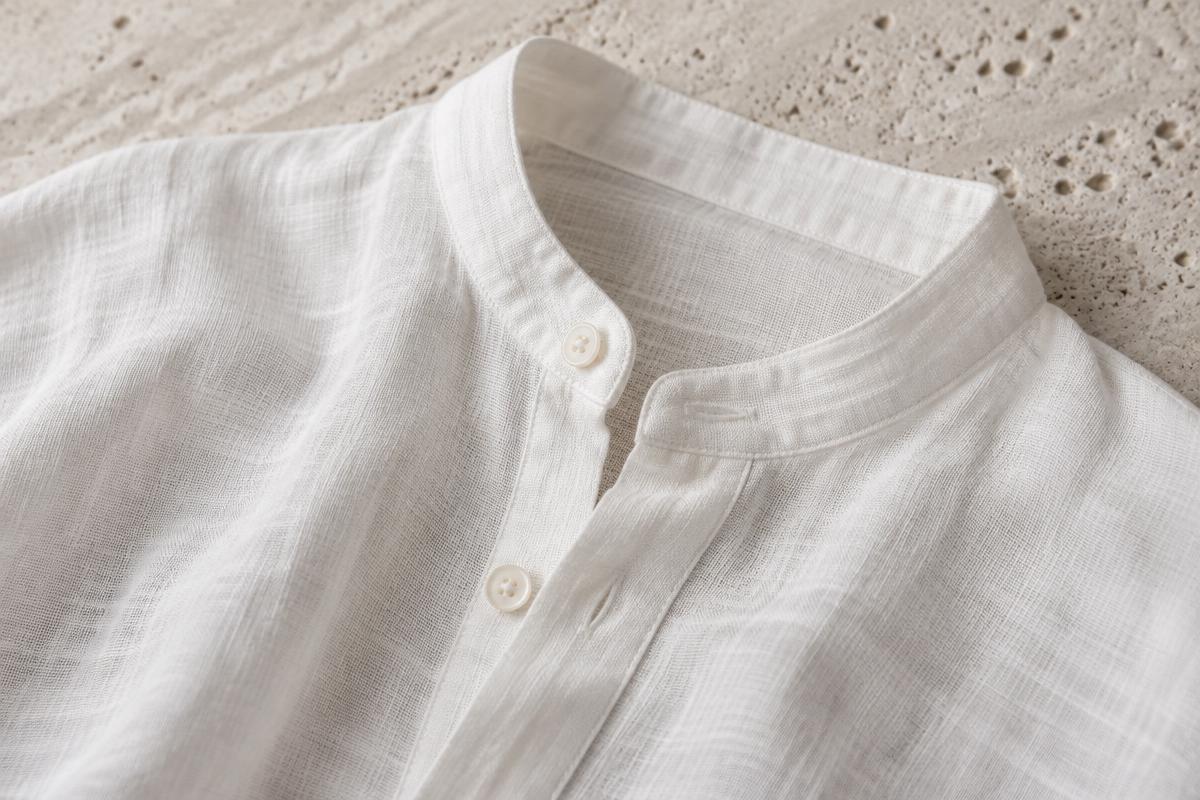
Linen
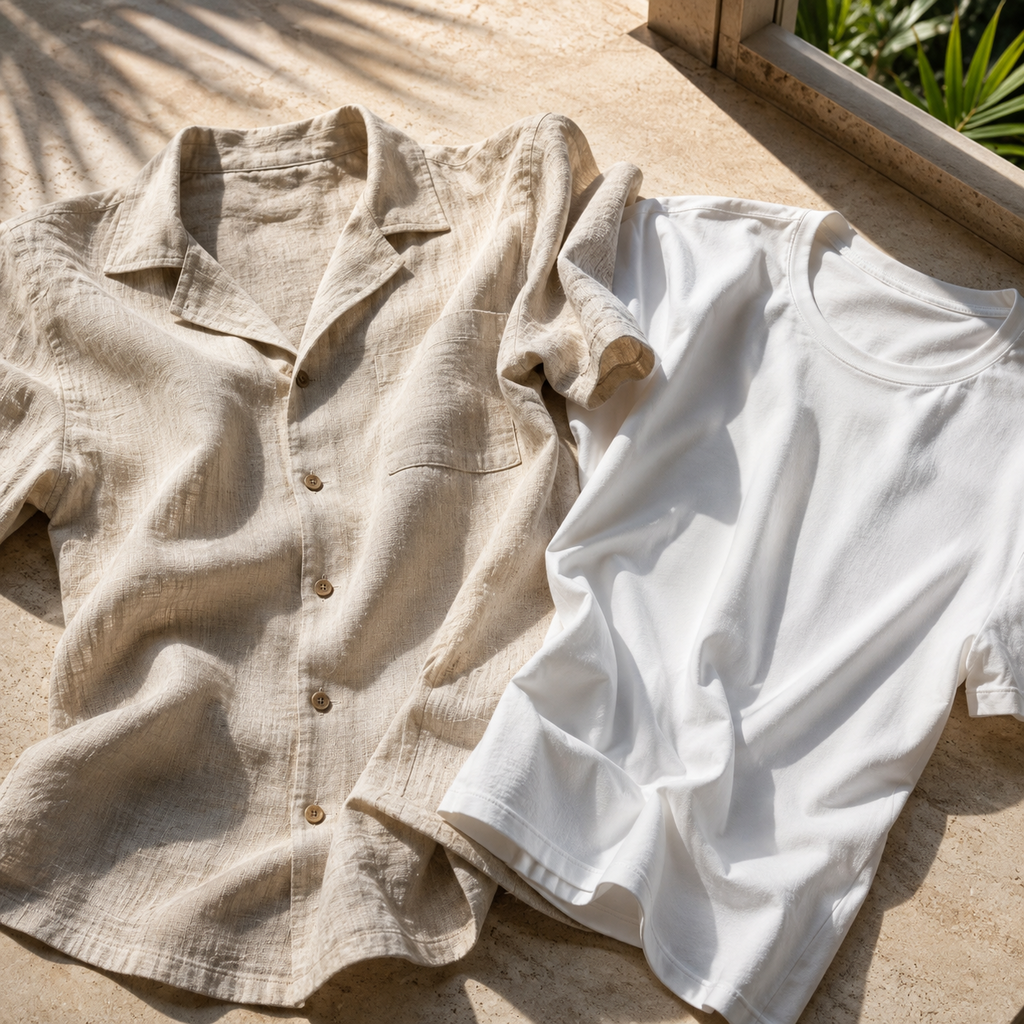
Linen has been used in warm climates for centuries, and there is a reason it continues to work.
It is naturally breathable, lightweight and comfortable when temperatures rise.
Its texture also gives it an advantage.
Linen does not need to remain perfectly smooth to look good. The creasing that comes with wear becomes part of the fabric rather than a flaw that needs to be hidden.
That makes it particularly suited to summer shirts and relaxed trousers.
Linen also tends to sit slightly away from the body rather than clinging closely to it, allowing more air to circulate.
For very humid conditions, that can make a noticeable difference.
The trade-off is obvious: linen wrinkles.
But in summer, that is often part of its appeal.
It looks lived in.
Not careless. Not overly polished.
Simply appropriate for the environment.
Cotton
Cotton is probably the most familiar summer fabric.
But not all cotton is equal.
The weight and construction of the fabric matter enormously.
A thick heavyweight cotton T-shirt can feel substantial and premium in cooler weather, but that same weight can become uncomfortable during a humid summer.
Lightweight cotton is a different proposition.
It can be soft, breathable and easy to wear throughout the day.
For T-shirts in particular, cotton remains difficult to beat because it combines comfort with structure.
The ideal fabric should be light enough to breathe without becoming so thin that it loses its shape.
That balance matters.
A summer T-shirt should feel easy without looking fragile.
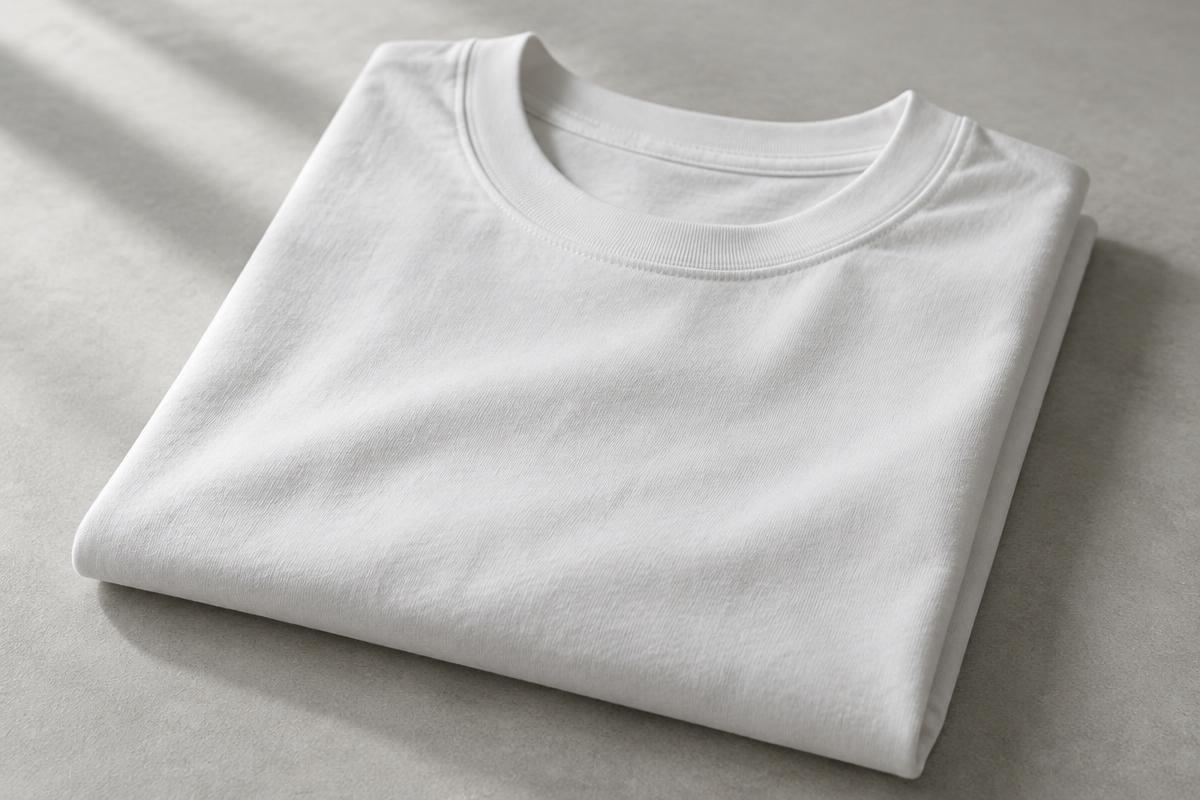
Linen-cotton blends
Blended fabrics can offer a useful middle ground.
Combining linen and cotton allows designers to retain some of linen's breathability and texture while introducing more of the softness and stability associated with cotton.
The result can crease less aggressively than pure linen while still feeling distinctly lighter and more relaxed than a heavier cotton fabric.
For shirts, especially, this can be a very practical option.
It offers some of the character of linen without requiring the wearer to embrace quite as much wrinkling.
Sometimes compromise is exactly what makes a fabric more useful.
Seersucker
Seersucker is immediately recognisable by its puckered surface.
That texture is not purely decorative.
The fabric sits unevenly against the body, reducing the amount of material in constant contact with the skin and allowing more air to circulate.
Traditionally associated with warm-weather tailoring, seersucker can work particularly well for shirts, lightweight trousers and relaxed summer jackets.
It also has one useful quality for travel:
It is not supposed to look perfectly flat.
Like linen, its character improves when you stop expecting it to behave like a formal fabric.
Lightweight wool
Wool might seem like an unusual suggestion for warm weather.
Heavy wool obviously is.
Lightweight tropical wool, however, behaves very differently.
Fine open-weave wool can breathe surprisingly well while keeping a cleaner, more structured appearance than linen or cotton.
This makes it useful when the weather is hot but the setting requires something smarter.
Lightweight wool trousers, for example, can sometimes feel more comfortable than thick cotton chinos because the fabric is designed to allow airflow.
It is a reminder that material names alone do not tell the whole story.
Construction matters just as much.
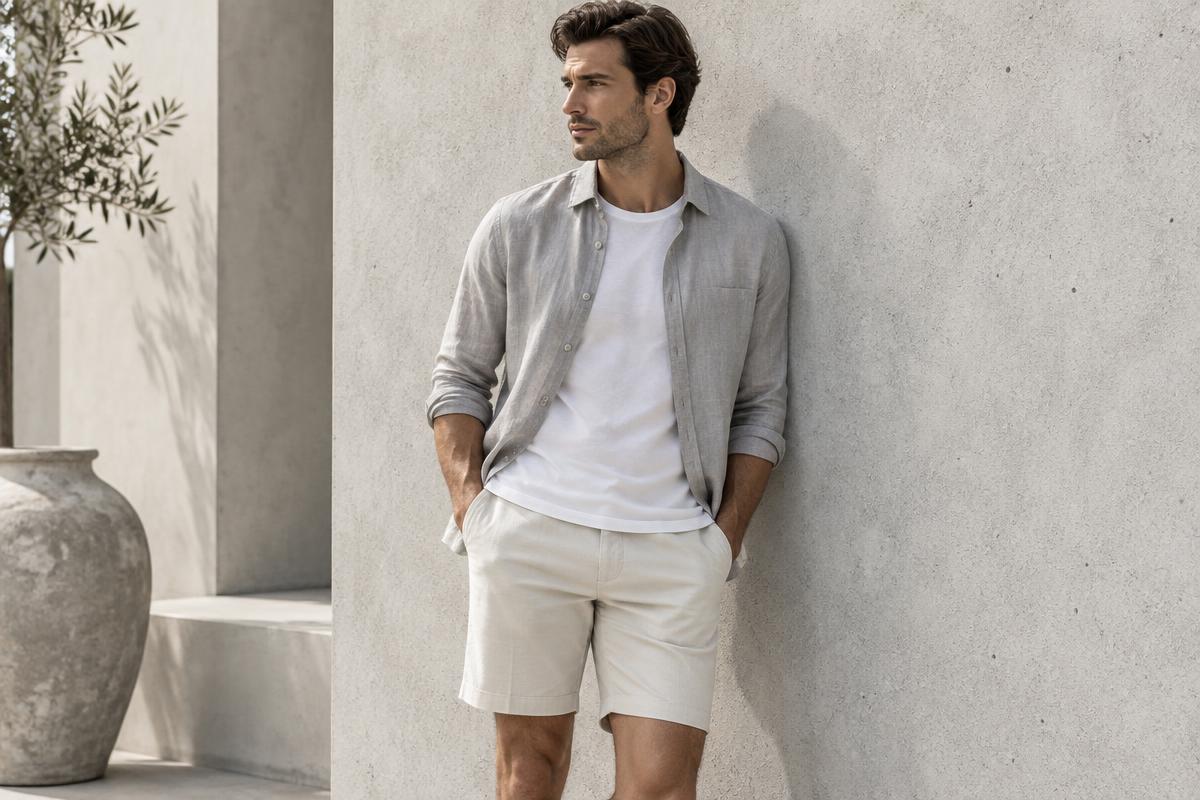
Chambray
Chambray is often confused with denim because of its appearance.
In reality, it can be considerably lighter.
A lightweight chambray shirt offers some of the visual character of denim without the same weight or stiffness.
That makes it useful for casual summer dressing when plain white or neutral shirts begin to feel repetitive.
It also works particularly well as an overshirt because it can add texture without adding too much warmth.
For warm climates, the lightest versions are usually the most versatile.
What about synthetic fabrics?
Synthetic materials are not automatically bad for summer.
Technical fabrics can be extremely effective at moving moisture and drying quickly, which is why they dominate sportswear and performance clothing.
The question is where and how they are being used.
A technical running shirt makes sense because performance is the priority.
For everyday clothing, some synthetic fabrics can feel less breathable or retain odour more easily than natural alternatives.
Others are engineered specifically for heat and perform extremely well.
It is therefore better to judge the actual fabric than to make assumptions based purely on whether something is natural or synthetic.
For understated everyday summer clothing, however, natural fibres still offer a combination of comfort, appearance and texture that is difficult to replace.
Fabric weight matters more than people think
Two shirts can both be made from cotton and feel completely different in summer.
One may be light, open and breathable.
The other may be dense and heavy.
The same applies to T-shirts.
A thicker fabric often looks more structured, but that does not automatically make it better.
In a humid climate, every additional gram begins to matter.
This is why clothing designed for warm weather should be considered as a complete system.
Fabric.
Weight.
Fit.
Construction.
None of those decisions exists in isolation.
Fit affects how a fabric performs
Even the most breathable fabric becomes less effective if it is worn too tightly.
Air needs space to move.
That does not mean clothing should be oversized.
It simply means allowing a little distance between the material and the body.
A shirt that falls naturally rather than pulling across the chest.
A T-shirt with room through the torso.
Trousers that do not cling to the leg.
In hot weather, ease becomes functional.
The silhouette should help the fabric do its job.
Colour also plays a role
Light colours are often associated with summer for good reason.
In direct sunlight, they generally absorb less heat than darker colours.
White, stone, sand and other pale neutrals can therefore feel particularly appropriate during the hottest parts of the day.
That does not mean black becomes unusable.
Black clothing can still work well when the fabric itself is lightweight, breathable and cut with enough room.
Again, there is rarely one rule.
The entire garment matters.
The best fabrics depend on what you are doing
There is no reason to build a summer wardrobe from a single material.
Different fabrics solve different problems.
For a T-shirt:
Lightweight cotton.
For a relaxed shirt:
Linen or a linen-cotton blend.
For something smarter:
Lightweight wool or finely woven cotton.
For travel:
Fabrics that are light, versatile and comfortable even when they are not perfectly pressed.
The best summer wardrobe combines those qualities rather than relying on one answer.
Dressing for humidity
Humidity makes you notice clothing.
A heavy shirt feels heavier.
A tight fit feels tighter.
An unnecessary layer becomes impossible to ignore.
The solution is not complicated.
Choose breathable fabrics.
Reduce unnecessary weight.
Allow space for movement.
And wear clothes that are designed for the conditions you are actually in.

That approach sits naturally behind EUVRΛN Volume 01 — Hong Kong.
A collection shaped by a city where heat, humidity, movement and transition are part of everyday life.
The clothes should adapt to the day.
Not ask the day to adapt to them.
More experience. Less excess.
You might also like
Material — August 2026
Linen vs Cotton: Which Is Better in Hot Weather?

Guide — June 2026